Pelvic Floor Pilates in Northampton
Strengthen, restore, and rebuild confidence – with specialist guidance in a private, supportive setting.
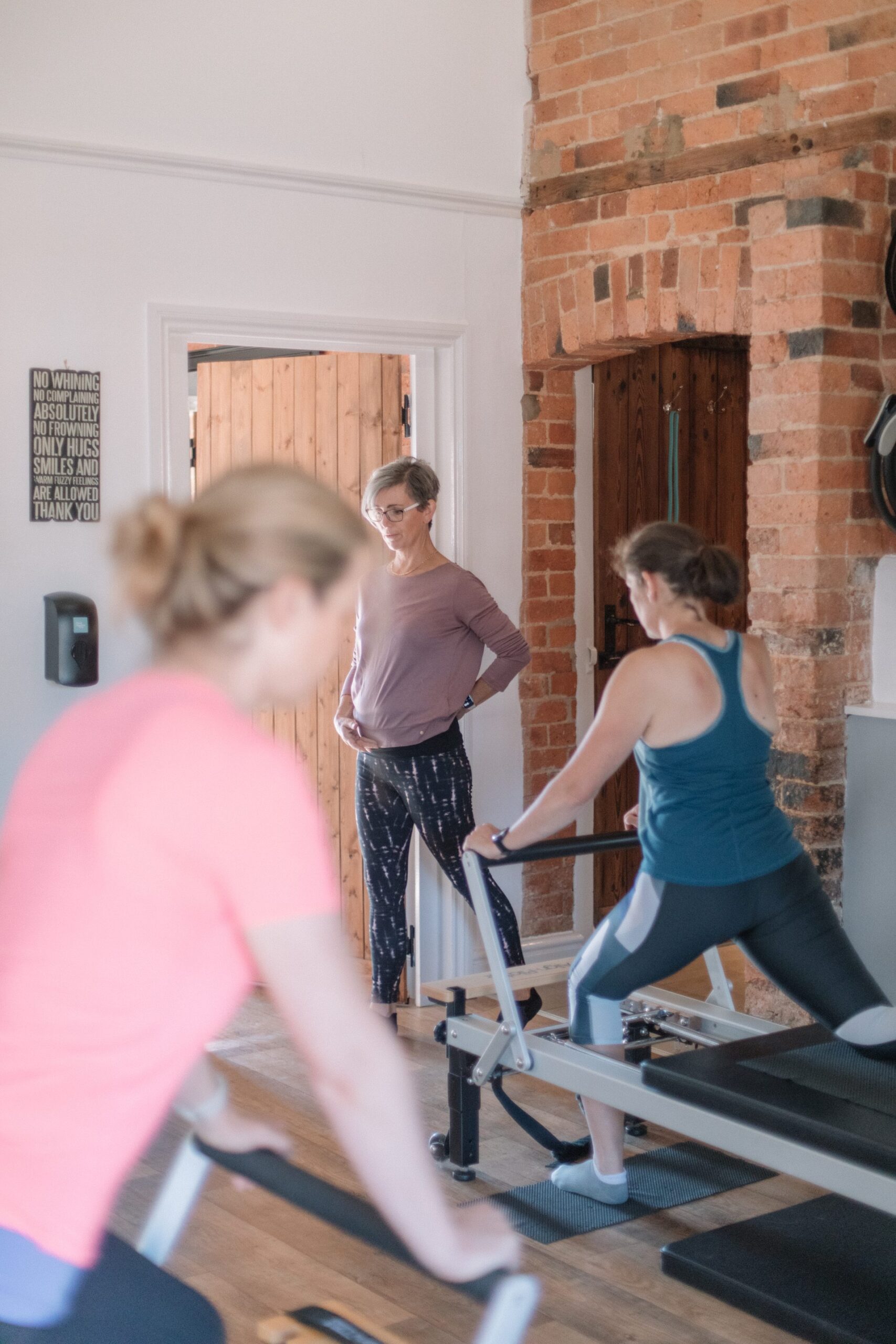
Why Pelvic Floor Health Matters
The pelvic floor is a group of muscles that sit like a hammock at the base of your pelvis. They support your bladder, bowel, and uterus, and play a crucial role in core stability, continence, sexual function, and posture.
When these muscles weaken or become dysfunctional, the effects can be life-altering: stress incontinence (leaking when you cough, sneeze, or exercise), urgency, pelvic organ prolapse, lower back pain, and reduced sexual sensation.
It’s incredibly common – affecting up to 1 in 3 women at some point in their lives – but it’s rarely talked about. Many people simply put up with symptoms, not realising that targeted exercise can make a significant difference.
Who Experiences Pelvic Floor Issues?
After childbirth
Pregnancy and birth stretch and weaken the pelvic floor. Recovery doesn’t always happen naturally – targeted rehabilitation makes a real difference. See our pregnancy & postnatal page.
During and after menopause
Declining oestrogen levels weaken pelvic floor muscles and reduce tissue elasticity. This is when many women first notice symptoms. See our menopause page.
After gynaecological surgery
Hysterectomy, prolapse repair, or other procedures can affect pelvic floor function. Careful, progressive rehabilitation helps restore strength and confidence.
High-impact exercise
Runners, jumpers, and CrossFit enthusiasts can develop pelvic floor issues from repeated impact. Pilates offers a way to rebuild without the stress.
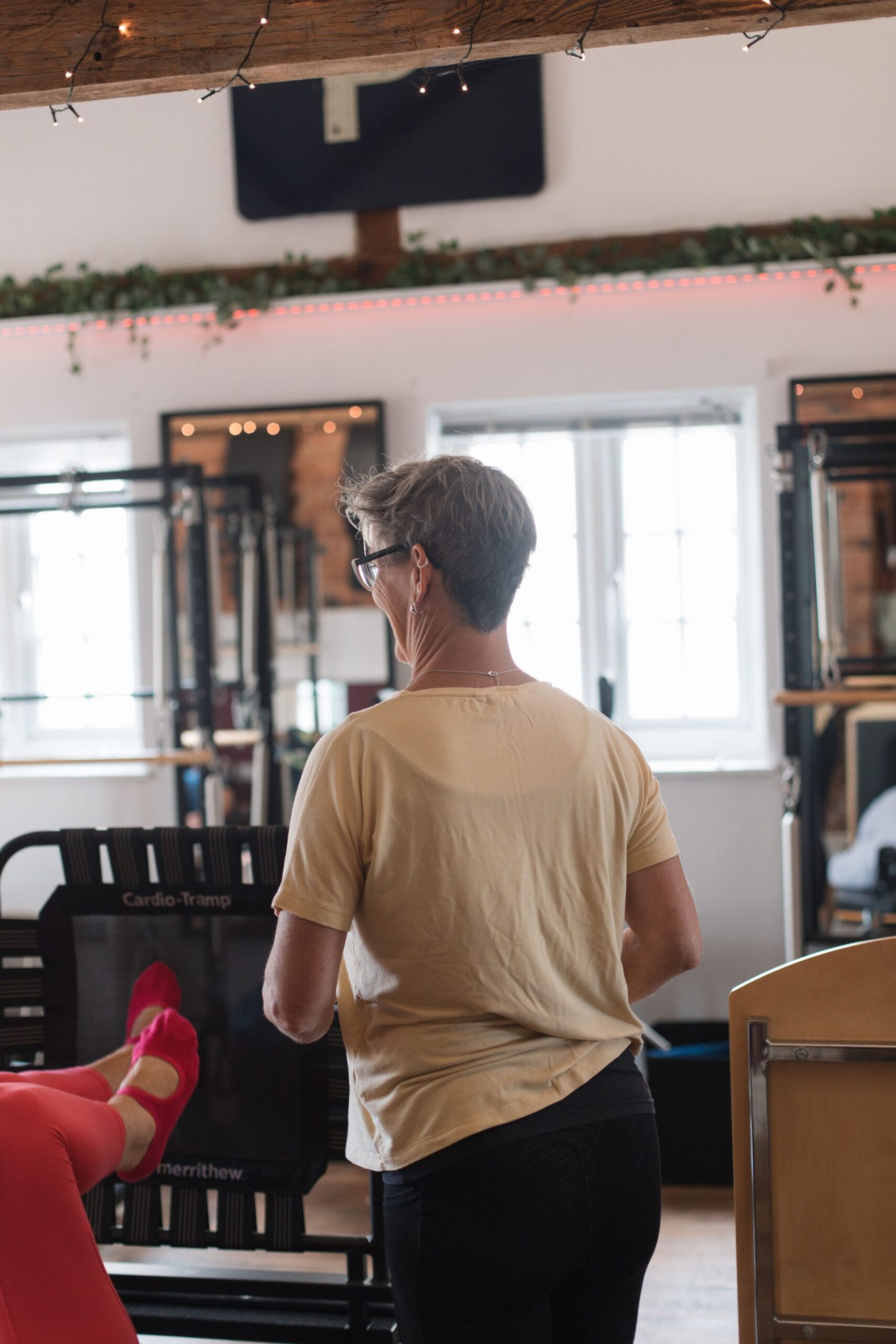
How Reformer Pilates Helps Your Pelvic Floor
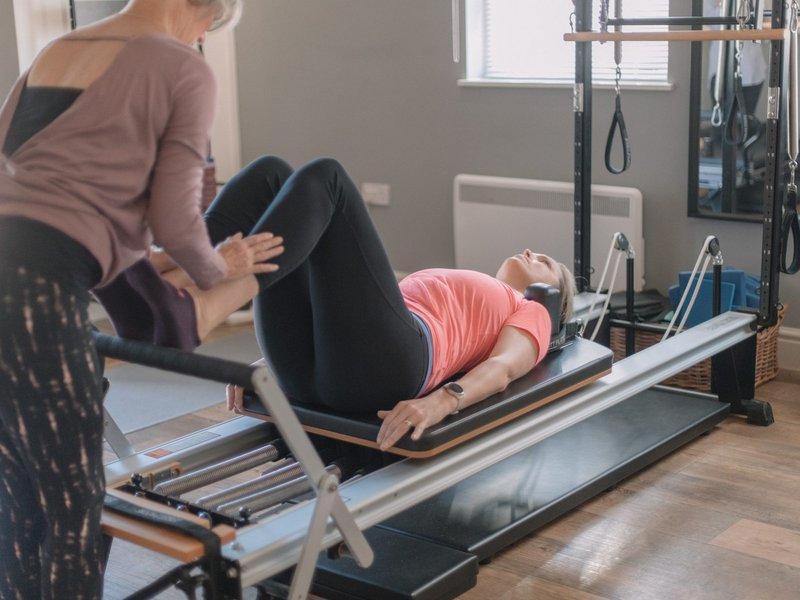
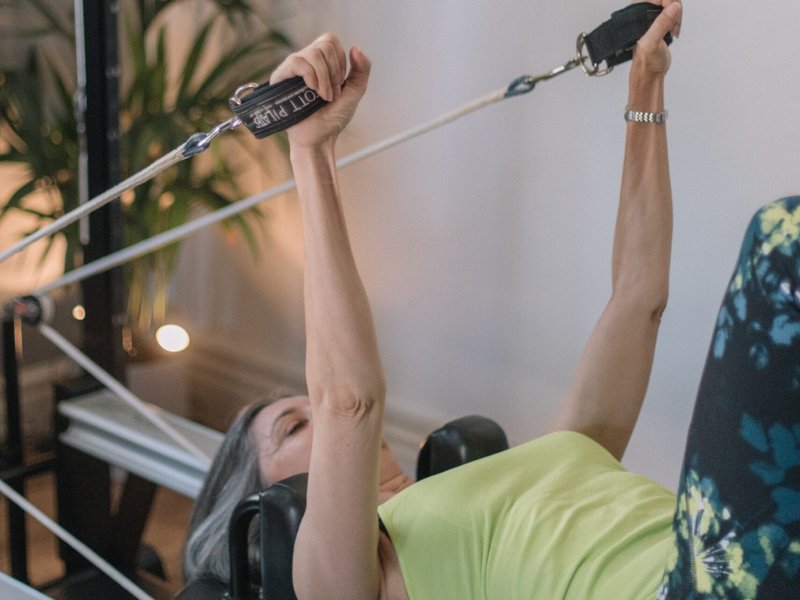
The Reformer is one of the most effective tools for pelvic floor rehabilitation because it provides spring-based resistance in supported positions. You can work lying down, reducing gravity’s effect on already-weakened muscles, while the springs provide progressive resistance as you strengthen.
Your instructor teaches you proper pelvic floor activation cues – not just “squeeze” but how to engage, release, coordinate with breathing, and integrate with your deep core muscles. The pelvic floor doesn’t work in isolation – it’s part of your deep core system (diaphragm, transversus abdominis, multifidus, and pelvic floor all working together).
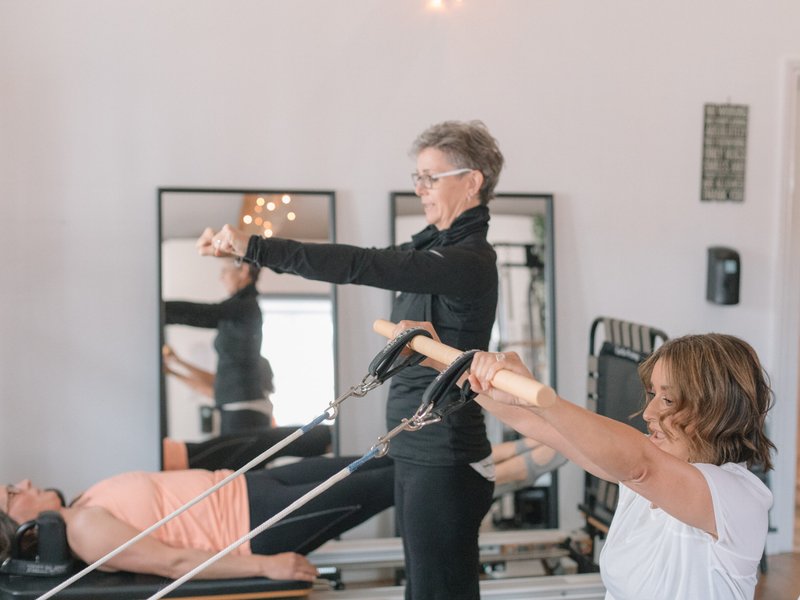
With just 4 people per class and the option of completely private 1-to-1 sessions, you can work on your pelvic floor in a discreet, comfortable environment. Our APPI-qualified instructors have specialist pelvic floor training and understand the sensitivity of these issues.
What Our Members Say
★★★★★
“I have a long-term health condition and all of the instructors have really gone out of their way to understand what I need and provide adaptations where needed.”
– Emma Moonlight
★★★★★
“Lorraine who has x-ray vision and could tell me so much about what was causing my issues. I’m already feeling the benefits and have learnt so much about my body.”
– Liz Jessett
How Reformer Pilates Strengthens Your Pelvic Floor
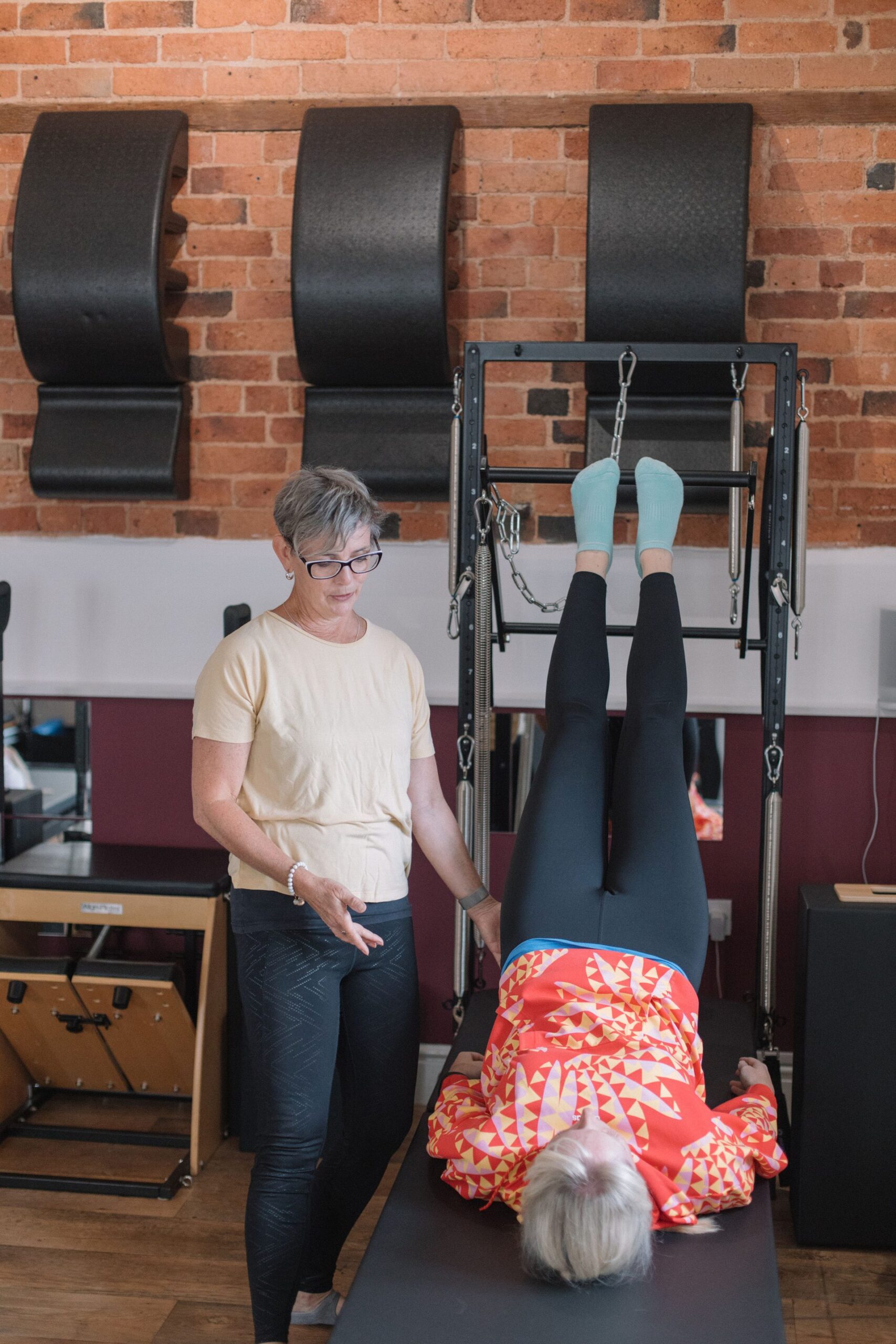
The Reformer is uniquely effective for pelvic floor rehabilitation because of how the spring resistance interacts with your deep core system.
Reflexive Pelvic Floor Activation
When you push against the Reformer’s springs, the resistance doesn’t just work your legs – it triggers a reflexive activation of your pelvic floor. This happens automatically as part of your body’s deep stabilising response. Over time, this reflexive engagement becomes stronger and more reliable, which is exactly what you need for real-life activities like lifting, carrying, and running.
Footwork and the Deep Core Chain
The footwork series on the Reformer – pressing the carriage out and controlling it back – engages the entire deep core chain: feet, inner thighs, pelvic floor, transversus abdominis, and diaphragm. This integrated activation teaches your pelvic floor to work as part of a team, not in isolation. It’s the difference between a pelvic floor that works during exercises and one that works during your life.
The Magic Circle (Pilates Circle)
Placing the Pilates circle between your knees activates the adductor muscles (inner thighs), which share fascial connections with the pelvic floor. When you squeeze the circle, your adductors co-contract with your pelvic floor – strengthening both simultaneously. This is particularly effective for women who struggle to “find” their pelvic floor with verbal cues alone.
Beyond Kegels – Why Isolated Squeezes Aren’t Enough
If you’ve been told to “just do your Kegels,” you’re not getting the full picture. Isolated pelvic floor squeezes have their place, but they train your pelvic floor to work in only one way – a conscious, voluntary contraction while you’re thinking about it.
Real life doesn’t work like that. You need your pelvic floor to activate automatically – when you sneeze unexpectedly, when you pick up your child, when you laugh, when you run for the bus, when you jump on a trampoline. That’s functional pelvic floor training, and it requires your pelvic floor to work with your core during dynamic movement.
Reformer Pilates provides exactly this. Every exercise involves coordinated breathing, core engagement, and movement against resistance – training your pelvic floor to fire reflexively as part of an integrated system. Over weeks and months, this automatic response becomes your new normal.
We also address the other side of the equation: pelvic floor release. A hypertonic (too-tight) pelvic floor can cause as many problems as a weak one – including pain, urgency, and incomplete emptying. Our instructors teach you to release as well as engage, creating a pelvic floor that’s responsive, not rigid.
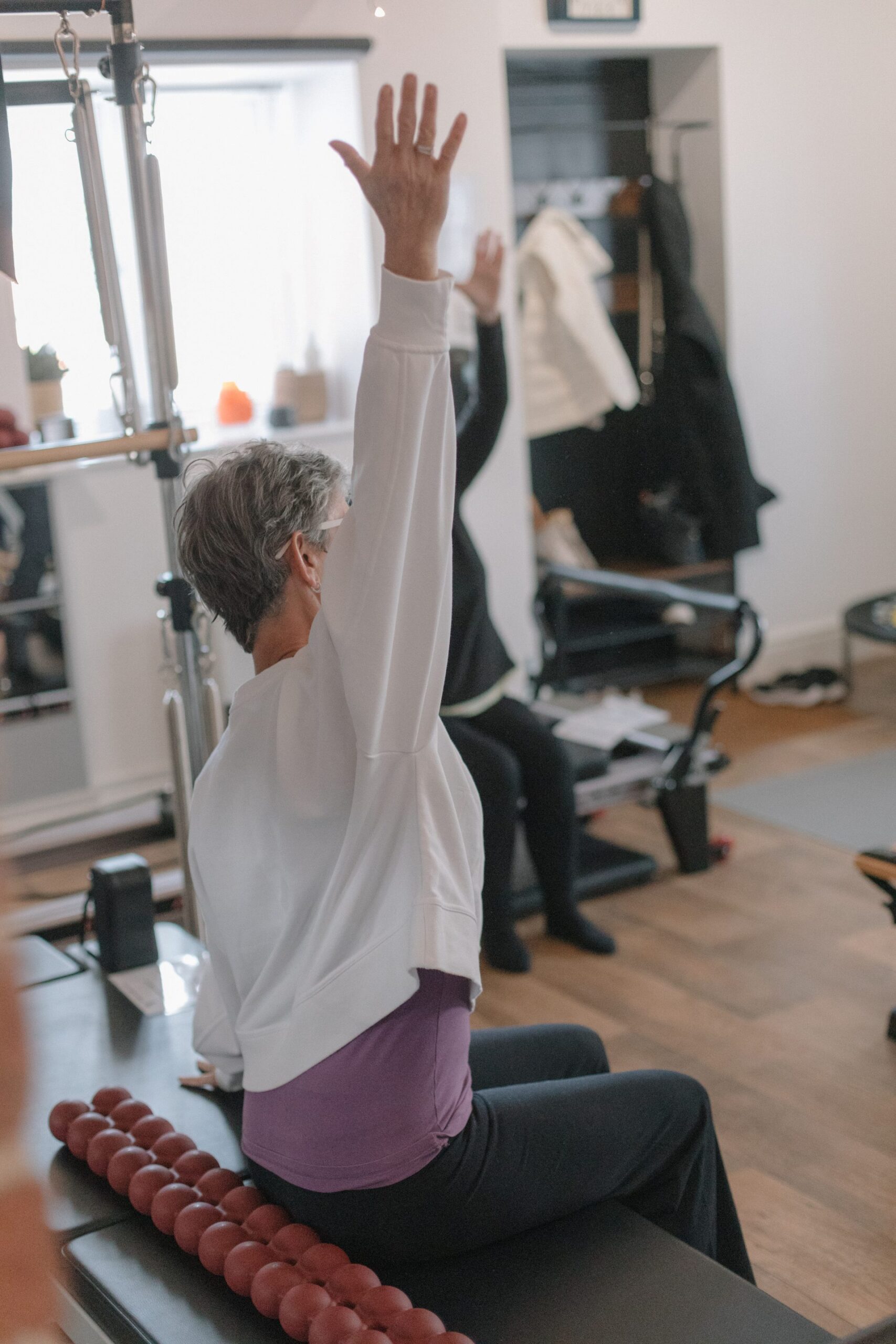
Signs Your Pelvic Floor Needs Attention
Many women live with these symptoms for years, assuming they’re “just normal” after having babies or going through menopause. They’re common – but they’re not something you have to accept:
Stress incontinence – Leaking when you cough, sneeze, laugh, jump, or run. Even small amounts. This is the most common sign of pelvic floor weakness and responds well to targeted rehabilitation.
Urgency – A sudden, intense need to get to the toilet that feels impossible to delay. This can be related to pelvic floor overactivity or weakness, and Pilates can help with both.
Heaviness or dragging sensation – A feeling of something “falling down” or heaviness in the pelvis. This can indicate prolapse and should be assessed by a women’s health physiotherapist. Pilates is often recommended as part of the management plan.
Lower back pain – Your pelvic floor is part of your deep core system. When it’s not functioning properly, your lower back often compensates – leading to chronic aching and stiffness that doesn’t respond to conventional back exercises.
Hip pain – The pelvic floor muscles attach to your pelvis and work closely with your hip rotators. Dysfunction in one area often shows up as pain or restriction in the other.
If any of these sound familiar, a conversation with us is a good starting point. Call 07766 807184 or email hello@theolddairypilates.co.uk.
Ready to Rebuild Your Strength and Confidence?
Your journey with us starts with a one-to-one introductory session (£33). Your instructor will take the time to understand your goals, assess how you move, and introduce you to our studio and equipment. From there, we’ll guide you into the right classes for your body and your goals.
Call us: 07766 807184 or 07305 091041
The Old Dairy Pilates Studio • Lamport Manor Farm • Northants • NN6 9HF
Just 15 minutes from Northampton, Kettering & Market Harborough
Explore More at The Old Dairy
Discover the full range of what our studio offers: