
The Pilates Chair
A compact, versatile piece of apparatus that builds exceptional strength, balance, and control. Used at The Old Dairy Pilates Studio, Northampton.
What Is the Pilates Chair?
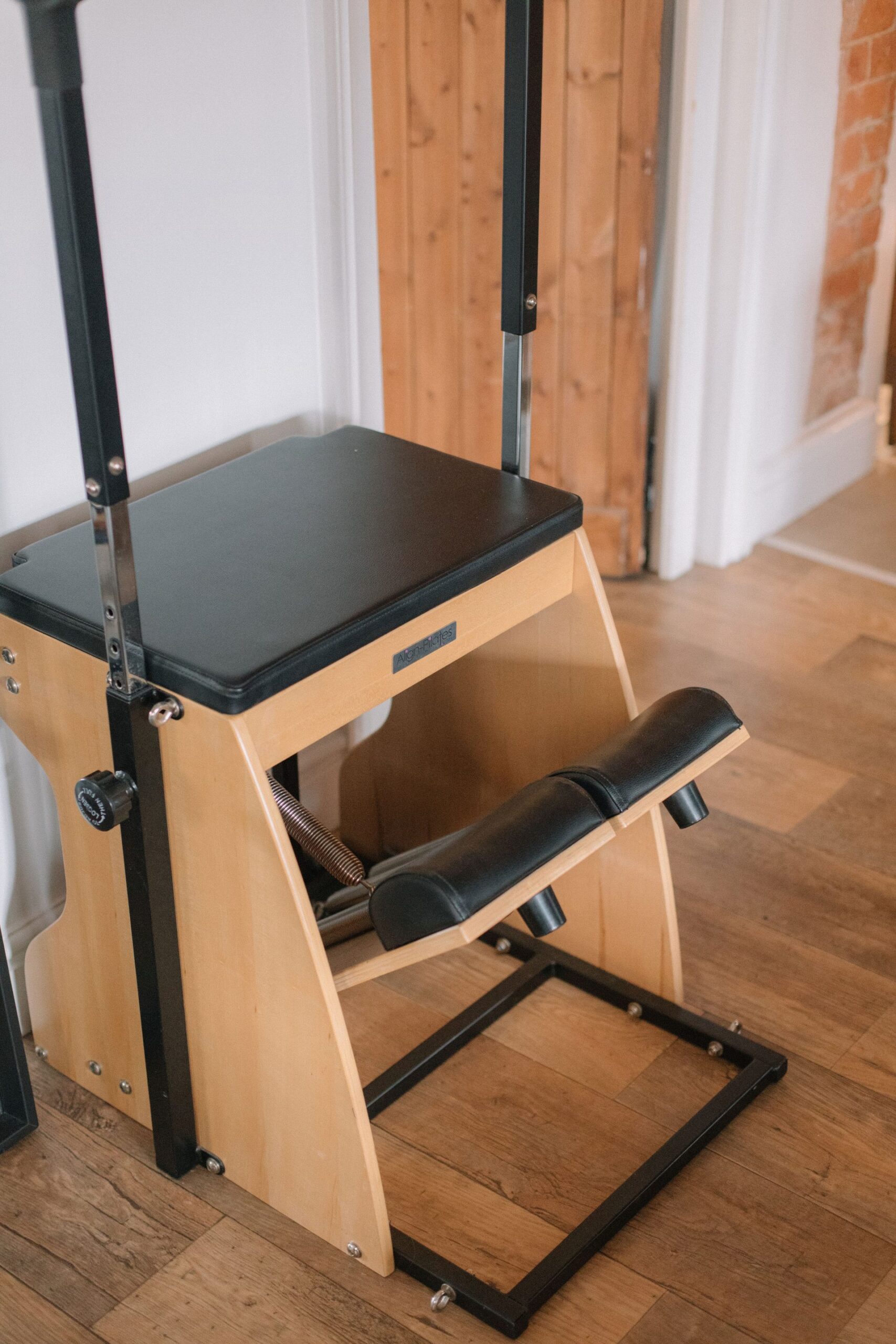
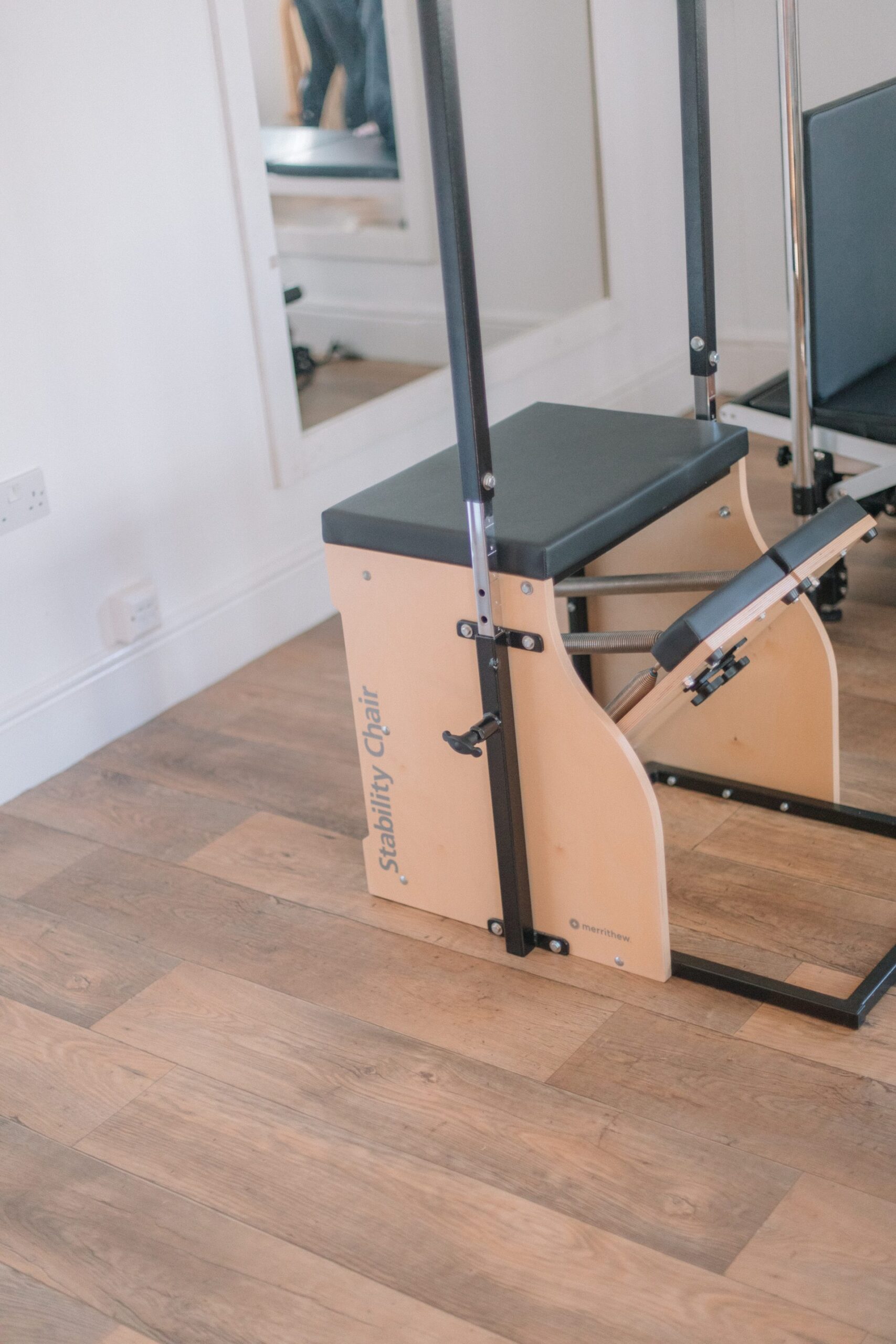
The Pilates Chair – also known as the Wunda Chair or Stability Chair – is one of the original pieces of apparatus designed by Joseph Pilates. It looks deceptively simple: a compact box with a padded seat and a spring-loaded pedal at the front. But don’t be fooled by its size. The chair is one of the most challenging and rewarding pieces of equipment in the Pilates repertoire.
At The Old Dairy Pilates Studio near Northampton, our instructors incorporate chair work into sessions when your technique and strength are ready for it. It’s not a separate class – it’s a progression that your instructor will introduce based on your individual development.
How Does the Pilates Chair Work?
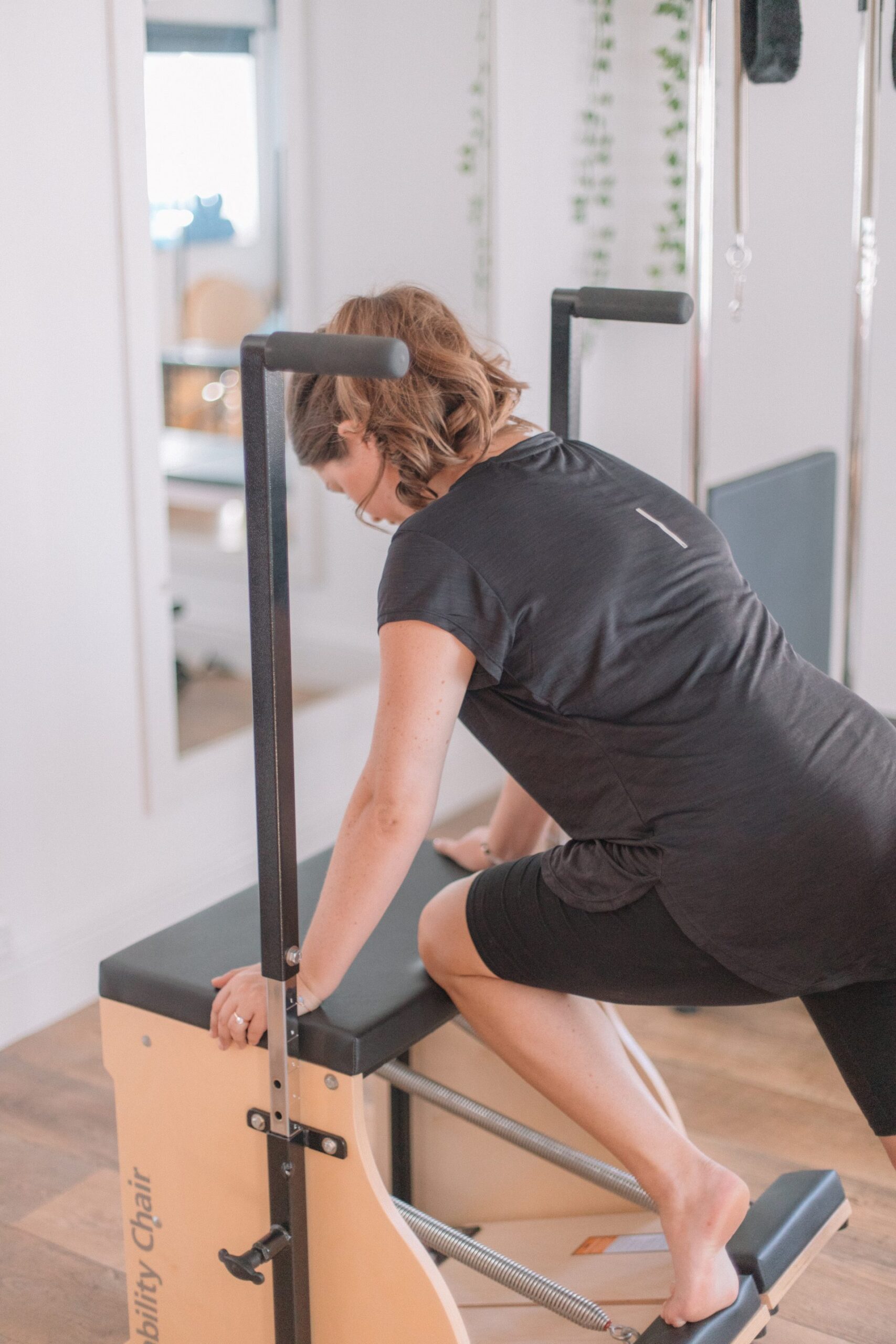
You sit, stand, kneel, or lie on the chair while pressing a spring-loaded pedal with your hands or feet. The springs provide adjustable resistance – lighter for mobility work, heavier for building raw strength.
What makes the chair unique is its instability. Unlike the reformer, where you’re guided along a track, the chair demands that you control the movement in every direction. There’s no carriage to stabilise you. Your core, your balance, and your proprioception do all the work.
This makes it exceptional for:
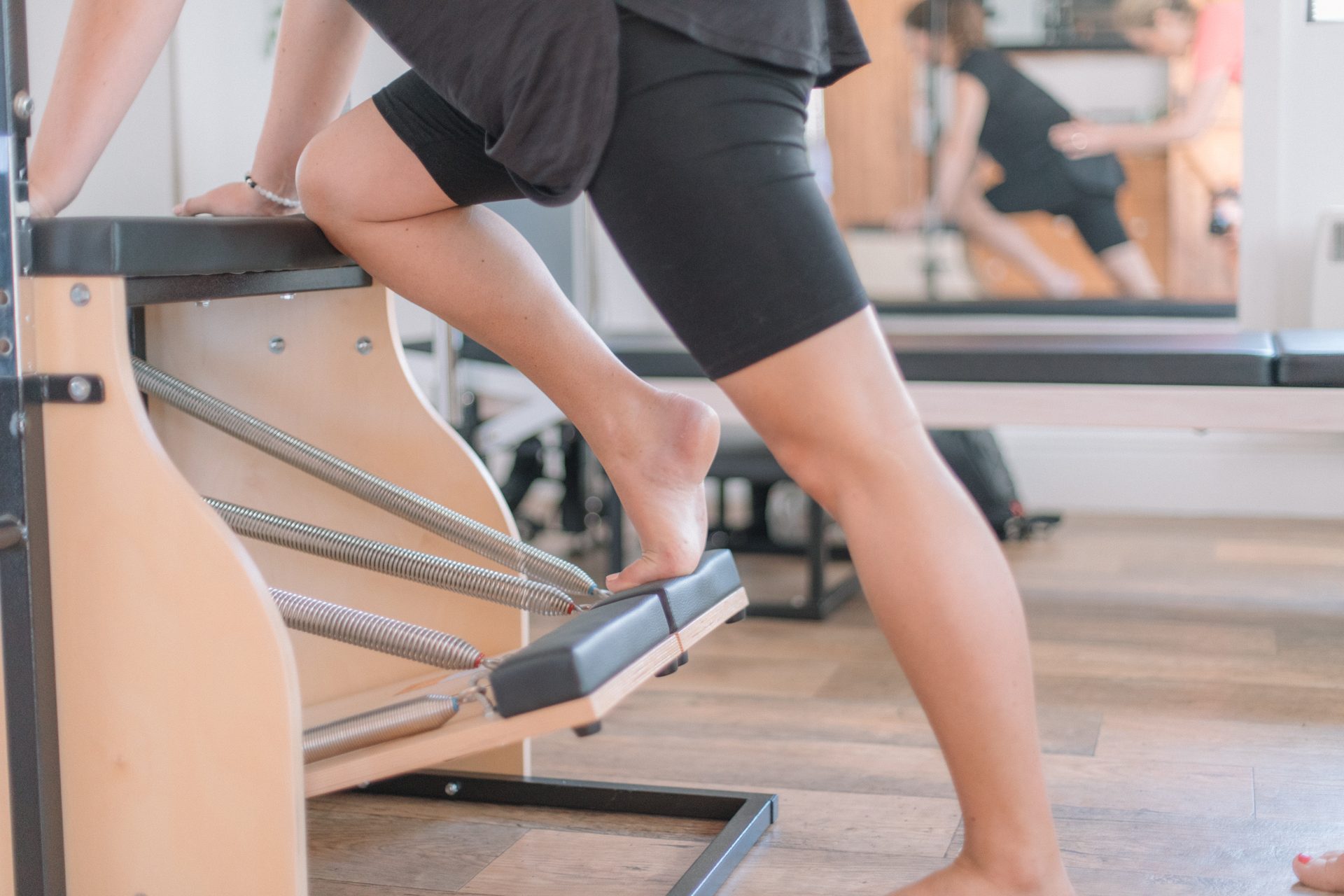
- Standing balance exercises – stepping up onto the chair while pressing the pedal builds functional leg strength and ankle stability
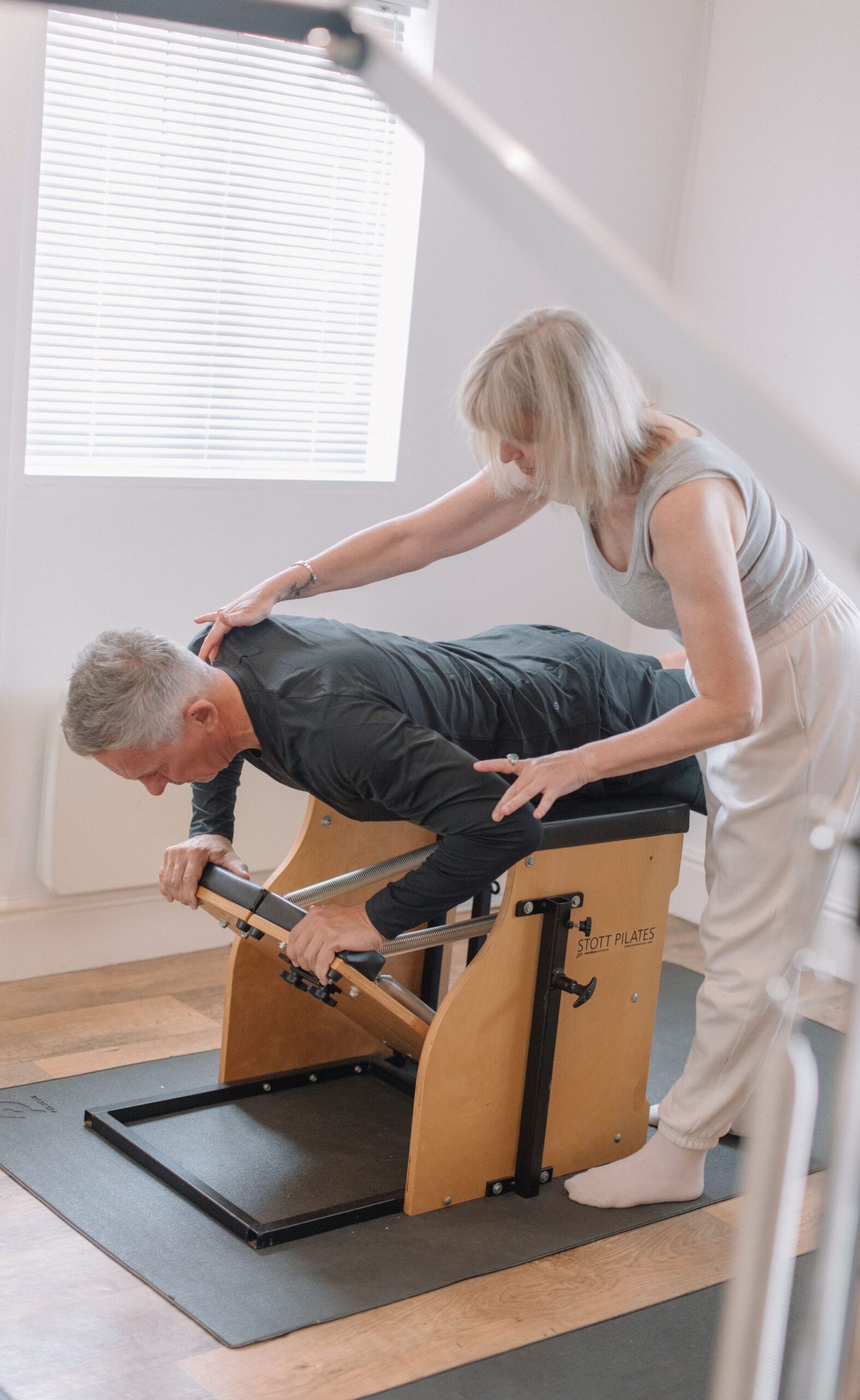
- Upper body work – pressing the pedal from a pike or plank position challenges the shoulders, chest, and deep core muscles
- Spinal articulation – seated pedal work encourages precise vertebra-by-vertebra movement
- Hip and glute activation – side-lying and kneeling exercises target the lateral hip stabilisers that are often weak in desk workers and runners
Benefits of the Pilates Chair
The chair mirrors real-life movement patterns – stepping up, pushing, pulling, balancing on one leg. The strength you build transfers directly to everyday activities, sport, and injury prevention.
Standing work on the chair challenges your balance in ways that floor and reformer work cannot. This is particularly valuable for older adults looking to reduce fall risk, and for athletes who need dynamic stability.
Every chair exercise requires deep core engagement to maintain position. The unstable surface means your transverse abdominis, pelvic floor, and deep spinal muscles are working constantly – even during what appears to be a simple arm exercise.
Don’t let its small size fool you. The chair provides some of the most intense Pilates exercises available. Many experienced Pilates practitioners find chair work humbling – in the best possible way.
The adjustable spring resistance means exercises can be modified for rehabilitation or ramped up for advanced training. It’s a natural progression from reformer work that doesn’t increase joint stress.
Who Is the Pilates Chair For?
The chair is typically introduced once you’ve developed a solid foundation on the reformer. Your instructor will know when you’re ready – it’s about having the body awareness and core control to work safely on an unstable surface.
It’s particularly beneficial for:
- Intermediate to advanced practitioners looking for new challenges
- Runners and cyclists who need single-leg strength and hip stability
- Horse riders who want to improve their independent seat and core control
- Older adults working on balance and fall prevention
- Rehabilitation clients progressing from reformer-based rehab to functional strength
- Anyone with desk-related postural issues – the chair is excellent for thoracic extension and shoulder mobility
How We Use the Chair at The Old Dairy
We don’t run dedicated chair classes. Instead, our instructors weave chair exercises into your sessions as part of your ongoing development. With a maximum of 4 people per class, there’s always space to use different equipment based on what each member needs.
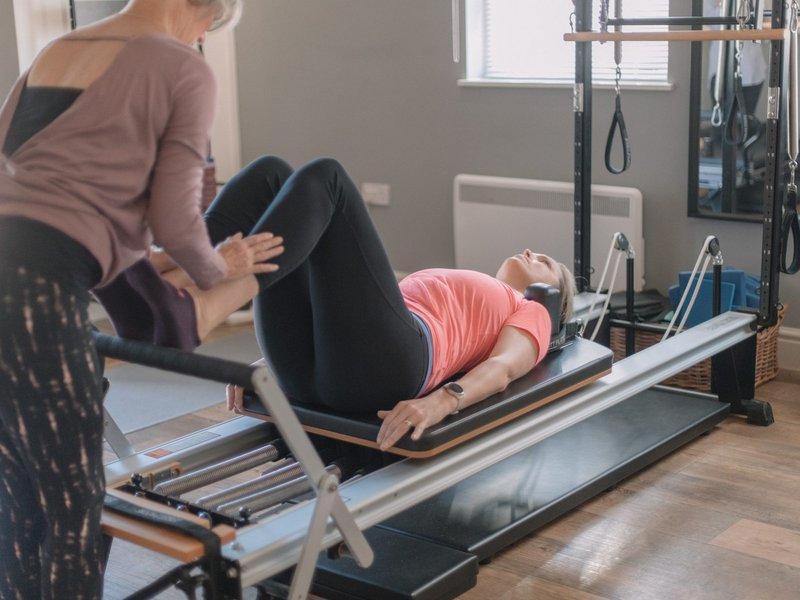
If you’re new to The Old Dairy, you’ll start with a 1-to-1 introductory session (£33) on the reformer. As your practice develops, your instructor will introduce the chair alongside other apparatus like the tower, jumpboard, and spine corrector.
This is how Pilates was designed to be taught – a progressive system where each piece of apparatus builds on the last, guided by an instructor who knows your body, your goals, and your limitations.
Explore More at The Old Dairy
Discover the full range of what our studio offers:
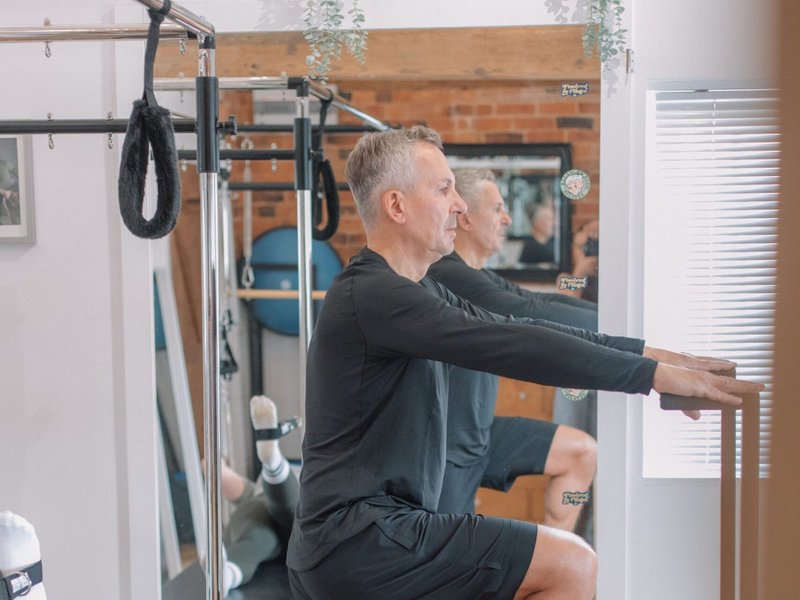
Tower Pilates
Vertical spring work for balance, coordination, and deep stabiliser strength.
New to Pilates?
Start with a 1-to-1 introductory session. No experience needed.
Curious About What Our Studio Has to Offer?
Your journey with us starts with a one-to-one introductory session (£33). Your instructor will take the time to understand your goals, assess how you move, and introduce you to our studio and equipment. From there, we’ll guide you into the right classes for your body and your goals.
Call us: 07766 807184 or 07305 091041
The Old Dairy Pilates Studio • Lamport Manor Farm • Northants • NN6 9HF
Just 15 minutes from Northampton, Kettering & Market Harborough