
Tower Reformer
Build functional strength, improve flexibility, and challenge your body in new ways — with vertical spring resistance that the Reformer alone can’t offer.
What Is Tower Pilates?
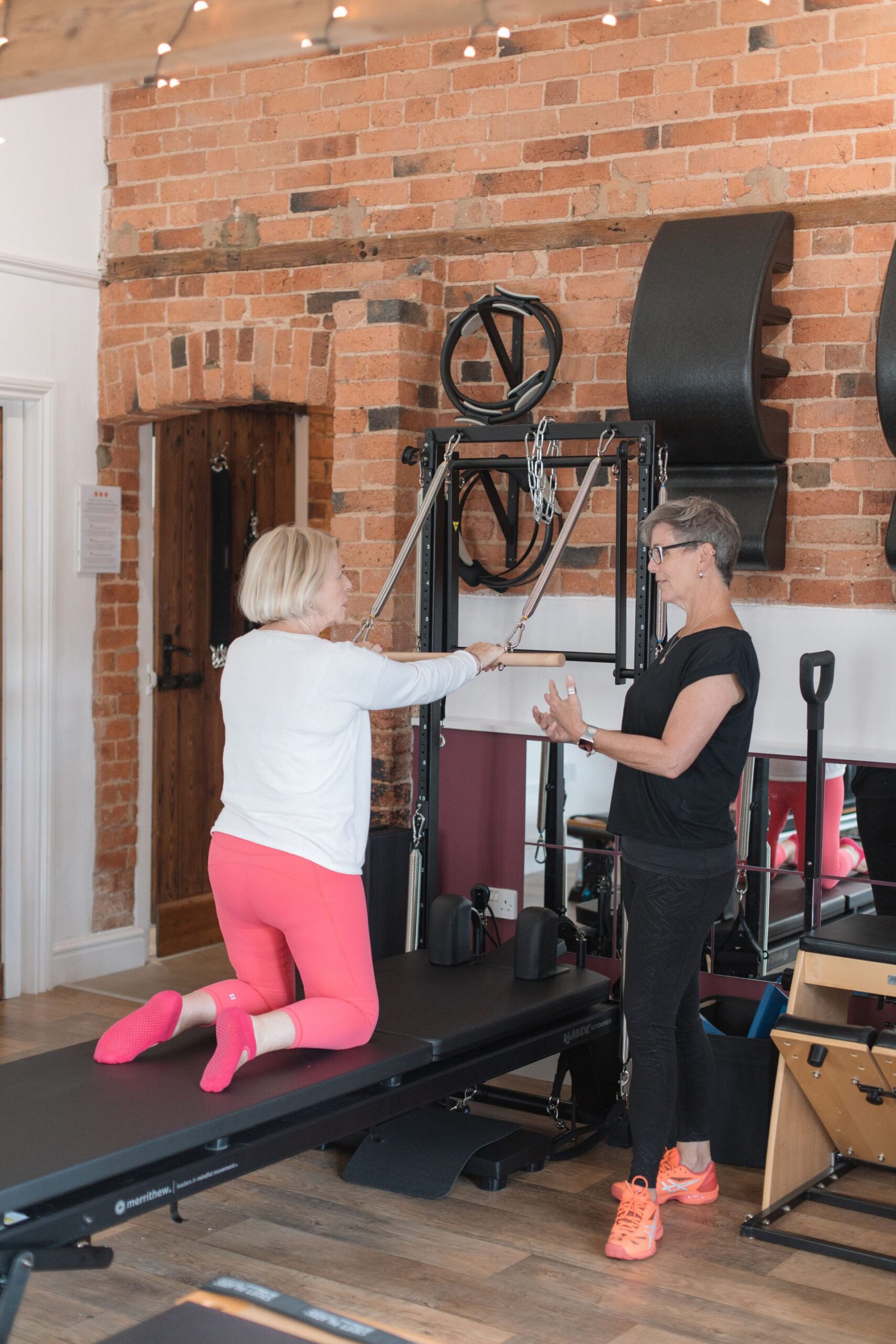
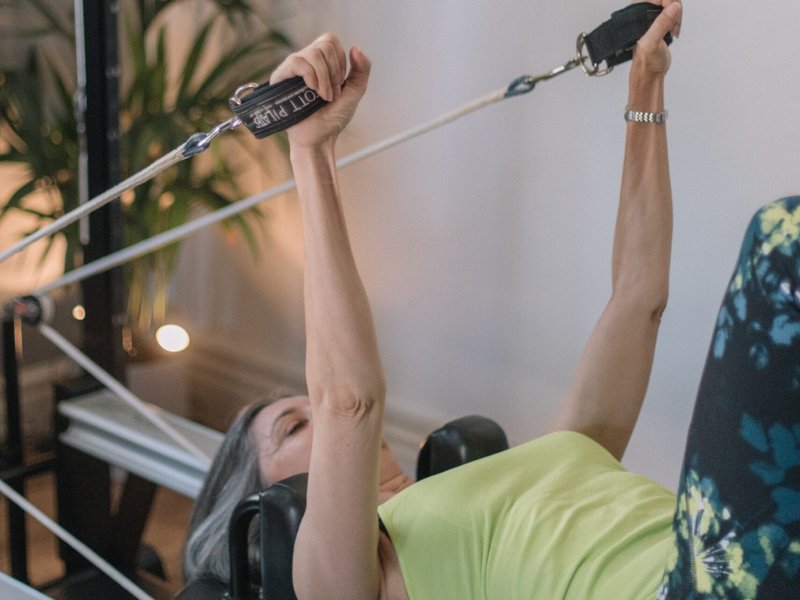
The Tower – also known as the Wall Unit or Half Cadillac – is a vertical spring system that attaches to the end of your Reformer. It adds an entirely new dimension to your Pilates practice by introducing standing work, push-through movements, and spring-loaded leg and arm series that you simply can’t do on the Reformer alone.
Think of the Tower as the bridge between the Reformer and the Cadillac. It uses the same spring principles but in a vertical orientation, which means you’re working against gravity in a completely different way. The result is functional strength – the kind of strength you actually use when you’re standing, walking, lifting, and moving through daily life.
History of the Tower
The Tower evolved directly from Joseph Pilates’ Cadillac. While the full Cadillac is a standalone piece of apparatus with its own raised table, the Tower was developed to bring the same spring-based exercises into a more space-efficient format by mounting the springs, bars, and attachments directly onto the Reformer frame.
This ingenious adaptation means studios can offer the full range of Cadillac-style exercises without needing a separate piece of equipment for each client. At The Old Dairy, our Tower attachments give you access to push-through bars, roll-down bars, leg springs, and arm springs – all within your Reformer session.
Key Tower Exercises & What They Target
Push-Through Bar
A spring-loaded bar that moves in an arc through the frame. Used for deep spinal articulation, hamstring stretches, and chest opening. One of the most therapeutic exercises available – the spring assists your movement, making it accessible even for those with limited mobility.
Leg Springs
Springs attached at the top of the frame, connected to your feet or ankles. Allow you to work your legs in circles, scissors, and walking patterns with the springs providing both resistance and support. Excellent for hip mobility and lower body strength.
Arm Springs
Upper body equivalent of leg springs. Used for chest expansion, shoulder strengthening, rowing series, and back extension. Particularly effective for desk workers and anyone with rounded shoulders or upper back stiffness.
Roll-Down Bar
A bar attached to springs at the top of the frame. You sit tall and slowly roll your spine down, vertebra by vertebra, against spring resistance. Builds deep core control, spinal mobility, and body awareness.
Standing Cat Stretch
Standing at the Tower, you use the push-through bar to articulate through your spine while weight-bearing. Builds functional strength that directly transfers to how you stand and move in everyday life.
Tower vs Reformer: What’s the Difference?
Vertical Springs
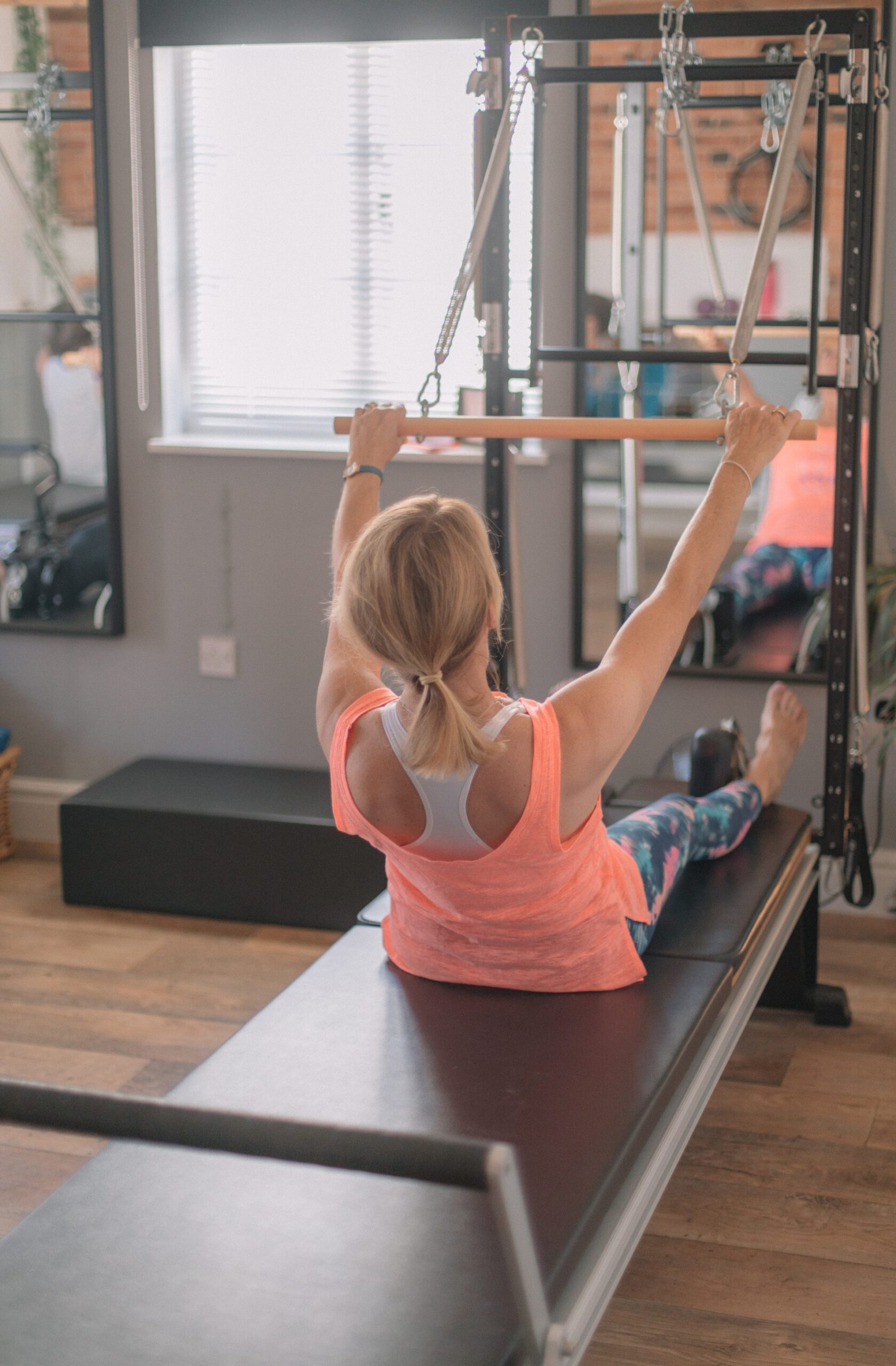
The Reformer works horizontally – you push and pull along the carriage. The Tower adds vertical spring work, challenging your body against gravity in a completely different way.
Standing Work
Many Tower exercises are done standing or kneeling, building the kind of functional strength you use every day. The Reformer is primarily lying or sitting.
Upper Body Focus
The arm springs and push-through bar are exceptional for shoulders, chest, and back – areas that the Reformer addresses less directly.
Who Is Tower Work For?
Tower work is woven into our reformer sessions by your instructor when they believe you’re ready. It’s the natural progression from the Reformer and is suited to:
Level 2+ clients – You’ve built a solid Reformer foundation and you’re ready for new challenges.
Variety seekers – If you love Reformer but want something different to complement your practice.
Flexibility focused – The spring-assisted stretches on the Tower help you achieve ranges of motion that are difficult to reach alone.
Upper body strength – If shoulders, arms, and back are areas you want to develop, the Tower is brilliant.
What Our Members Say
★★★★★
“If you want ‘real’ pilates rather than just gym exercises on a reformer machine it’s brilliant. Absolutely fantastic focus on the details, technique and the guidance.”
– N D
★★★★★
“An amazing studio with such a welcoming environment. Coming to classes puts me in a great mood, combats stress and helps me move and feel better.”
– Rebecca Kneeshaw
How We Incorporate Tower Work at The Old Dairy
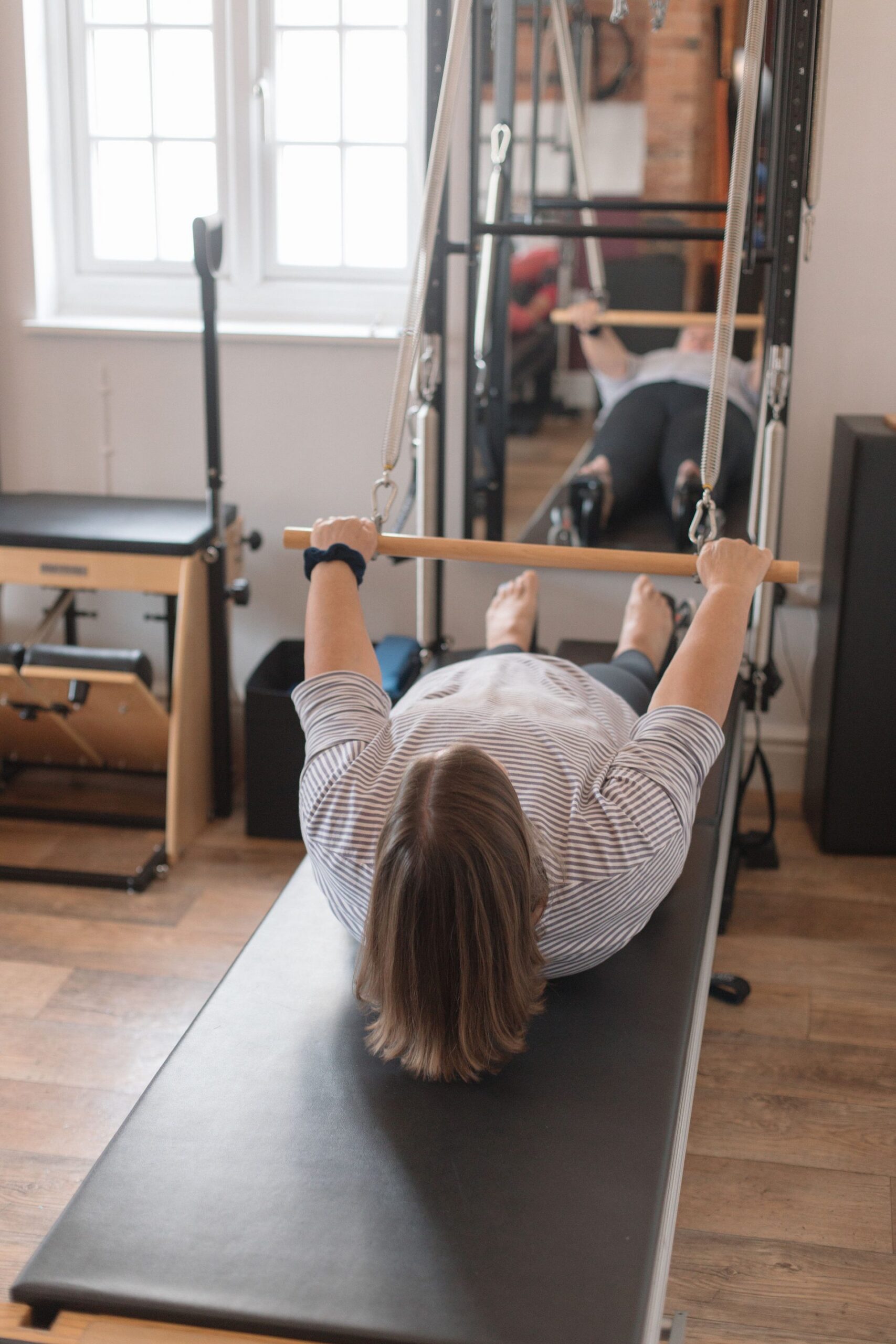
Although we offer one dedicated Tower Hour class each week (Monday, 16:00 – 17:00), tower work is not limited to that single session. It is a technique that our APPI-qualified instructors incorporate into reformer classes based on the group’s ability, experience, and what their bodies need on that particular day.
This is deliberate. We believe that a well-rounded Pilates session should draw from the full range of equipment and techniques available – reformer, tower, jumpboard, seated work, and more. Rather than separating everything into individual classes, our instructors weave tower exercises into balanced sessions that also include strength work, flexibility, and controlled movements.
With a maximum of 4 people per session, your instructor knows exactly where each person is in their Pilates journey. They will introduce tower work when your core stability and technique are ready, and they will progress the difficulty as you improve. This personalised approach is only possible because of our small class sizes.
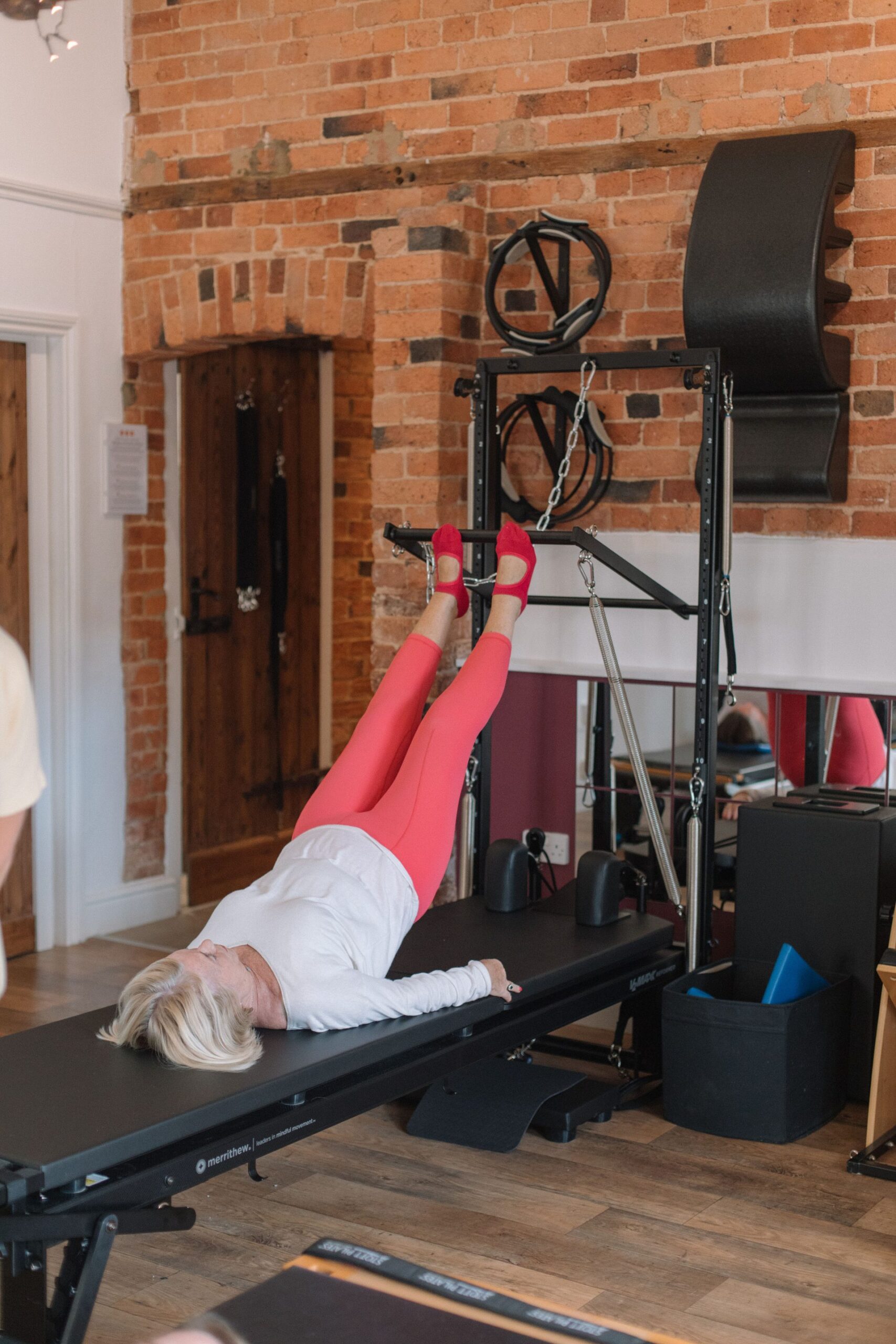
Benefits of Tower Work
The Tower (also known as the Wall Unit or Springboard) offers something the Reformer alone cannot – vertical, standing-based exercise against spring resistance. This creates unique training benefits that complement your Reformer work.
Most Reformer exercises are performed lying or sitting. Tower work puts you on your feet, challenging your balance and proprioception against spring resistance in ways that directly transfer to everyday life – walking on uneven ground, climbing stairs, reaching overhead, and reacting to unexpected changes in balance.
The Tower’s springs pull from above, below, and horizontally, creating resistance patterns that are impossible to replicate on the Reformer. This variety is crucial for building well-rounded, functional strength. The push-through bar, for example, combines upper body strength with spinal articulation in a way that’s entirely unique to the Tower.
The Tower is exceptional for shoulder work. The arm springs allow controlled, progressive strengthening through the full range of shoulder movement – rotation, elevation, depression, and stabilisation. For anyone recovering from frozen shoulder, rotator cuff issues, or post-surgical rehabilitation, the Tower provides resistance that can be finely tuned to your current ability and progressed as you heal.
Real life demands pushing and pulling in upright positions – opening doors, lifting shopping, carrying children, gardening. The Tower’s springs allow you to train these exact movement patterns against progressive resistance, building the kind of practical, usable strength that makes everyday activities easier and protects your joints from injury.
Who Benefits Most from Tower Work
While everyone benefits from the variety that Tower exercises bring to their Pilates practice, certain groups find it particularly valuable:
Anyone with balance concerns – If you feel unsteady on your feet, worry about falling, or notice your balance declining, the Tower’s standing exercises with spring support provide a safe way to challenge and rebuild your balance progressively. The springs offer resistance but also gentle support – you’re challenged but never at risk.
Shoulder injuries – Frozen shoulder, rotator cuff tears, impingement, and post-surgical shoulders all respond well to the Tower’s arm springs. The ability to adjust resistance precisely and work through partial ranges of movement makes it an ideal rehabilitation tool. Many of our members with shoulder issues find the Tower is where they make their biggest gains.
Athletes who need vertical strength – Climbers, swimmers, tennis players, and anyone whose sport demands overhead or vertical pulling and pushing will find the Tower invaluable. The spring resistance can be set heavy enough to genuinely challenge strong athletes while maintaining the controlled, joint-safe movement that Pilates is known for.
Desk workers with rounded shoulders – If you spend hours at a computer, your chest muscles shorten and your upper back rounds. The Tower’s push-through bar and arm springs open the chest, strengthen the upper back, and retrain your posture – undoing the damage that desk work causes day after day. Many of our members notice a visible difference in their posture within weeks of starting Tower work.
At The Old Dairy, Tower work is integrated into our Reformer classes based on your level and needs – your instructor selects the right exercises for you on any given day.
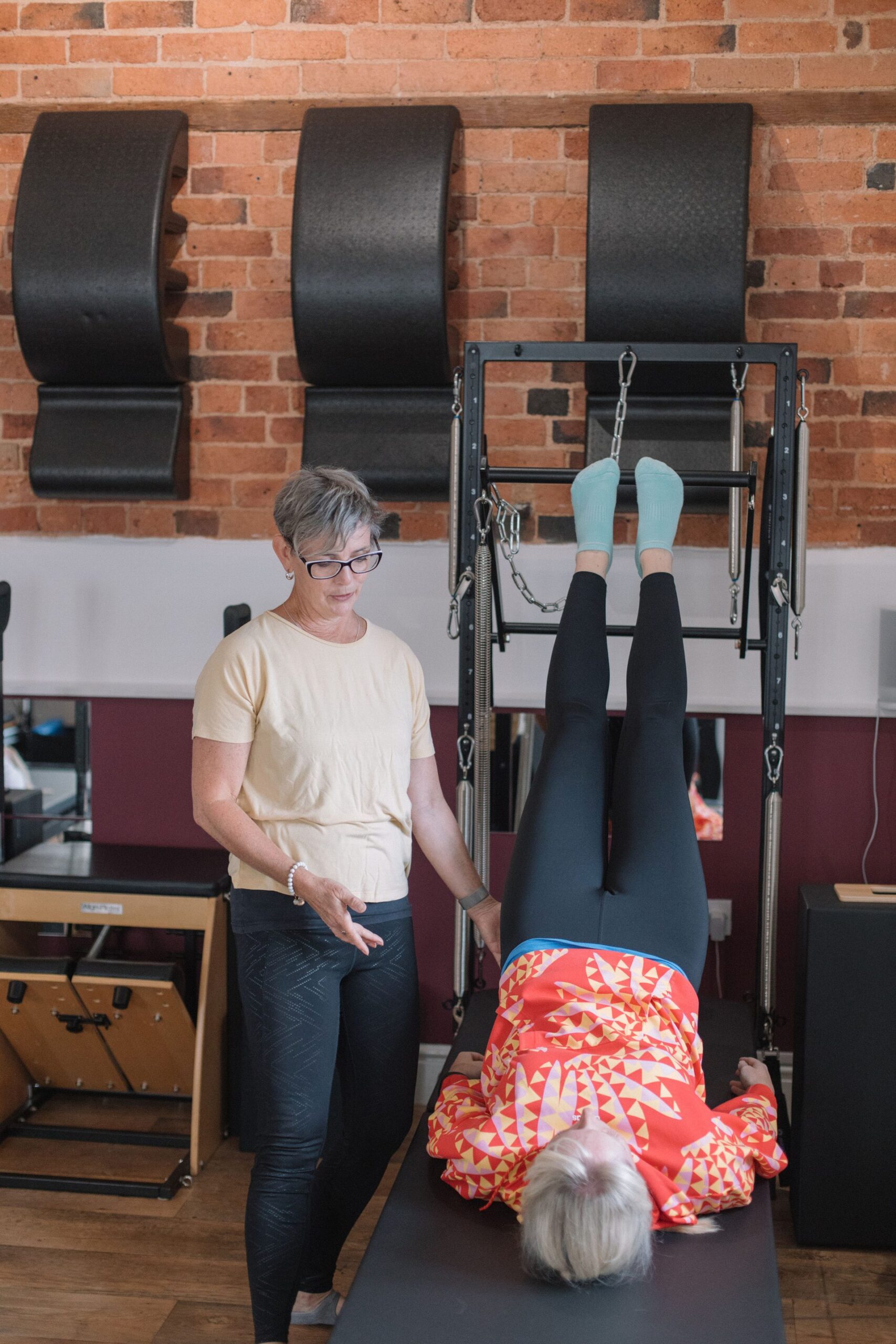
Tower Pilates at Our Northampton Studio
Tower work is available at The Old Dairy Pilates Studio, based at Lamport Manor Farm near Northampton. Our members travel from across Northamptonshire, including Kettering, Wellingborough, and Market Harborough. Tower exercises are incorporated into your classes based on your level and goals.
Explore More at The Old Dairy
Discover the full range of what our studio offers:
New to Pilates?
Start with a 1-to-1 introductory session. No experience needed.
Ready to Discover What Pilates Can Do?
Your journey with us starts with a one-to-one introductory session (£33). Your instructor will take the time to understand your goals, assess how you move, and introduce you to our studio and equipment. From there, we’ll guide you into the right classes for your body and your goals.
Call us: 07766 807184 or 07305 091041
The Old Dairy Pilates Studio • Lamport Manor Farm • Northants • NN6 9HF
Just 15 minutes from Northampton, Kettering & Market Harborough