26 July 2026
Wunda chair vs reformer: what's the difference?
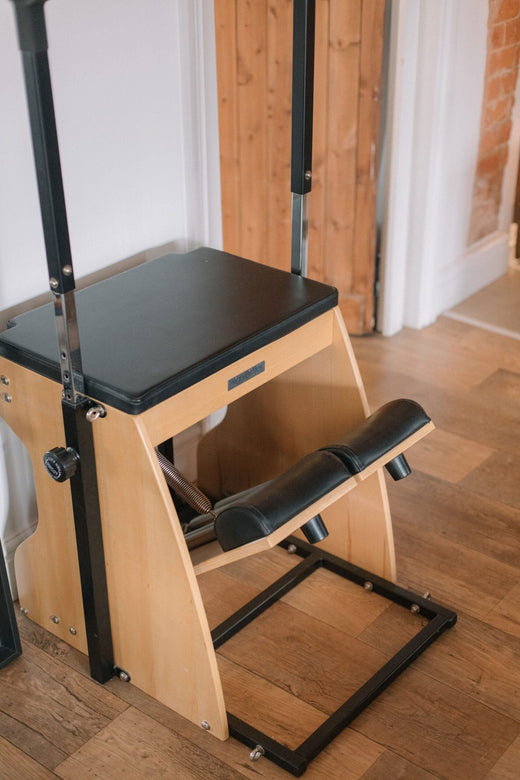
If you have started to explore the wider world of Pilates apparatus, you will have met two very different machines: the reformer and the Wunda (or Pilates) chair. They look nothing alike, and that is exactly the point, they do different jobs, and together they make a brilliant pair.
The reformer: supported and expansive
The reformer is a long, sliding bed on springs. It supports your whole body while giving smooth, adjustable resistance through a big, generous range of movement. That support is why it suits everyone, from first-timers to people rebuilding after injury, and why so much strength and mobility work happens on it.
The Wunda chair: compact and demanding
The Pilates chair is the reformer's opposite in almost every way: small, upright and far less forgiving. With a single spring-loaded pedal and a tiny, stable base, it asks you to control the movement yourself, with much less support. Where the reformer gives, the chair challenges, and it is superb for upright strength, balance and single-sided work.
Why use both?
The reformer builds strength through length and support; the chair teaches you to own that strength, upright and unaided, much closer to how you move in real life. One opens up range and confidence, the other sharpens control and stability. Trained across both, your body gets the best of each.
Feel the difference
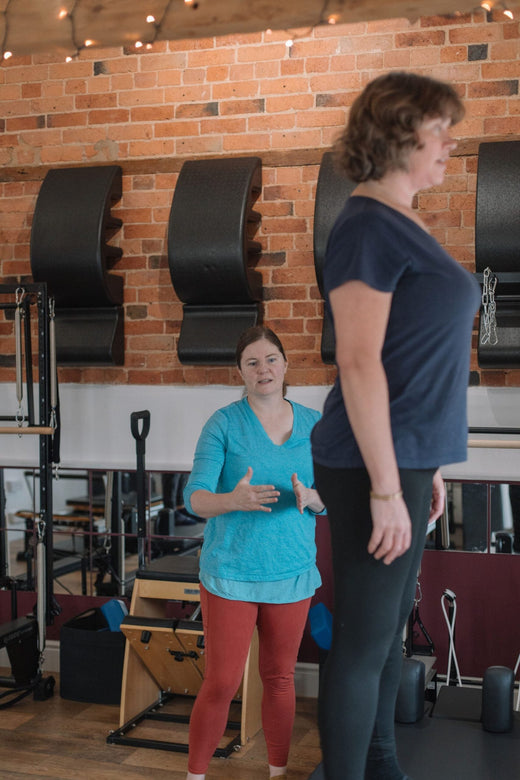
In our small classes, your instructor draws from the whole studio, choosing the right apparatus for your body on the day. Come and feel how the reformer and the chair complement each other, we will show you, gently, what each one can do.