
Apparatus
Jumpboard Reformer
Combine the precision of Pilates with the exhilaration of cardio. Low impact. High results. And a maximum of 4 per session.
Book your intro session
What Is the Jumpboard?
The jumpboard is a flat, padded board that attaches to the end of the Pilates Reformer, replacing the standard footbar. It transforms the reformer into a horizontal jumping platform – allowing you to perform dynamic, plyometric movements while lying on your back with your spine fully supported.
Think of it as jumping without the impact. You push off the board with your feet, propelling the carriage backward, and then land softly as the springs absorb the force. The result is a cardiovascular workout that gets your heart rate up and your muscles burning, all while protecting your joints from the repetitive pounding of traditional cardio exercises like running or HIIT.
Jumpboard Pilates combines everything that makes reformer Pilates effective – spring resistance, core engagement, precise alignment – with the added challenge of speed, rhythm, and explosive power. It is one of the most exhilarating ways to train on the reformer, and our members consistently tell us it is their favourite part of a session.
How Does the Jumpboard Work?
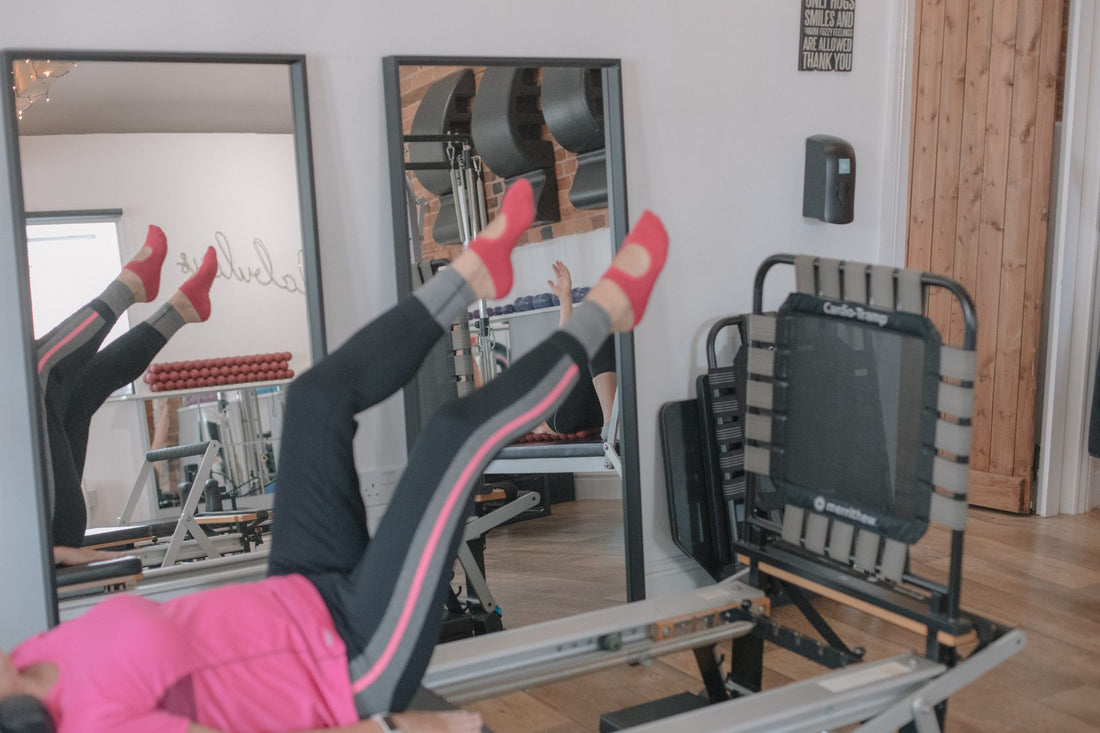
You lie on your back on the reformer carriage with your feet pressing against the jumpboard. When you push off, you “jump” horizontally – the carriage slides away from the board and then returns as you land. The springs provide resistance on the push and control on the landing, creating a uniquely smooth, gravity-reduced jumping experience.
Because you are lying down, your spine is completely supported throughout the movement. There is no axial loading (weight pressing down through your spine), which means people with back problems, joint issues, or conditions that make upright jumping painful can often perform jumpboard work comfortably.
Your instructor controls the spring tension to match your ability. Lighter springs make the jumps faster and more cardiovascular; heavier springs increase resistance for strength-focused work. The combination of jumping patterns, foot positions (parallel, turned out, single leg), and spring settings creates an almost infinite variety of exercises.
Who Is Jumpboard Training For?
Jumpboard work is suitable for a wide range of people, and at The Old Dairy, your instructor will introduce it when your technique and core control are ready. It is particularly popular with:
Runners and athletes who want cross-training that builds power and cardiovascular fitness without adding more impact to already-stressed joints. Many runners find that jumpboard work improves their leg speed and endurance while giving their bodies a break from the road.
People who want a cardio element in their Pilates practice. If you find standard reformer sessions too slow or want to feel more physically challenged, jumpboard work adds the intensity you are looking for while maintaining all the precision and control that defines Pilates.
Anyone with joint concerns who has been told to avoid high-impact exercise. The supported position and spring-controlled landing make jumpboard one of the safest ways to perform plyometric (jumping) movements. Many of our members with knee or hip issues are able to jump on the board when they cannot jump on the floor.
People who enjoy variety. The jumpboard opens up a whole new category of exercises – from rhythmic jumping patterns to single-leg power work to fast-paced sequences that challenge your coordination and cardiovascular system simultaneously.
Jumpboard Training at Our Northampton Studio
Our jumpboard sessions take place at The Old Dairy Pilates Studio, Lamport Manor Farm, near Northampton. Members travel from across Northamptonshire including Kettering, Wellingborough, and the surrounding villages to train with us. The jumpboard is integrated into our group reformer classes as part of your regular training.
Jumpboard vs Traditional Cardio
How does jumpboard compare to running, cycling, or a HIIT class? The short answer: you get comparable cardiovascular benefits with a fraction of the joint stress.
When you run, each footstrike sends a force of 2–3 times your bodyweight through your ankles, knees, and hips.
On the jumpboard, you are jumping horizontally against spring resistance rather than vertically against gravity. The springs decelerate your landing, so the impact force is dramatically reduced. Your spine is supported by the carriage, removing the compressive loading that upright exercise creates. Studies on reformer-based plyometrics have shown that heart rate responses during jumpboard sequences are comparable to moderate-intensity running – but without the associated injury risk.
At The Old Dairy, we see the jumpboard as the perfect complement to standard reformer work. It adds the cardiovascular training that many of our members want, without compromising the joint-friendly, alignment-focused approach that makes Pilates so effective.
How We Incorporate Jumpboard at The Old Dairy
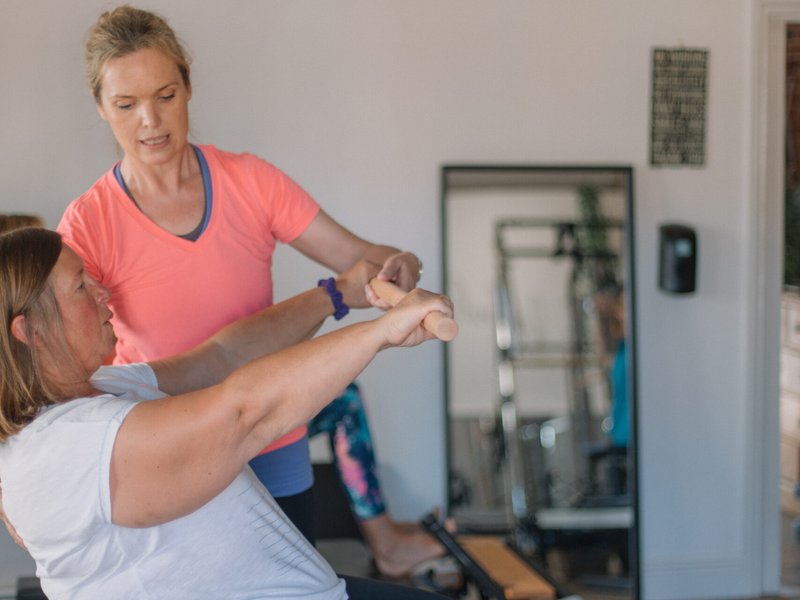
An important distinction: jumpboard is not a separate class at The Old Dairy. It is a technique that our APPI qualified instructors incorporate into reformer sessions based on the group’s ability, experience, and what their bodies need on that particular day.
This is deliberate. We believe that a well-rounded Pilates session should draw from the full range of equipment and techniques available – reformer, jumpboard, tower, seated work, and more. Rather than locking you into a “jumpboard class” where the entire hour is spent jumping, our instructors weave jumpboard sequences into a balanced session that also includes strength work, flexibility, and controlled movements.
With a maximum of 4 people per session, your instructor knows exactly where each person is in their Pilates journey. They will introduce jumpboard work when your core stability and technique are ready, and they will progress the difficulty as you improve. This personalised approach is only possible because of our small class sizes – and it is why our members get better results than they would in a large studio offering generic “jumpboard classes.”
Ready to move?
New to the studio? Every journey starts with a personal 1:1 introductory session, we'll see how you move and set you up for the right classes.
1:1 with an instructor · no obligation to join · everybody welcome