
Reformer Pilates
What Is a Reformer?
The reformer looks like precision engineering, because it is. Here's a plain-English tour of the machine at the heart of everything we do, part by part, so you know exactly what you're looking at before your first class.
Book your intro session
One machine, endless possibilities
A reformer is a low, bed-like frame with a padded, wheeled platform, the carriage, that glides smoothly back and forth along it. You lie, sit, kneel or stand on it and move the carriage with your own strength against adjustable spring resistance. That simple idea is what makes it so versatile: the same machine can give a gentle, supported session or a strong, full-body workout, just by changing how you use it. Here’s what you’re actually looking at.
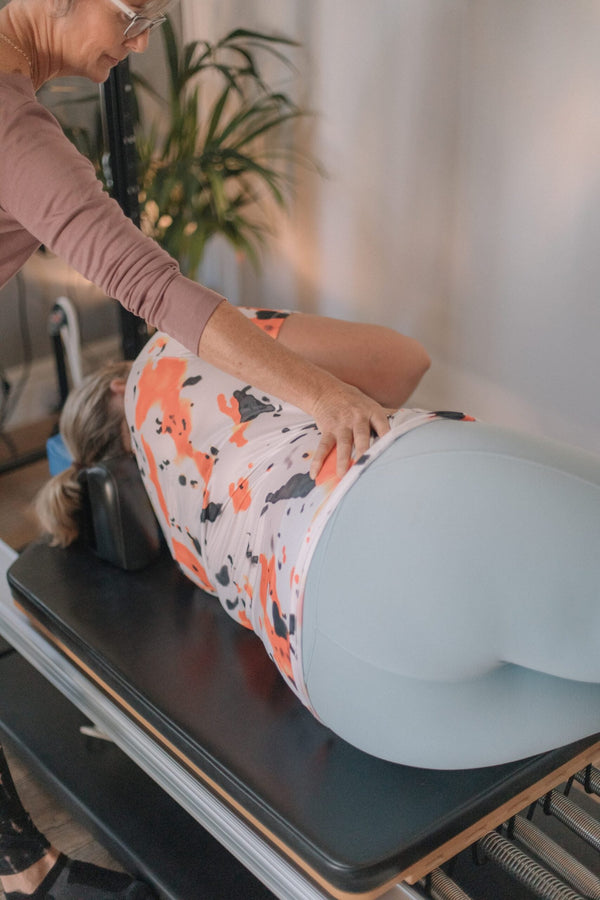
The carriage (the ‘bed’)
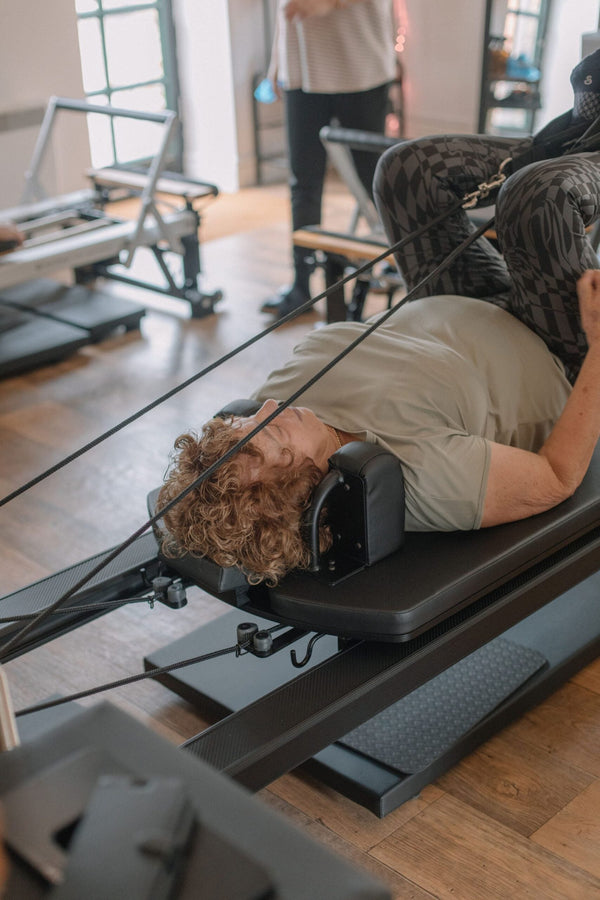
The padded platform you lie, sit or kneel on. It runs on wheels along the frame and is the part that actually moves, every exercise is really about controlling how, and how far, the carriage travels.
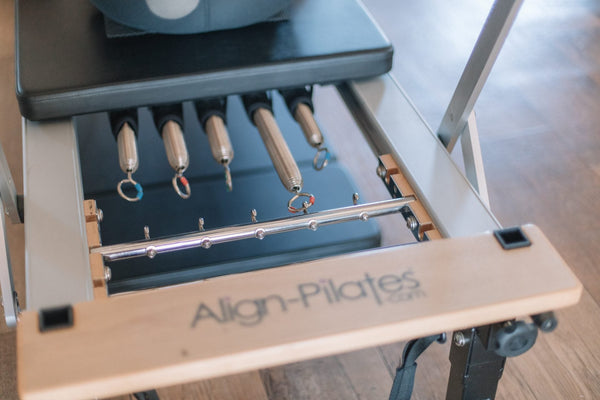
The springs
Tucked under the carriage are colour-coded springs. Clip on more and the carriage is heavier to move; fewer, and it’s lighter. This is how your instructor dials in exactly the right resistance for your body on the day, more support where you need it, more challenge where you’re ready.
The footbar
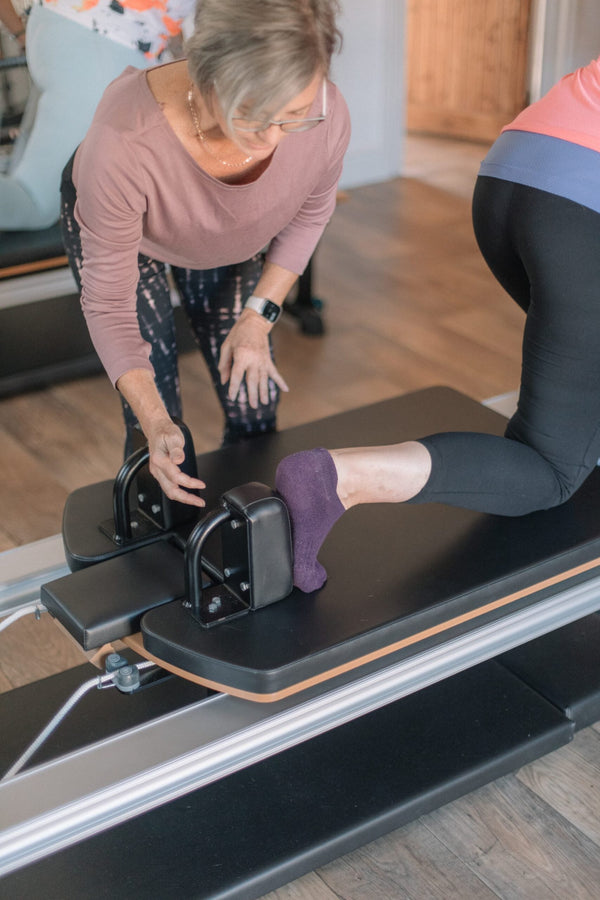
An adjustable bar at the end of the reformer. You press into it with your feet or your hands to move the carriage, and it repositions to suit each exercise and each person’s height, so the same bar works for footwork, arm work and plenty in between.
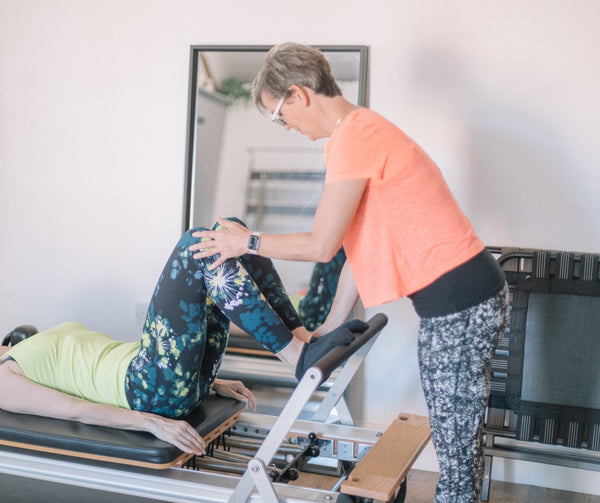
The shoulder blocks
A pair of padded blocks near the top of the carriage. They stop you sliding as the carriage moves and help you find the right placement for each exercise, lying, kneeling or sitting. Simple, but they keep you secure and correctly aligned.
The straps & loops
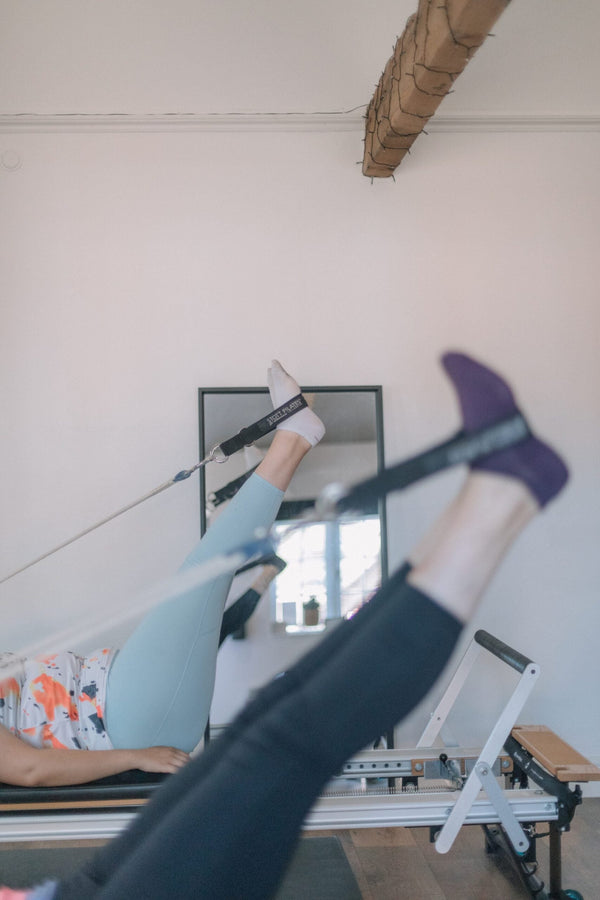
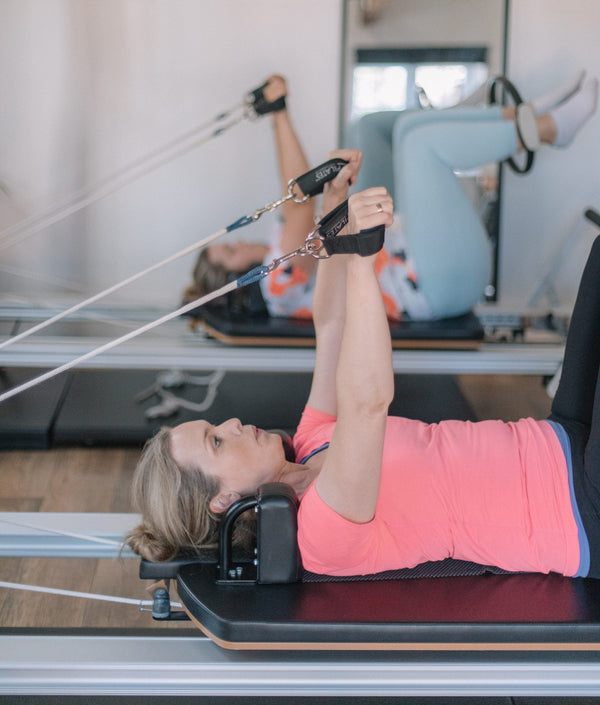
Long ropes running through pulleys, ending in handles and padded loops. Hold them in your hands or slip your feet into them, and the same springs can now work your arms, legs and core through a huge range of movement.
The box (an add-on)
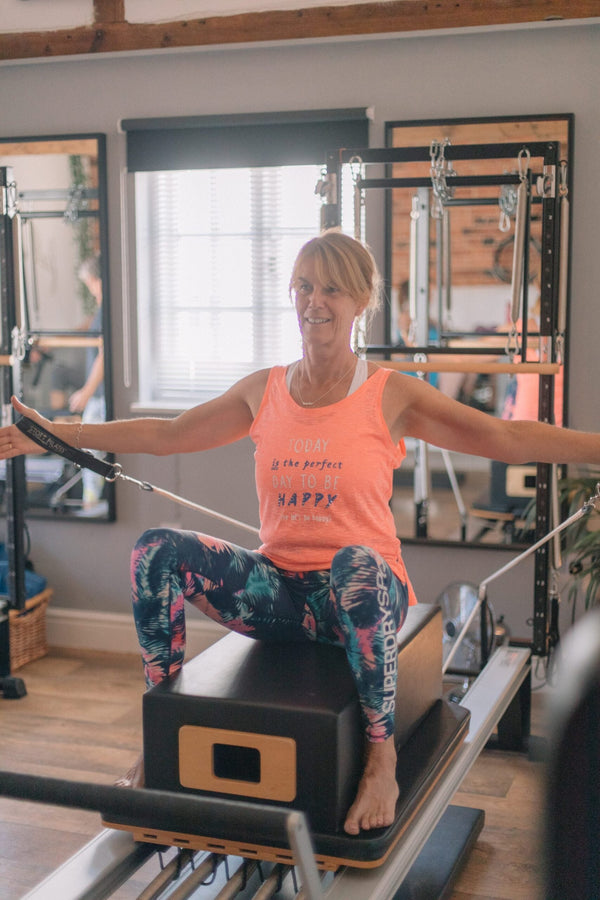
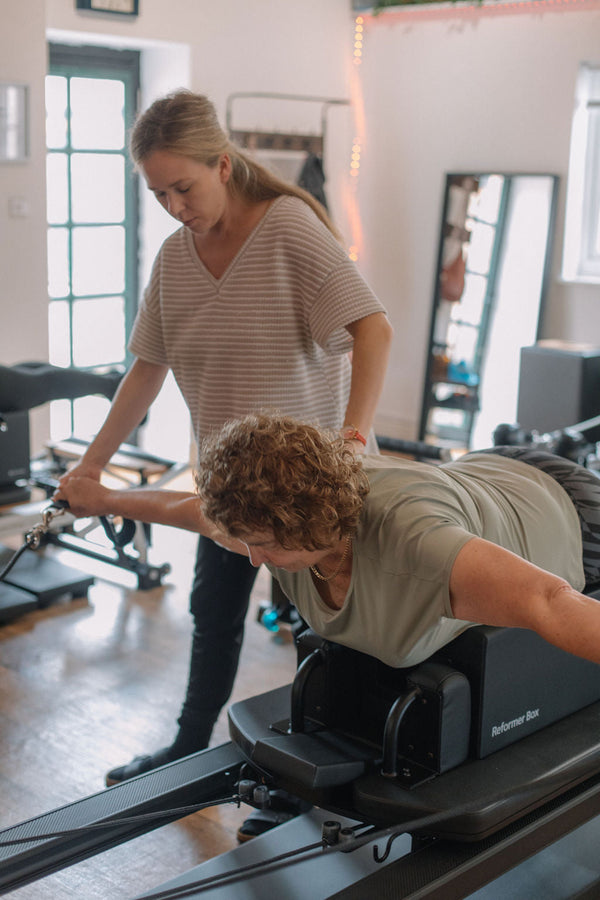
A sturdy padded box that sits on top of the carriage. Sit, lie or kneel on it and a whole new set of exercises opens up, seated twists, back extension, deep abdominal work, all still powered by the springs.
The jump board (an add-on)
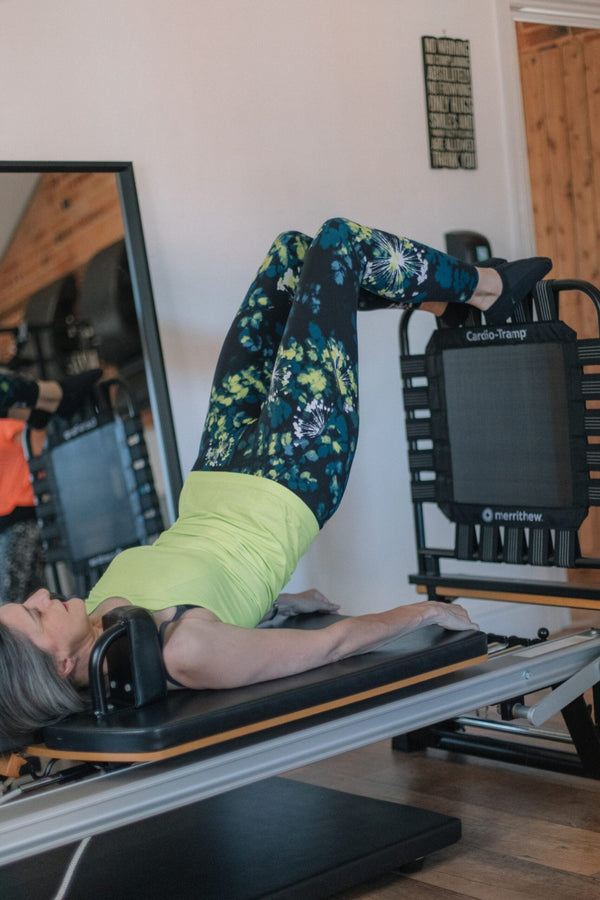
A cushioned board that clips onto the end of the reformer. Lying on your back, you ‘jump’ against it, cardio and power training with almost no impact through your joints, because you’re fully supported the whole time.
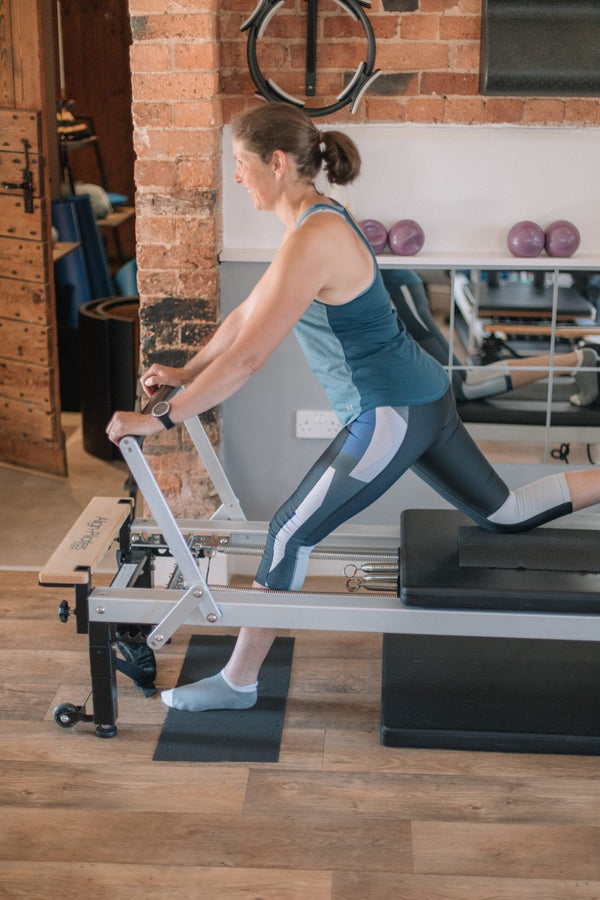
The platform extender
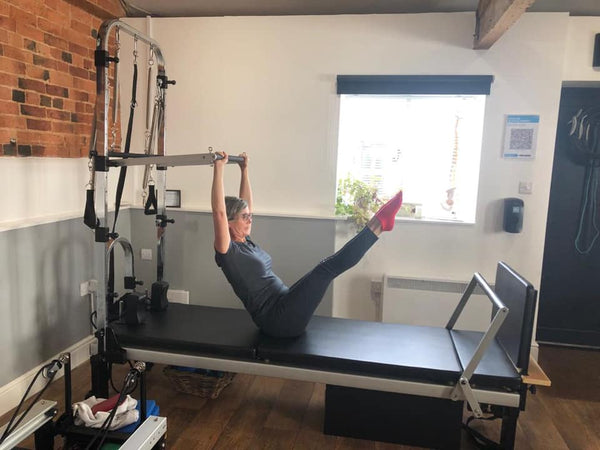
A sturdy platform that fixes onto the end of the reformer and holds the carriage still. With the carriage locked in place you get a stable base for standing, kneeling and lunging work, bridging mat and moving-carriage exercises, and adding a whole extra layer of standing strength and balance.
Why it works for every body
Because the resistance, the attachments and your position all adjust, the reformer meets you exactly where you are, rebuilding after injury, brand new to movement, or an athlete chasing control and strength. Same machine, endless ways to use it. That’s the beauty of reformer Pilates, and why, whatever your level, you’ll get to use the full studio.