
Classes
Reformer Pilates
Expert-led reformer classes with a maximum of 4 people. Three levels. 1:1 attention. And real results.
Book your intro session
What Is Reformer Pilates?
Reformer Pilates is performed on a specialised piece of equipment called the reformer – a sliding carriage that moves back and forth along a frame, connected to a set of springs that provide adjustable resistance.
Unlike mat Pilates, where you work solely against gravity using your own bodyweight, the reformer adds spring-loaded resistance to every movement. This means your muscles are working harder throughout the entire range of motion – both on the push and the pull. The carriage slides freely, so your core has to stabilise your body constantly, building deep strength you simply cannot achieve on a mat.
The Reformer also allows exercises to be performed in positions that are impossible on a mat – lying, sitting, kneeling, and standing – targeting muscles from angles that mat work cannot reach. For people with injuries, joint problems, or mobility issues, the supported positions make the reformer significantly safer and more effective than floor-based exercise.
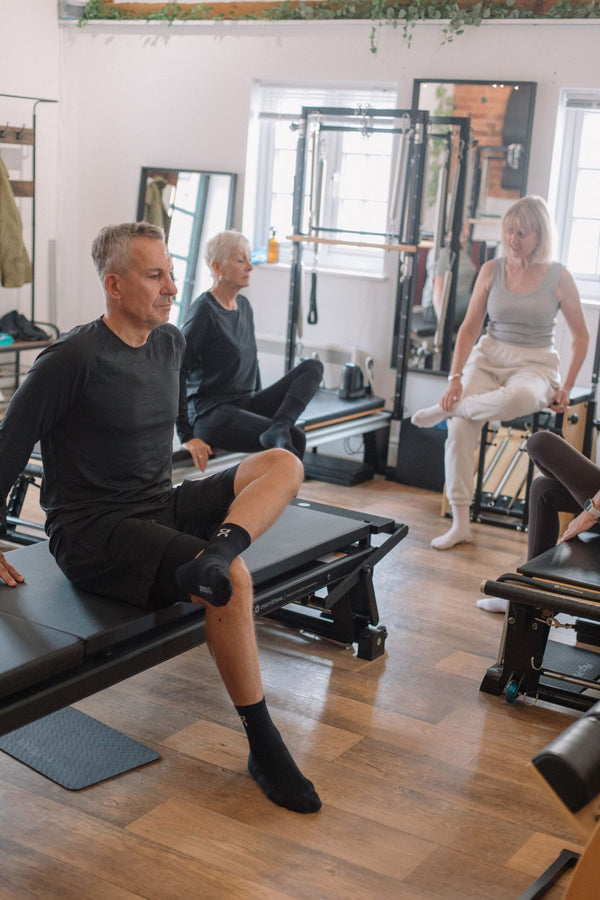
At The Old Dairy Pilates Studio in Northampton, every reformer class has a maximum of 4 people. That means your instructor can watch your form, correct your alignment, and progress you at the right pace – something that is simply not possible in the 20-person reformer classes you will find at commercial gyms.
The History of the reformer
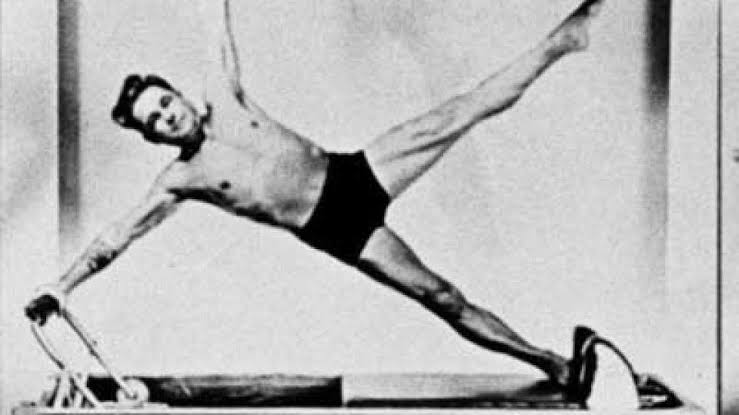
The Pilates Reformer was invented by Joseph Pilates in the early 20th century. Originally called the Universal Reformer, it was born out of necessity – during World War I, Pilates was interned on the Isle of Man, where he began rigging springs from hospital beds to help bedridden patients exercise while lying down.
Those improvised bed-spring machines became the prototype for the reformer we use today. Joseph Pilates discovered that spring resistance was uniquely effective: it challenged muscles throughout the entire movement, not just at the point of maximum effort. The sliding carriage meant patients could exercise without bearing weight through injured joints, making rehabilitation safer and faster.
When Pilates emigrated to New York in the 1920s, he refined the design and opened his first studio. Professional dancers were among his earliest clients, drawn by the reformer’s ability to build long, lean strength without bulk. Over the following decades, the method spread from rehabilitation clinics to dance studios, and eventually into mainstream fitness.
Today, the reformer remains the centrepiece of authentic Pilates practice. At The Old Dairy, we honour that tradition – using the reformer exactly as Joseph Pilates intended: as a precision tool for building strength, flexibility, and control, guided by a qualified instructor who understands your body.
The 3 Levels at The Old Dairy
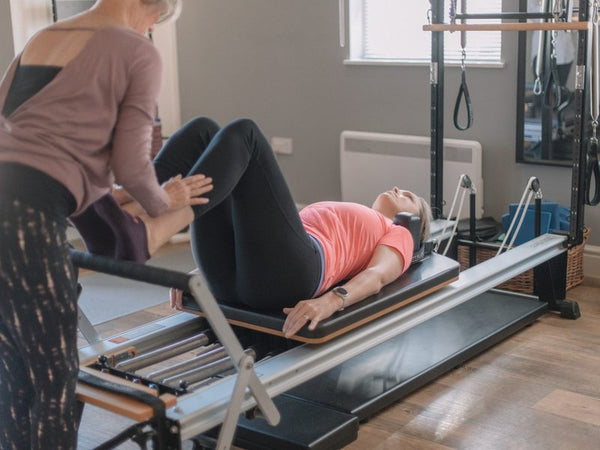
We run three clearly defined levels so that every session is pitched perfectly for each group. Your introductory session (£33, always 1:1) determines which level is right for you.
Level 1 – Beginner
Level 1 is where everyone starts. These classes focus on the foundational principles of Pilates: breathing, alignment, pelvic stability, and core engagement. You will learn the essential reformer exercises at a pace that lets you build confidence and develop correct technique. Springs are set to provide support rather than maximum challenge, and your instructor will ensure you understand every movement before progressing. Level 1 is also ideal for anyone returning after a break or managing a long-term condition.
Level 2 – Intermediate
Once your instructor is confident in your technique and core control, you will move to Level 2. Here, the exercises become more complex – longer lever arms, reduced spring support, and multi-directional movements that demand greater coordination. Techniques such as jumpboard work, tower exercises, and seated reformer may be incorporated based on the group’s ability and experience. You will feel a significant increase in challenge and will start to notice real changes in your strength, posture, and flexibility.
Level 3 – Advanced
Level 3 is for experienced practitioners who have demonstrated mastery of the intermediate repertoire. These sessions include the most demanding exercises in the Pilates method – full-range movements, minimal spring assistance, complex sequencing, and advanced variations that require exceptional control and body awareness. Classical Reformer sessions at Level 2/3 follow the original Joseph Pilates exercise order for a truly authentic experience.
What You’ll Do on the Reformer
Every session at The Old Dairy draws from a broad repertoire of movements. Your instructor selects what’s right for you based on your level, your goals, and how your body is responding that day. Here are the types of movement you can expect:
Lower Body & Footwork
Sessions typically begin with spring-loaded leg and foot work – pressing, pointing, and flexing against resistance to warm up the legs, activate the glutes, and establish the pelvic alignment that underpins everything that follows.
Core & Spinal Work
The reformer is built for core training. Whether you’re stabilising against the moving carriage, articulating through the spine, or holding position under load, your deep abdominal muscles and pelvic floor are constantly engaged.
Upper Body & Arms
Using the straps, springs, and your own body weight, you’ll build strength through the shoulders, chest, and arms – always with an emphasis on control and correct alignment rather than heavy loading.
Stretching & Mobility
The sliding carriage allows for deep, supported stretches that are difficult to achieve on the floor. Hip flexor opening, hamstring lengthening, and thoracic mobility work are woven into every session.
Balance & Standing Work
As you progress, your instructor will introduce standing exercises on the reformer – challenging your balance, proprioception, and functional strength in ways that transfer directly to everyday movement.
Coordination & Flow
At higher levels, exercises combine multiple movement patterns – arms, legs, and breath working together in flowing sequences that build cardiovascular endurance alongside strength and control.
Reformer Pilates Near You in Northampton
Based at Lamport Manor Farm near Northampton, our purpose-built studio welcomes members from across Northamptonshire, including Kettering, Wellingborough, and Market Harborough. Every reformer Pilates class is kept to a maximum of four people, so you always receive hands-on guidance from your instructor.
Reformer vs Mat Pilates
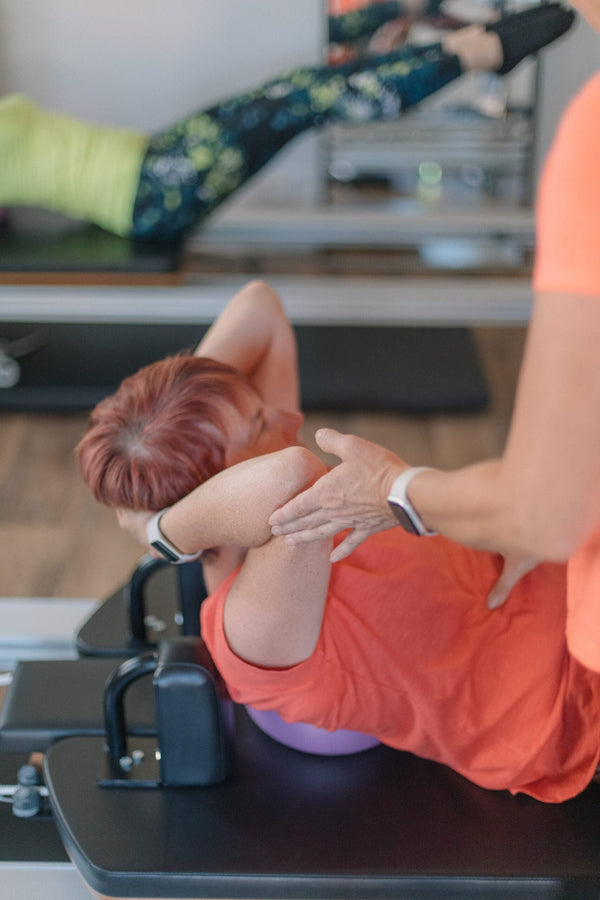
If you have only tried mat Pilates, stepping onto a reformer for the first time is a revelation. Here is why Reformer Pilates delivers results that mat classes simply cannot match:
Spring resistance works muscles through the entire range. On a mat, gravity is your only resistance – and it only works in one direction. The Reformer’s springs create resistance on every push and every pull, meaning your muscles are under tension for the full duration of each exercise. This builds strength faster and more evenly.
Supported positions protect your joints. Many mat exercises require you to hold your body weight in positions that can stress the wrists, neck, and lower back. The Reformer’s carriage supports your body, allowing you to work hard without overloading vulnerable joints. This is why Reformer Pilates is widely used in physiotherapy and rehabilitation.
Greater exercise variety. This variety means your body is constantly challenged in new ways, preventing the plateaus that are common with mat-only practice.
Measurable progression. With adjustable springs, your instructor can precisely control the resistance for each exercise. As you get stronger, the springs change – giving you a clear, objective measure of your progress that mat Pilates cannot provide.
At The Old Dairy, we believe the reformer is the most effective way to practise Pilates, and we teach it in a way the big gyms can’t. We’re a small, personal, dedicated studio, not a high-capacity fitness floor: every class is capped at four, and our instructors bring well over 15 years of experience to the room. The studio itself is five years young, and in that time our members have come back to us year after year, that quiet, steady loyalty is what we’re proudest of, far more than any headcount.
Why Maximum 4 Per Class Matters
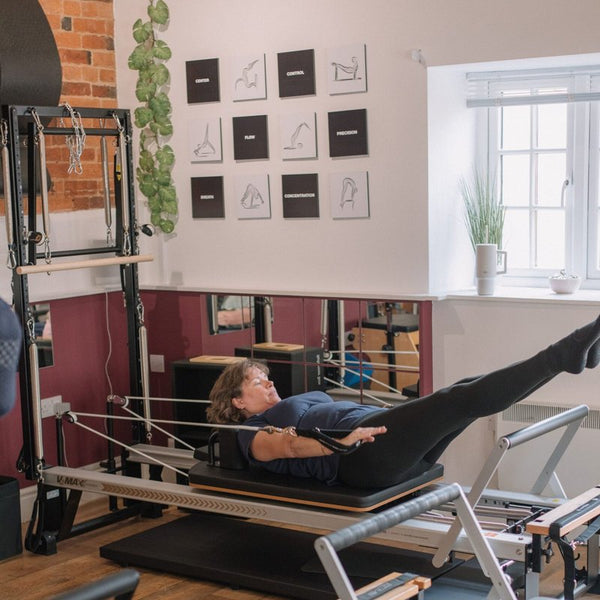
Walk into most reformer studios and you will find 12, 16, even 20 reformers lined up in rows. The instructor stands at the front, calls out exercises, and hopes everyone keeps up. There is no time to check your form, correct your alignment, or adapt exercises to your needs.
At The Old Dairy, we cap every class at 4 people. That is not a marketing gimmick – it is fundamental to how Pilates should be taught. With only 4 in the room, your instructor can:
All our instructors are APPI qualified (Australian Physiotherapy and Pilates Institute) – the gold standard in Pilates education. APPI training is grounded in physiotherapy and anatomy, meaning our instructors understand not just the exercises, but the science behind them.
Ready to move?
New to the studio? Every journey starts with a personal 1:1 introductory session, we'll see how you move and set you up for the right classes.
1:1 with an instructor · no obligation to join · everybody welcome