
Our Equipment
Pilates Apparatus & Equipment
Beyond the reformer, the specialist apparatus and props our instructors use to deepen your practice, challenge your body and speed your progress.

Everything else we use
Alongside the reformers, tower, cadillac and chair, our studio is stocked with a wide range of apparatus and props, from the ladder barrel to spine fitters, balls, bands and the jump board. We teach Pilates as a complete system, the way Joseph Pilates intended, and with a maximum of four people per class there’s always the chance to bring in exactly the right piece for what your body needs that day. Here’s what else you’ll find in the studio.
Ladder Barrel
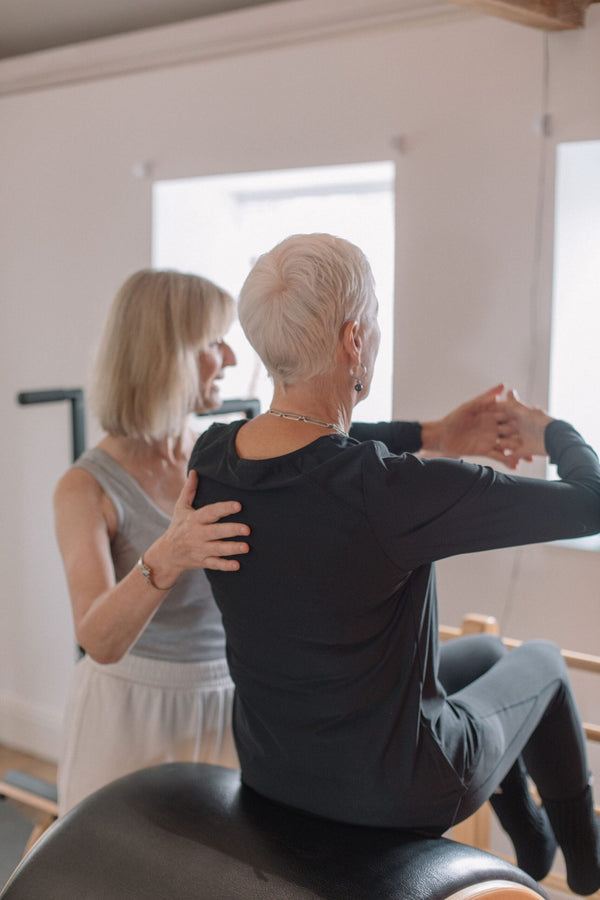
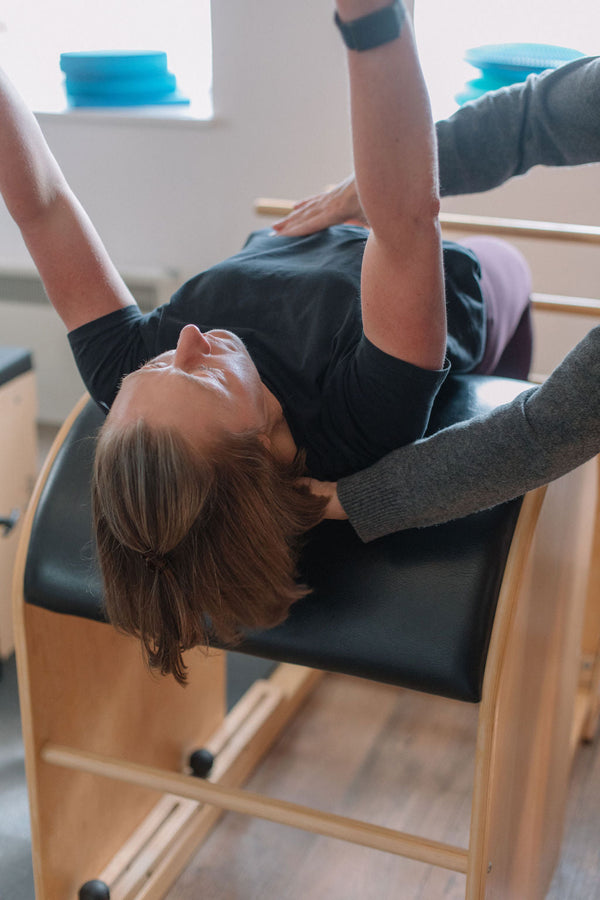
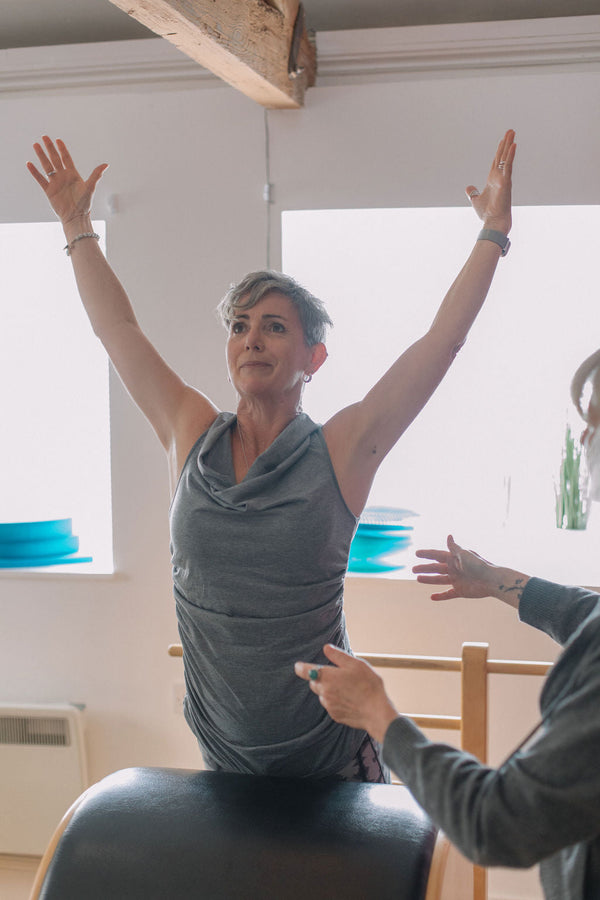
Ladder Barrel
One of the larger pieces in the studio, the ladder barrel pairs a padded, curved barrel with a short ladder of rungs set a stride away. That simple shape unlocks a huge range of movement, deep spinal extension and rotation draped over the barrel, long hamstring and hip-flexor stretches against the rungs, and strong, precise core and side-body work you simply can’t recreate on a flat surface. Because you choose the distance and how far you take each shape, it meets you where you are: a gentle, supported stretch for one person is a demanding full-body challenge for the next.
Best for:
- Spinal mobility, extension, flexion and rotation with support
- Opening tight hips, hamstrings and shoulders
- Deep core, oblique and back strength
- Better posture and balance, at any level
From our Journal
Arc Barrel
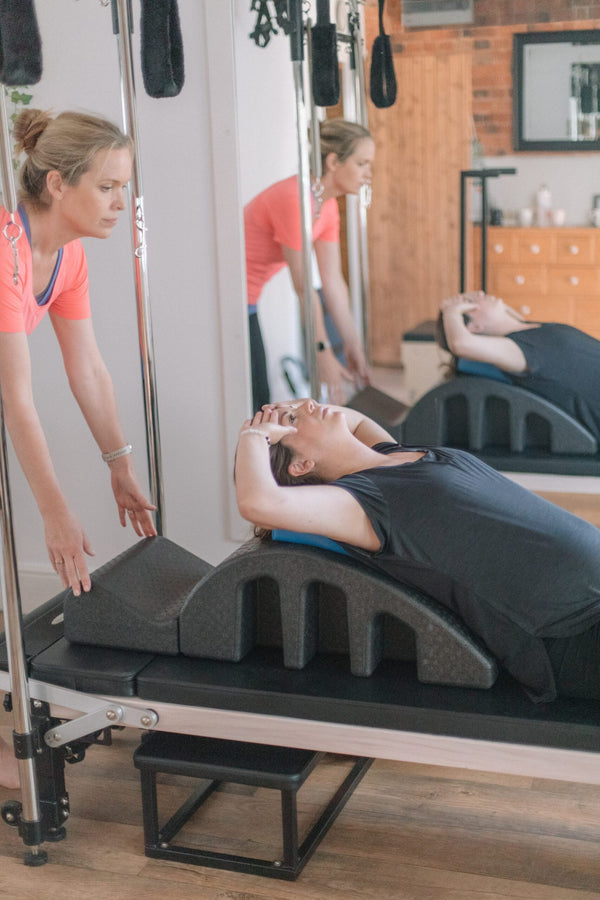
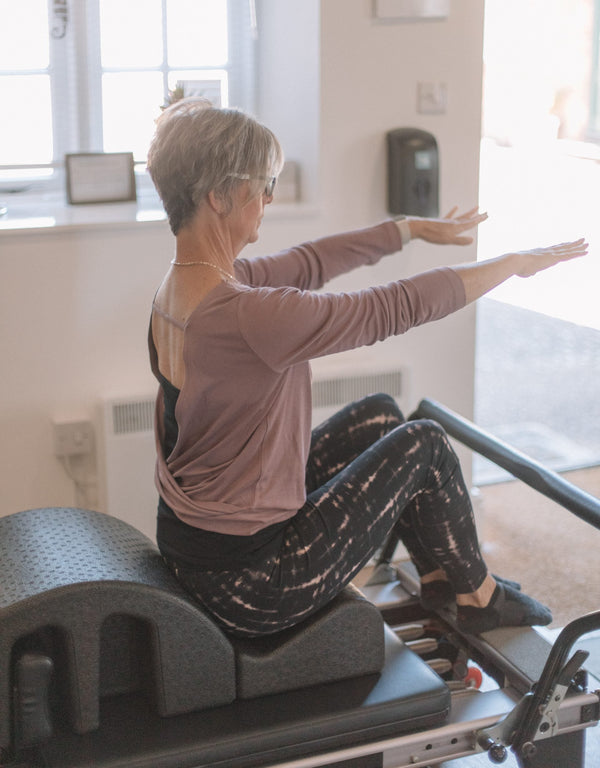
The arc barrel (or arc) is a curved, padded half-moon you stretch and arch over. Its curve cradles your spine as you move into the extension most of us never reach, a real antidote to hours at a desk, while opening the ribcage so you breathe more freely. It's built for spinal extension, side bending and deep, supported stretching, and it feels wonderfully luxurious while doing serious work on spinal mobility and deep core control.
In our small reformer Pilates classes near Northampton, we bring the arc barrel in for anyone working on posture, back care or upper-back (thoracic) mobility, a firm favourite with desk workers, and a lovely way to build the extension that your reformer and mat work then reinforce.
Best for:
- Desk workers with tight, rounded shoulders and a stiff upper back
- Anyone with a stiff or achy back, the barrel supports you as you mobilise vertebra by vertebra
- Swimmers and runners needing better rib and thoracic rotation
- Post-natal recovery, rebuilding core and spinal strength
From our Journal
Spine Fitter
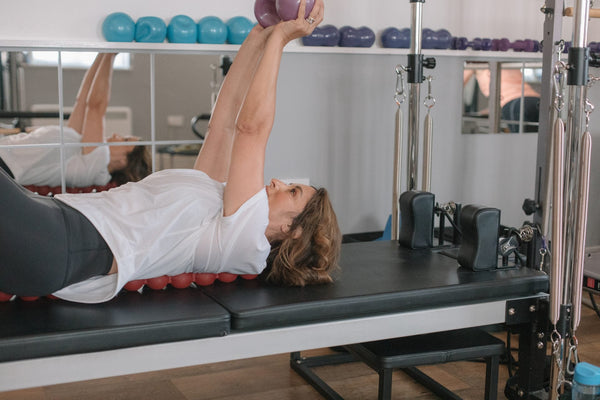
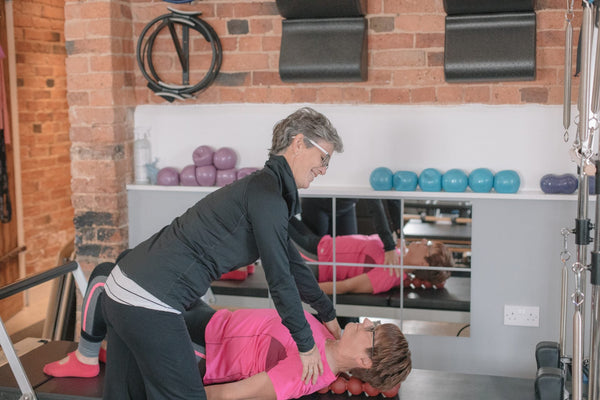
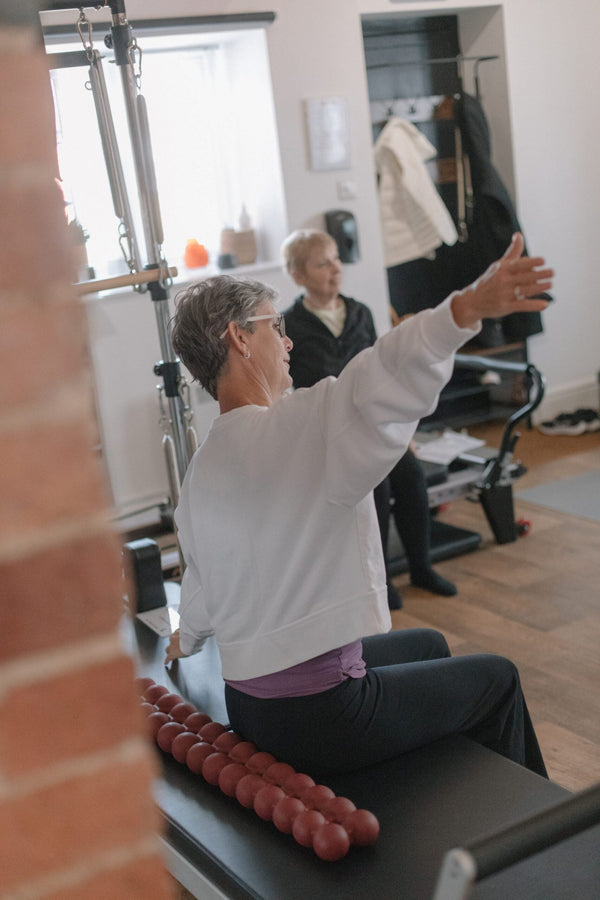
The spine fitter is a smaller, portable support that sits under the spine, pelvis or shoulders to create a gently unstable surface. Lying on it you form a subtle arch that asks your deep core to stabilise while your arms and legs move, the perfect way to learn, and then hold, a true neutral spine.
It's one of the tools our APPI-qualified instructors reach for most in beginner and rehab-focused sessions at the Lamport studio, helping you turn 'neutral spine' from a cue you hear into something you can feel, the foundation everything else in Pilates is built on.
Best for:
- Beginners learning to find neutral spine
- Lower-back pain, the gentle arch decompresses while switching on the deep stabilisers
- Experienced clients adding challenge to mat-based work
From our Journal
Foot Corrector
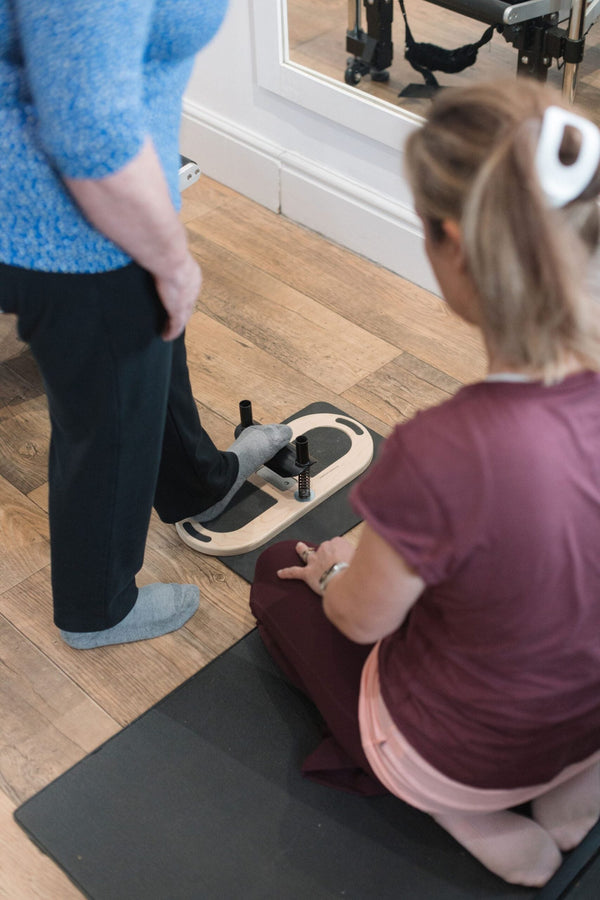
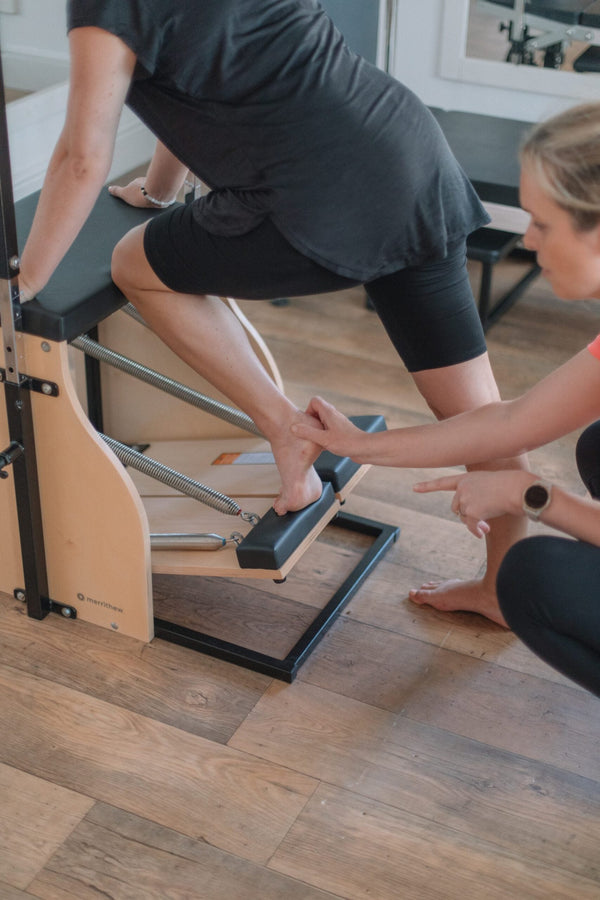
The foot corrector is a spring-loaded pedal for the feet. Pressing against its resistance strengthens the small, deep muscles that support your arches and control how your foot meets the ground, the stable foundation your ankles, knees and hips all rely on.
Healthy feet underpin every standing exercise, so the foot corrector features across our Northamptonshire classes for anyone with foot, ankle or balance concerns, from runners and horse riders to clients rebuilding stability after injury, or working on strength and balance in later life.
Best for:
- Runners prone to plantar fasciitis, shin splints or knee pain
- Flat feet or fallen arches, rebuilding arch strength from the ground up
- Bunion sufferers, and horse riders needing ankle stability
- Older adults improving balance and reducing fall risk
From our Journal
Spikey Balls
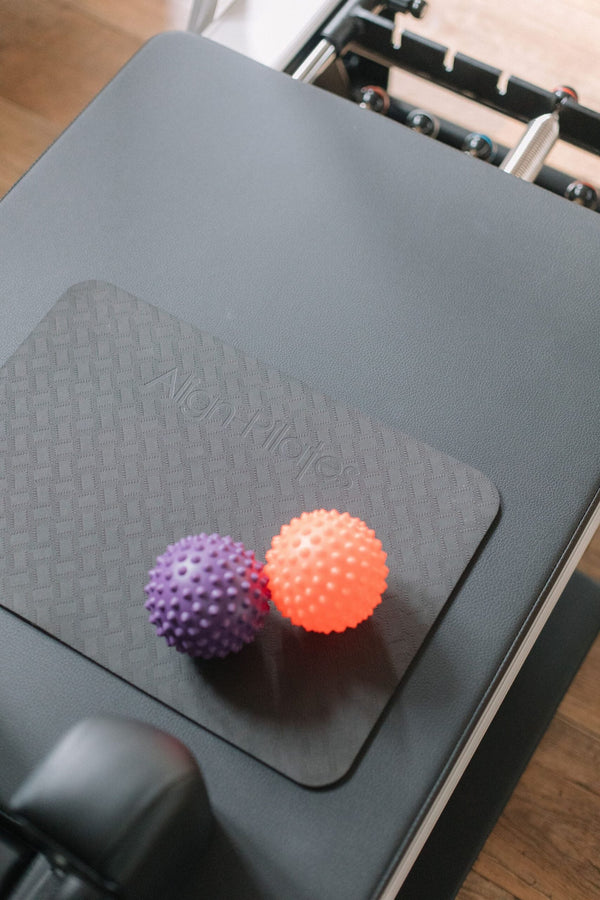
Don't be put off by the name, spikey balls are one of the most effective self-massage tools there is. Placed under a tight spot (the foot, spine, glutes or shoulders) and pressed gently, they help the fascia release and rehydrate. We often use them to warm up at the start of a session, or to aid recovery at the end.
You'll often meet the spikey balls at the start or end of class as part of our warm-up and recovery, and they're an easy, affordable tool to keep using at home between sessions, ideal for everyday tension, desk-related tightness and simple foot care.
Best for:
- Releasing the plantar fascia before reformer work
- Desk-worker tension through the neck and shoulders
- Tight glutes and piriformis, a common source of back and hip pain
- Post-exercise recovery
From our Journal
Weighted Balls
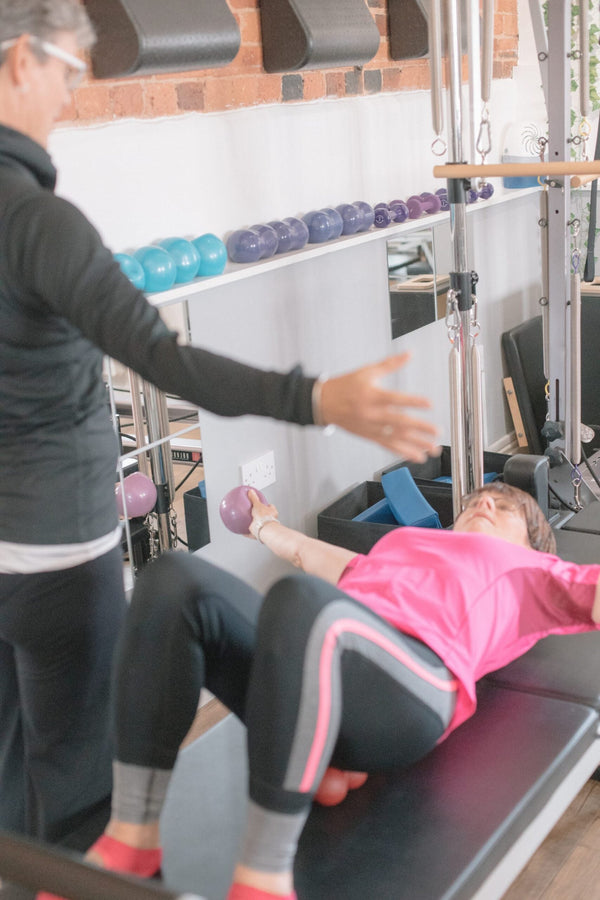
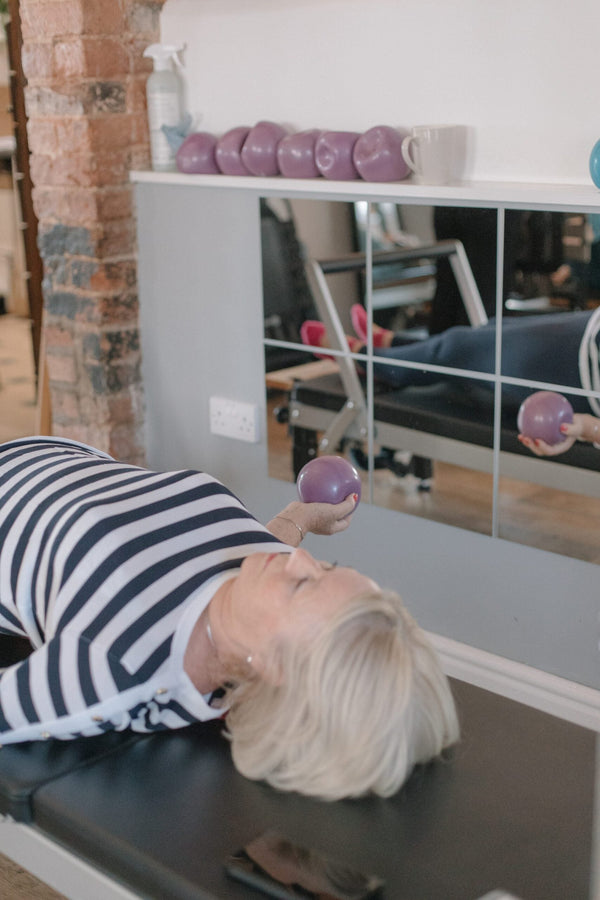
Weighted (or toning) balls are small, soft, sand-filled balls of around 0.5–1.5kg. They add resistance without the bulk or joint stress of dumbbells, and their soft, slightly unstable grip makes the hand, forearm and shoulder work harder through the whole chain.
We weave weighted balls into reformer and mat classes at The Old Dairy once you're ready to progress, a simple way to add strength and tone to arm, shoulder and core work without heavy weights, and a natural next step as your Pilates practice develops.
Best for:
- Adding upper-body challenge with a light, joint-friendly load
- Building grip strength for everyday life
- Extra control and proprioception
- Progressing exercises once bodyweight alone is no longer enough
From our Journal
Overball (Soft Ball)
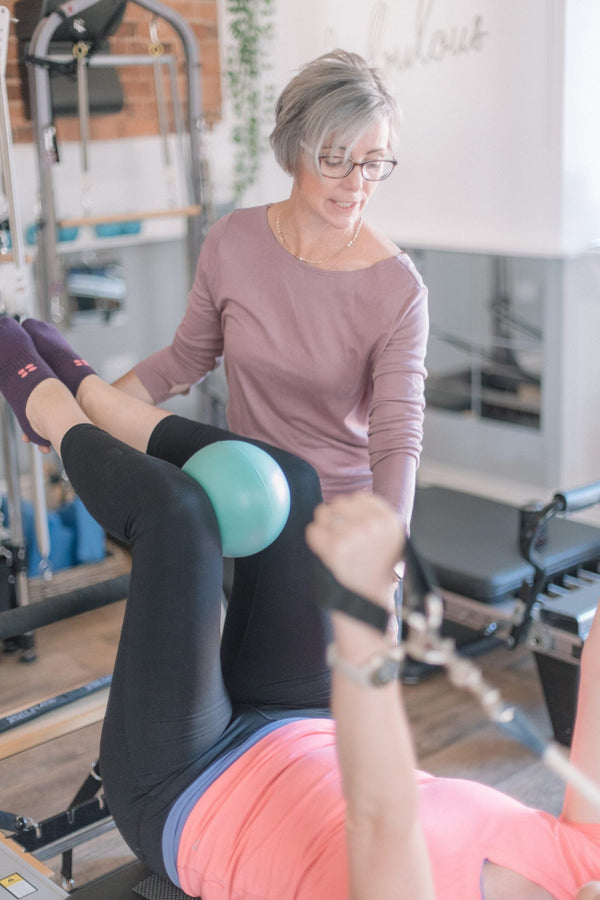
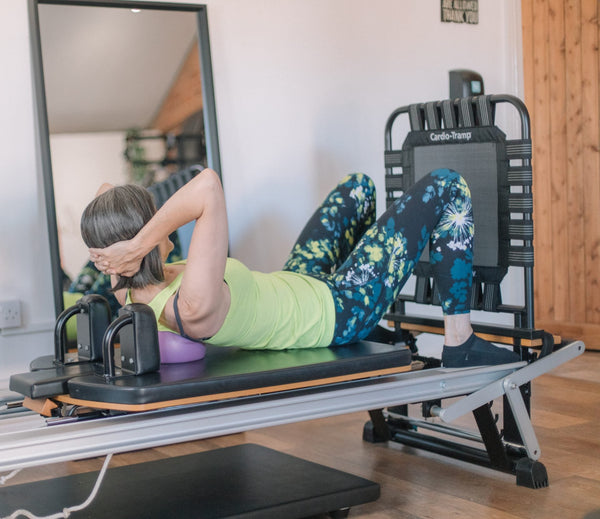
The overball, also called a Pilates mini ball, soft ball or mini stability ball, is a small, inflatable PVC ball used partially deflated so you can squeeze and press it easily. That little bit of give is exactly the point: it offers gentle feedback and support for deep core and pelvic-floor work, and cushions the spine, head or pelvis in lying exercises.
The overball is one of the most versatile props in our Lamport studio, turning up in pregnancy and post-natal Pilates, pelvic-floor and deep-core work, and gentle rehabilitation, and because it's small, inexpensive and packs flat, it's an easy piece to keep your practice going at home.
Best for:
- Deep core and pelvic-floor activation, the ball gives you something to squeeze against
- Post-natal recovery and gentle rehabilitation
- Comfortable support under the head, spine or sacrum in supine work
- Feedback that helps you feel the right muscles working
From our Journal
Gym Ball (Exercise Ball)
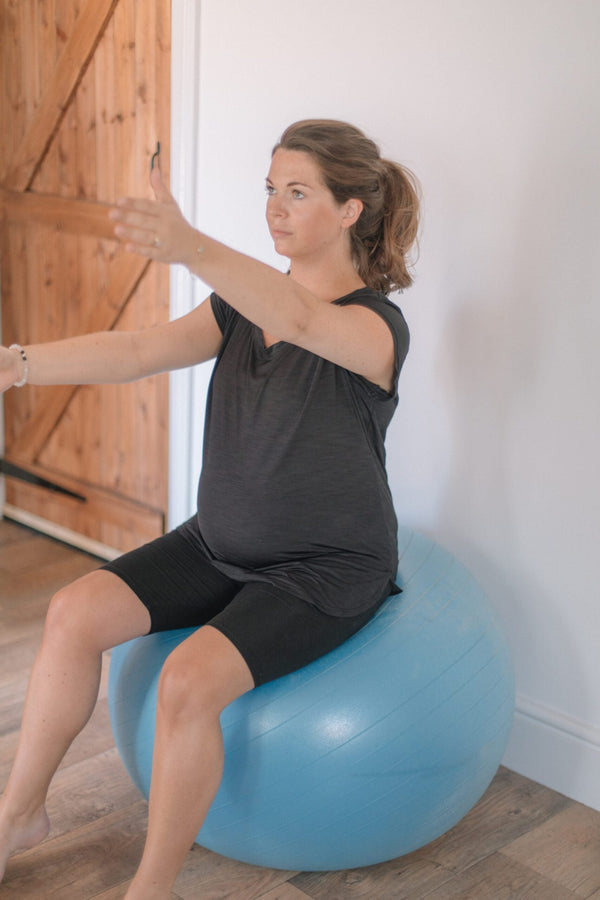
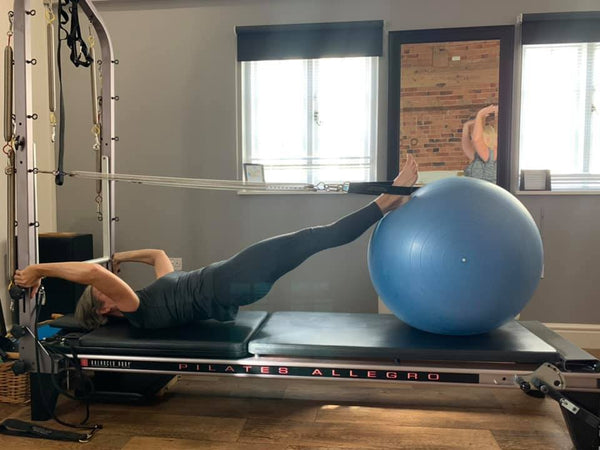
The gym ball, also called a Swiss ball, exercise ball or stability ball, is the large inflatable ball you can sit or lie on. Its rounded, unstable surface keeps your core working constantly to hold you steady, turning the simplest movement into a whole-body stability challenge.
We use the gym ball across our classes for balance, core and mobility, and it's especially popular in pregnancy and post-natal Pilates, where its supportive, mobile base makes everything from gentle mobilisation to pelvic-floor work more comfortable.
Best for:
- Core strength and balance on an unstable surface
- Gentle spinal mobility, rolling and arching over the ball
- Pregnancy and post-natal work, as a supportive and comfortable base
- Adding challenge to upper-body and stretching exercises
From our Journal
Foam Roller
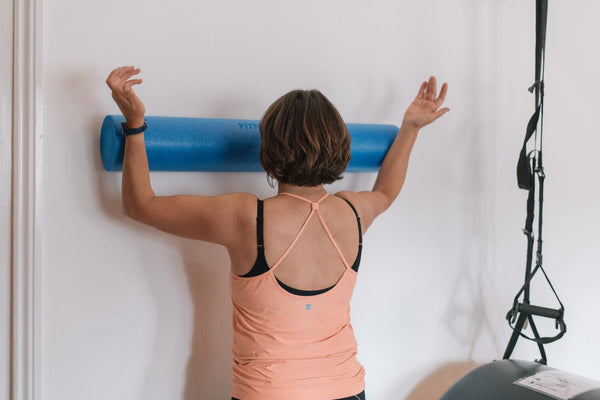
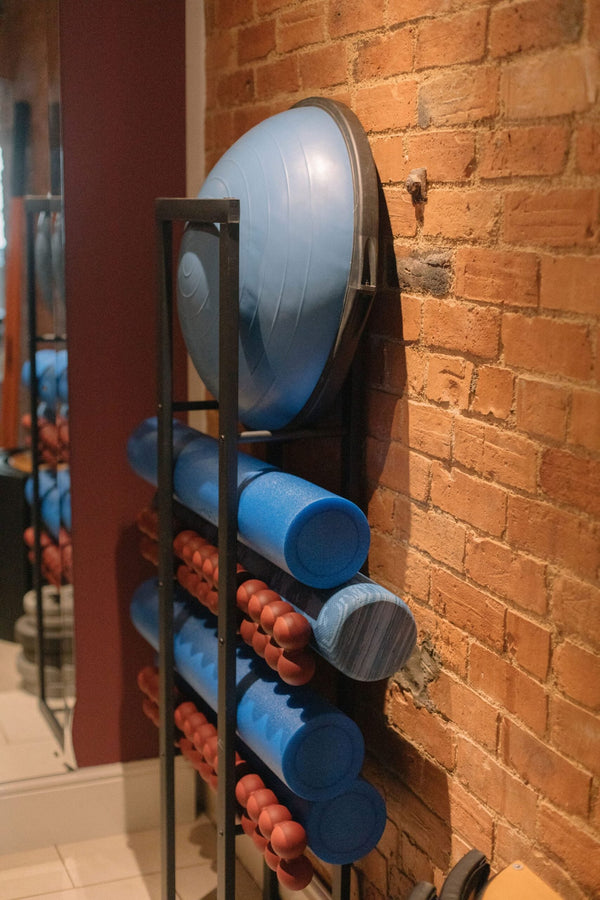
In Pilates we use the foam roller very differently from the aggressive 'rolling out' you may have seen elsewhere. Lie lengthways along it and it becomes an unstable surface, every arm or leg movement makes your deep core work overtime to keep you steady. It's a lovely bridge between mat and apparatus work.
In our reformer and mat classes near Kettering and Market Harborough, the foam roller is a go-to for core control and thoracic mobility, and it doubles as an accessible home tool for posture, upper-back tightness and gentle self-release between visits.
Best for:
- Core stability and control
- Gentle thoracic (upper-back) mobility
- Balance and proprioception
- Easing tension through the IT band, calves and upper back
From our Journal
Magic Circle
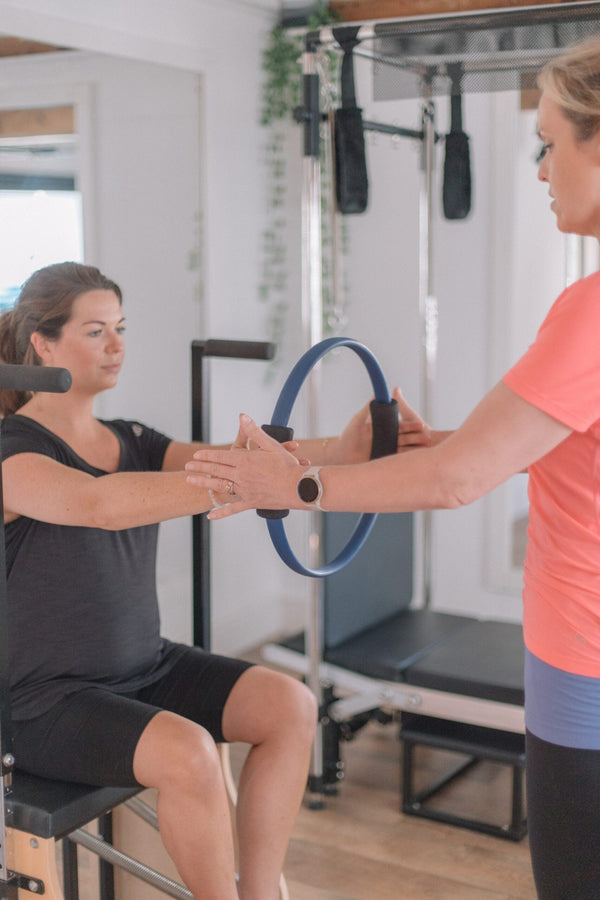
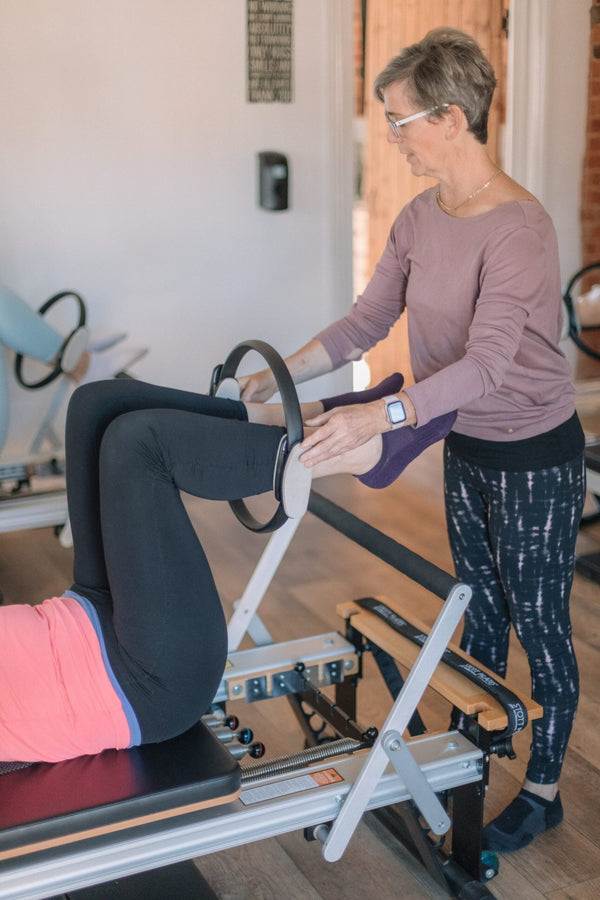
The Pilates circle, the 'magic circle', is a flexible ring with padded handles that gives gentle, even resistance in every direction. Squeeze or press it between your hands, thighs, ankles or feet to switch on specific muscles. Beginners use it to feel a muscle working; experienced clients use it to add resistance to familiar moves.
The magic circle appears throughout our classes, from post-natal and pelvic-floor recovery to inner-thigh and arm toning, because it gives instant feedback on whether the right muscles are switching on, making it one of the best props for learning good technique.
Best for:
- Inner-thigh (adductor) and pelvic-floor activation
- Post-natal recovery
- Waking up chronically under-used muscles
- Making familiar exercises feel brand new
From our Journal
Jump Board
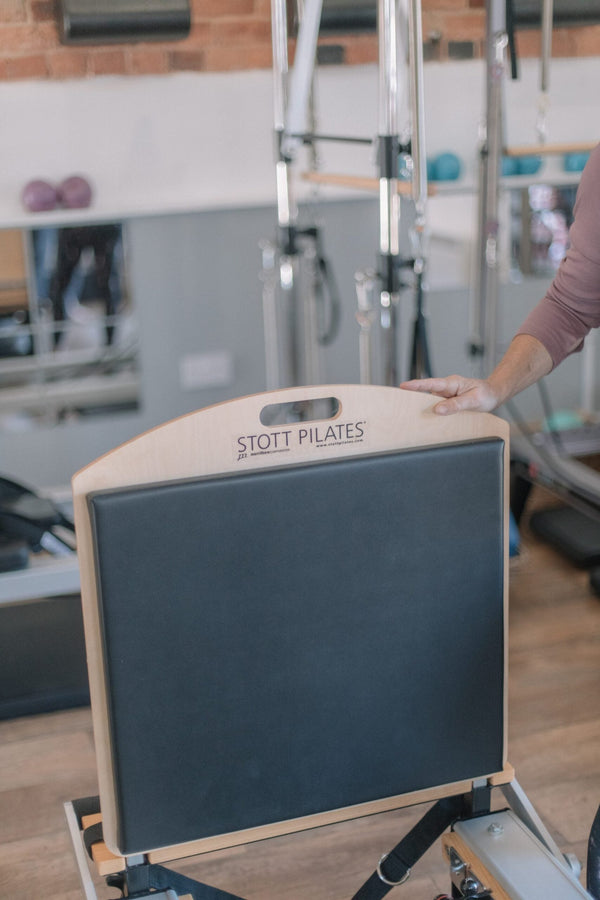
The jump board is a solid, padded board that fixes to the foot end of the reformer. Lying back on the carriage, you push off the flat surface and 'jump' horizontally, all the power and heart-rate lift of plyometric jumping, but with your spine supported and your body weight taken off your joints. Because the board is firm, it gives a defined, athletic push-off, so it's brilliant for building serious lower-body strength and power.
Jump-board work is a popular way to add low-impact cardio and leg strength to reformer Pilates at The Old Dairy, giving runners, athletes and anyone rebuilding fitness a joint-friendly alternative to running or gym plyometrics, all within a supported, controlled class.
Best for:
- Low-impact cardio with real leg power and push-off
- Building strength and bone density through safe, supported jumping
- Runners and athletes wanting plyometric work without the joint load
- Easing back into higher-intensity movement after injury or pregnancy
From our Journal
Cardio-Tramp Rebounder
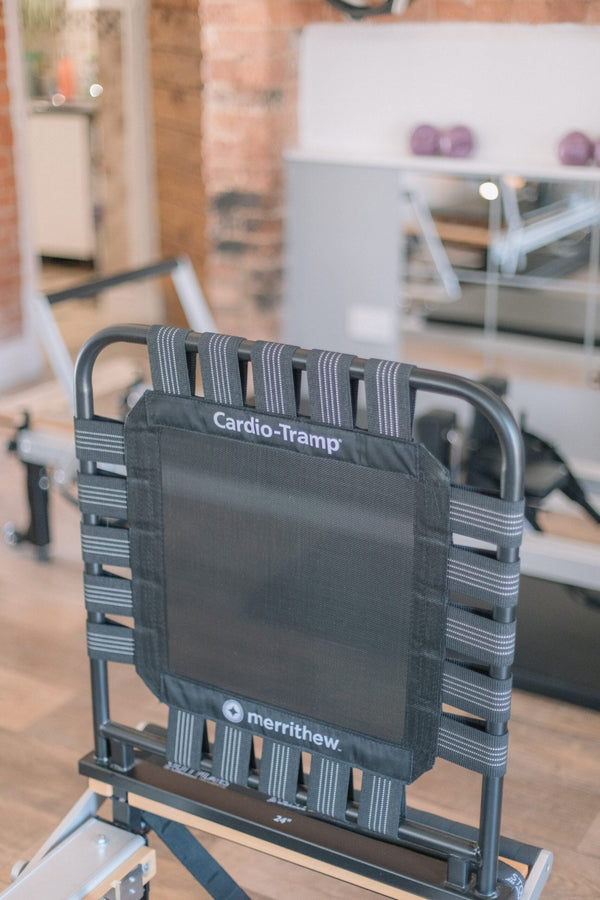
The Cardio-Tramp is a rebounder, a small, springy trampoline surface that attaches to the reformer in place of the jump board. Where the jump board gives a firm, defined push-off, the rebounder absorbs your landing, so it's even gentler on the joints and lets you bounce continuously for a flowing, sustained cardio workout. The 'give' of the trampoline also adds a balance and deep-core control challenge that the solid board doesn't.
For clients who want the gentlest cardio option, the Cardio-Tramp rebounder is a favourite in our Northamptonshire studio, a fun, springy way to raise the heart rate that's especially kind to sensitive knees, hips and ankles, and a lovely contrast to the strength focus of the reformer.
Best for:
- The lowest-impact cardio option, kind to knees, hips and ankles
- Continuous, flowing rebounding for endurance and circulation
- Extra balance and deep-core control from the springy surface
- Sensitive joints, or simply a fun, gentle way to lift the heart rate
From our Journal
Take it home
Loved it in class? Take it home
Much of the equipment we use is available to buy in class, from foam rollers and resistance bands to spinefitters and soft balls. Try it here, learn to use it well, and take it home whenever you're ready.
See equipment you can buy in classReady to move?
New to the studio? Every journey starts with a personal 1:1 introductory session, we'll see how you move and set you up for the right classes.
1:1 with an instructor · no obligation to join · everybody welcome