6 August 2026
Fibromyalgia and gentle movement: how reformer Pilates can help
Living with fibromyalgia means navigating widespread pain, deep fatigue, broken sleep and the frustrating "fibro fog", and exercise can feel like the very last thing your body wants. Yet gentle, carefully-paced movement is one of the approaches most consistently recommended for managing it. The secret is entirely in how you do it.
What is fibromyalgia?
Fibromyalgia is a long-term condition marked by widespread pain across the body, alongside profound fatigue, unrefreshing sleep, and difficulties with memory and concentration (the well-named "fibro fog"). It's now understood largely as a problem of central sensitisation, the nervous system turns up the volume on pain signals, so the body hurts more, and more easily, than it should. Many people also live with heightened sensitivity to touch, temperature or sound, headaches, and IBS-type symptoms.
The "boom and bust" trap
Because symptoms flare unpredictably, it's easy to fall into a cycle almost everyone with fibromyalgia recognises: on a good day you seize the moment and do too much, then pay for it with days of flare and fatigue. Over time, doing less and less leaves the body deconditioned, which makes everything harder still. Gently breaking that cycle is the key, and it's very possible.
Why gentle, graded movement helps
The NHS and pain specialists point to gentle, gradually-increasing activity as a cornerstone of managing fibromyalgia. Done well, it can ease stiffness, improve sleep, lift mood, reduce deconditioning and slowly build your tolerance for activity, all without tipping you into a flare. The word that matters most is pacing: small, consistent, sustainable amounts, rather than boom and bust.
The reformer movements that suit fibromyalgia, and why
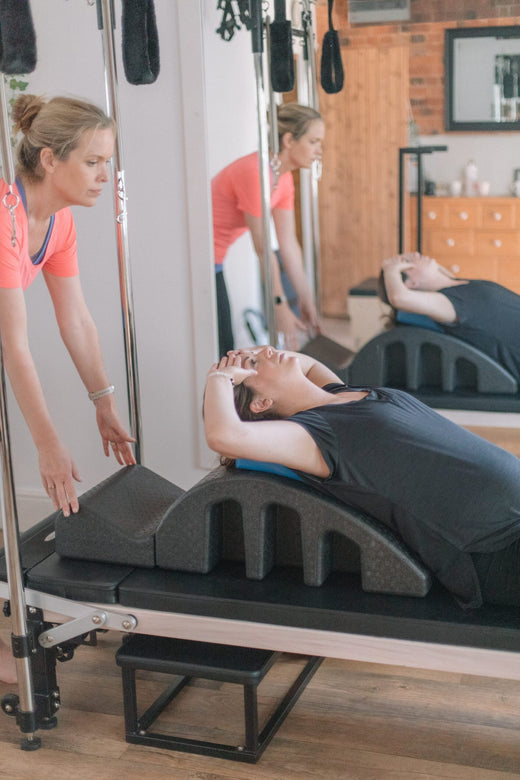
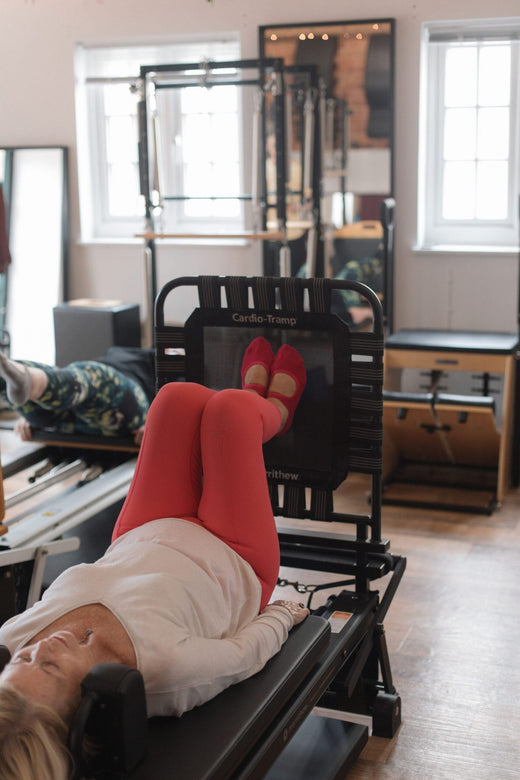
- Supported, lying-down work. Much of what we do happens on your back on the carriage (gentle footwork and leg movements against light spring), so you build strength without the energy cost of being upright or getting up and down from the floor.
- Spring assistance, not resistance. The springs can help a movement along, so exercises are as easy as your body needs that day, as small as today calls for.
- Slow, breath-led flow. Every movement is paired with slow, deliberate breathing, which helps settle an over-sensitised nervous system rather than stir it up.
- Small ranges, gradually grown. We begin in comfortable, gentle ranges and build tolerance a little at a time, graded exposure that teaches your system it's safe to move.
Making life more manageable
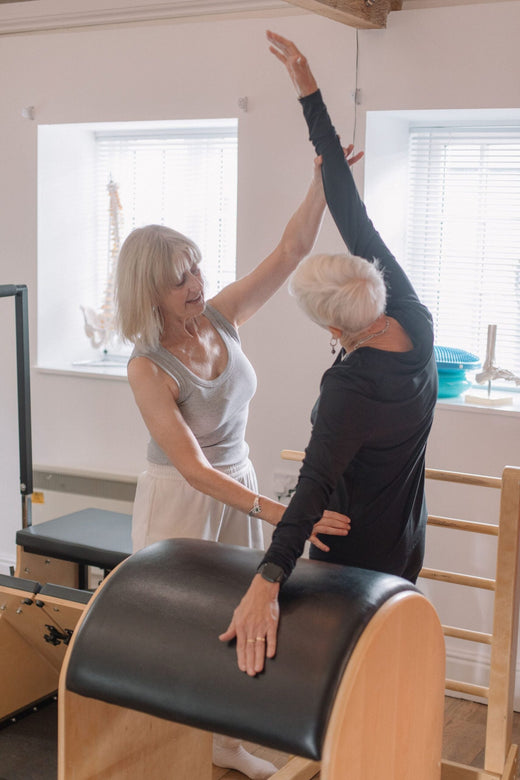
The aim is a steadier baseline: fewer crashes, a little more energy for the things that matter, better sleep, and the quiet confidence that movement is a friend rather than a threat. Consistency matters far more than intensity here, a small amount you can repeat beats a big effort you'll pay for. And you won't be doing it alone: in a class of no more than four, there's no pressure, no comparison and no rush, just support to move at exactly your pace.
Please keep your own healthcare team in the loop, fibromyalgia is best managed from several angles at once. We'll always start with a one-to-one so we understand your symptoms and your flares, and build from there in the smallest, kindest steps.
Written by the team at The Old Dairy Pilates, a boutique reformer and apparatus studio in Lamport, Northamptonshire. This article is for general information and isn't a substitute for personalised medical advice; if you're in pain or managing a condition, we'll always start with a one-to-one and work in step with your healthcare professionals.