11 August 2026
Fascia: the hidden tissue behind stiffness and tension, and how reformer Pilates helps
If you've ever felt stiff after a long drive, "seized up" at your desk, or noticed that stretching in one place seems to ease tension somewhere else entirely, you've already met your fascia, the body-wide web of connective tissue that shapes how you move and feel.
What is fascia?
Fascia is a continuous sheet of connective tissue (mostly collagen), that wraps and connects every muscle, bone, nerve, blood vessel and organ in your body. Picture a fine, three-dimensional web running from head to toe, holding everything in place while still letting it glide and move. It isn't a set of separate parts; it's one connected system, which is why tightness in one area can quietly influence another.
The main types of fascia
- Superficial fascia, sits just under the skin, storing fat and water and housing nerves and blood vessels.
- Deep fascia, the dense, fibrous layer surrounding and separating your muscles, bones and joints. This is the layer most involved in movement, tension and that "tight" feeling.
- Visceral fascia, suspends and cushions the organs within your chest and abdomen.
Together these layers give your body its shape, help muscles glide smoothly over one another, and are richly supplied with nerves, part of why fascia has such a say in how comfortable, or how tight, you feel.
What healthy fascia does for you
When fascia is well-hydrated and moving freely, it supports good posture, transmits force efficiently as you move, and helps your body sense where it is in space (proprioception). Supple fascia is a big part of moving with ease.
When fascia gets unhappy: common issues
Fascia loves movement and variety. It can become stiff, dehydrated or "sticky" without enough of either, after long hours sitting, following an injury or a period of rest, or simply from repeating the same limited movements day after day. When that happens, the layers can lose their glide and form restrictions, which may show up as:
- General stiffness and a reduced range of movement
- Lower-back tightness and aching, often linked to prolonged sitting
- Tight, tender feet (plantar fasciitis is a fascia problem, as the name suggests)
- Neck, shoulder and upper-back tension from desk work and screens
- That feeling of being "bound up" or unable to move freely
What keeps fascia healthy?
The good news is that fascia responds well to the right kind of care. Leading health bodies, the Cleveland Clinic among them, point to regular, varied movement, stretching, staying hydrated, and self-release techniques such as foam rolling as the most effective ways to keep fascia supple and gliding. The key themes are:
- Move often, and move with variety, full ranges of motion, not just the same few patterns.
- Stretch and lengthen, gentle, sustained stretching helps the tissue rehydrate and glide.
- Self-release, foam rollers and massage balls encourage tight areas to let go.
- Load it well, controlled resistance keeps fascia strong and resilient.
How reformer Pilates helps your fascia
Reformer Pilates ticks every one of those boxes, which is exactly why it tends to feel so good:
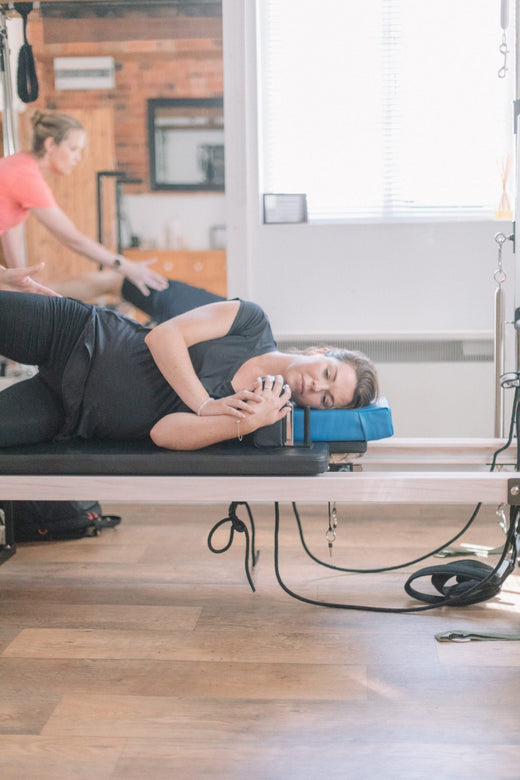
- Full-range, whole-body movement. The reformer guides you through long, flowing movements that take your joints and tissues through their full range, the varied motion fascia thrives on.
- Support and resistance in one. The springs both assist and challenge you, so you can lengthen and load safely, even if you're stiff or recovering.
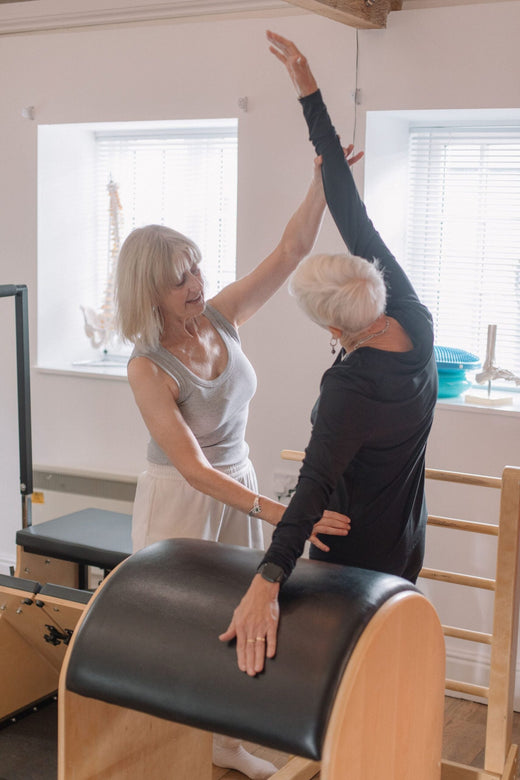
- Deep, supported stretching. Apparatus like the arch barrel let you open through the spine, ribs and hips in a way that helps the fascia rehydrate.
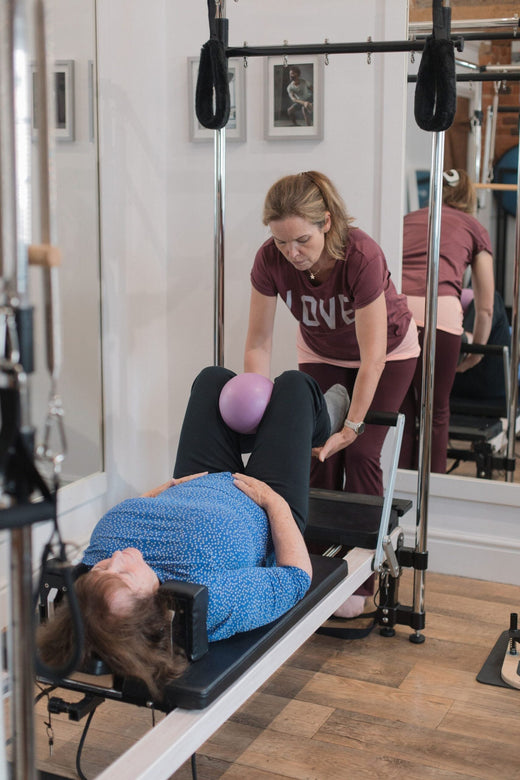
- Hands-on self-release. We build foam rollers and massage (spikey) balls into sessions for targeted myofascial release, and show you how to keep it going at home.
- Small, tailored classes. With no more than four people per class, your instructor can meet your body where it is that day and focus on the areas that need it most.
Because fascia is one connected system, this whole-body, precise approach tends to leave you feeling looser, taller and freer, not only in the spot you were working on.
In our members' words
We hear the fascia story all the time, even when people don't use the word:
"I went to The Old Dairy due to suffering with lower back pain… I'm already feeling the benefits and have learnt so much about my body." - Liz Jessett
"As I sit for long hours at work I really wanted to improve my strength and flexibility. Lorraine was like a detective finding all my weak spots… Felt great afterwards!" - Jade Warren
"When I first started, I was walking with a limp from an old horse-riding injury and struggling with mobility… I've not only regained proper movement but also become much healthier and more active." - Bethany Vipond
"If you want to get strong and move with more ease, it's unlike any other form of exercise… I left feeling 10cms taller." - Susie Burgess
Feel the difference for yourself
If you're stiff, desk-bound, recovering from an injury, or simply want to move more freely, reformer Pilates is one of the kindest and most effective ways to look after your fascia.
Written by the team at The Old Dairy Pilates, a boutique reformer and apparatus studio in Lamport, Northamptonshire. This article is for general information and isn't a substitute for personalised medical advice; if you're in pain, we'll always start with a one-to-one to understand your body first.