16 July 2026
Frozen shoulder and reformer Pilates: gentle mobility that helps
Few conditions test a person's patience like frozen shoulder. It arrives without much reason, hurts more than it seems entitled to, steals everyday movements one by one, reaching the top shelf, fastening a seatbelt, sleeping on your side, and then takes its time leaving, often the better part of a year or more. If you are somewhere in that long middle, this post is for you.
An honest note first: frozen shoulder (adhesive capsulitis) should be properly diagnosed, because other shoulder problems mimic it and are treated differently. Please see your GP or a physiotherapist first, and if you are under their care, we will gladly work alongside their plan rather than around it. Pilates does not cure a frozen shoulder or rush its timeline. What it can do is help you keep what you have, and rebuild well as the shoulder thaws.
The three seasons of a frozen shoulder
The condition usually moves through phases: a painful freezing stage, a long frozen stage where pain eases but stiffness rules, and a gradual thawing as movement returns. What helps is different in each, which is why a one-size-fits-all exercise sheet so often disappoints.
How we work with it on the reformer
- While it is freezing: we do not chase the shoulder at all. We keep the rest of you strong and moving, legs, core, posture, and use gentle, fully supported arm movement strictly within comfort. Releasing the overworked muscles around the shoulder blade, including simple work against the wall with a spikey ball, often eases the constant background ache of guarding.
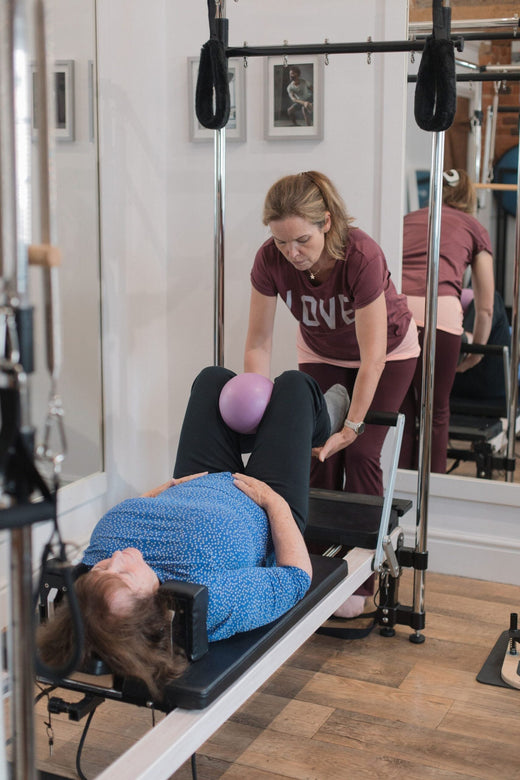
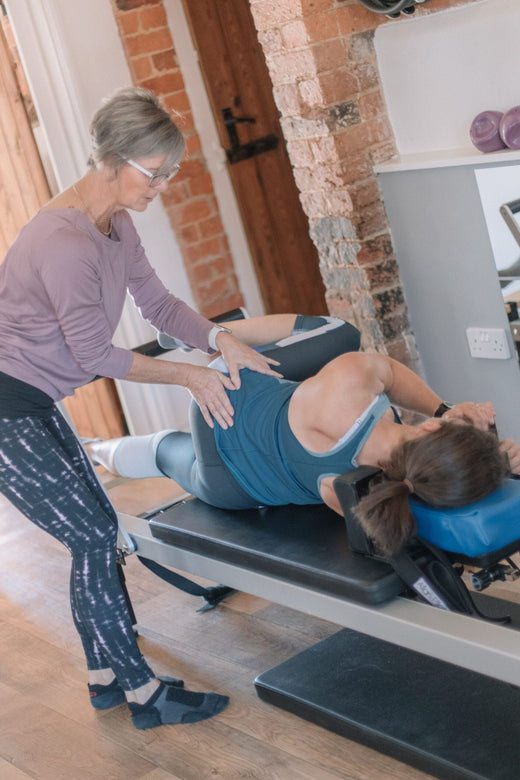
- While it is frozen: supported movement is everything. Lying on the carriage with your arm in a strap, the spring can carry the weight of the limb while it moves through whatever range the joint allows, movement without the bracing that comes from moving an unsupported arm. We also train the posture underneath: a shoulder blade that sits well on the ribs gives the stiff joint the best possible platform.
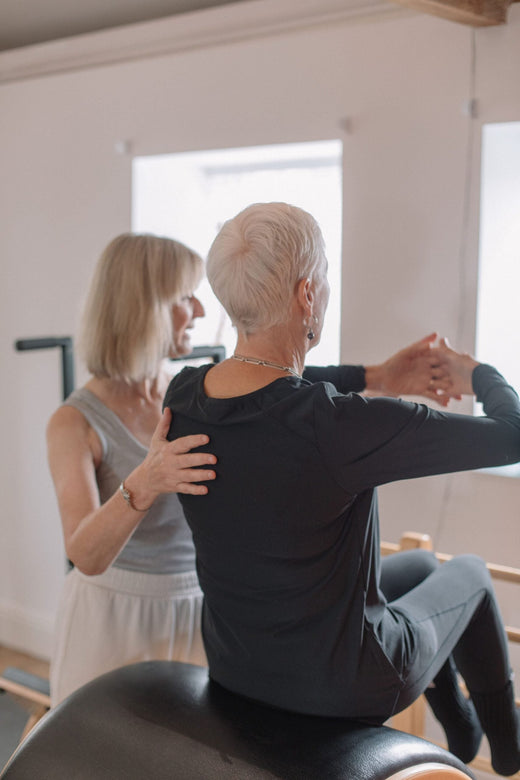
- While it is thawing: this is where the reformer shines. As range returns, the springs progressively load the returning movement, so the shoulder comes back strong rather than merely loose, and the rotator cuff, which has had months off, is rebuilt carefully alongside.
Meanwhile, the rest of you
A year is a long time to put your fitness on hold, and you do not have to. Almost everything we do for the legs, hips, back and core can be done with one arm resting out of the conversation entirely. Members mid-frozen-shoulder often tell us the hour is the best their shoulder feels all week, partly the movement, partly simply being somewhere the shoulder is worked with rather than fought against.
Where to start
Tell us where you are in the timeline, what your clinician has said, and what movements your week actually needs back. Then we will get to work, patiently, at the shoulder's pace rather than the calendar's. It does thaw. We will make sure you are strong when it does.