7 August 2026
Osteoarthritis and movement: how reformer Pilates can support achy joints
If you live with osteoarthritis, you'll know the instinct well: when a joint aches, resting it feels like the safe choice. Yet one of the most helpful things you can do for osteoarthritic joints is to keep them moving, in the right way. Here's a closer look at the condition, and the specific, gentle movements our reformer classes use to help.
What is osteoarthritis?
Osteoarthritis (OA) is the most common form of arthritis. It develops as the smooth cartilage that cushions the ends of your bones gradually thins and roughens, so the joint no longer glides as easily. The surrounding bone, ligaments and muscles then take on more of the work, which can bring pain, swelling, stiffness and a reduced range of movement. Importantly, it isn't simply "wear and tear" or an inevitable part of getting older, it's an active process, and one that responds to how you move and how strong the muscles around the joint are.
Where it shows up, and how it feels
- Knees. The most common site, pain on stairs or kneeling, and a deep ache after standing or walking.
- Hips. Pain in the groin or outer thigh, stiffness putting on socks and shoes, and a shorter stride.
- Spine. Stiffness and aching in the lower back or neck, often at its worst first thing in the morning.
- Hands. Stiff, achy or swollen finger joints and a weaker grip.
A hallmark of OA is "start-up" stiffness, those first sore minutes after resting that ease once you get going. That single detail is a clue to why the right movement helps so much.
The movement paradox
It can feel counter-intuitive, but Versus Arthritis and the NHS are clear: staying active is one of the best things you can do for osteoarthritis. Movement nourishes the cartilage (joints have no direct blood supply, so gentle movement is how they're fed), keeps the joint mobile, and (most importantly), builds the muscle that supports and offloads it. Strong muscles act like shock absorbers; weak ones leave the joint to cope alone.
The reformer movements that help, and why
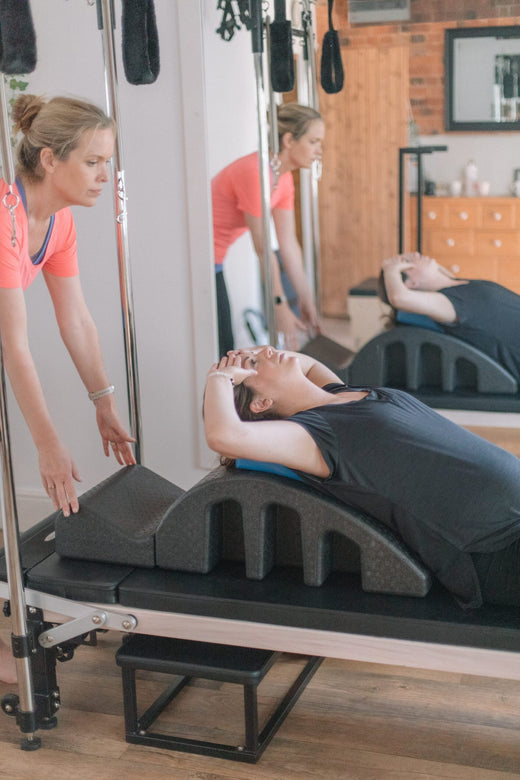
None of this needs to be strenuous. In our small classes the reformer lets us load your joints in a supported, controlled, low-impact way. In practice, that looks like:
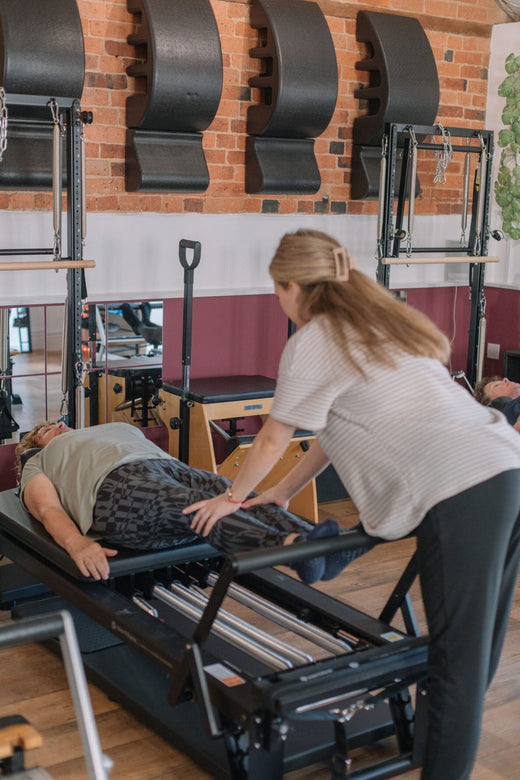
- Footwork and the leg press, lying on your back, feet on the bar, pressing the carriage away against light spring. It's essentially a supported squat with none of the body-weight thud, strengthening the quads, hamstrings and glutes that protect your knees and hips, through exactly the range that tends to stiffen.
- Bridging, lifting the hips builds the glute and back strength that stabilises the hips and lower back, while gently mobilising the spine and easing that morning stiffness.
- Side-lying leg work, targets the outer-hip muscles that keep your pelvis level and take load off an arthritic hip or knee as you walk.
- Seated and lying arm springs, light, smooth resistance keeps the shoulders and hands moving and strong, with a gentle challenge to grip.
- Spinal articulation, slow, segment-by-segment "rolling" of the spine keeps a stiff, arthritic back or neck supple and comfortable.
The springs are the magic ingredient: they can assist a movement on a bad day and challenge it on a good one, so you're always working within a range that feels safe.
Living well with osteoarthritis
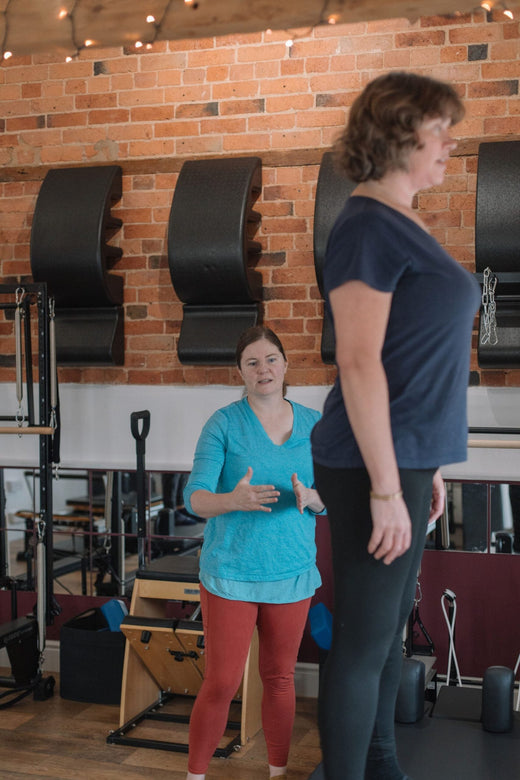
The goal isn't a "cure", it's making daily life feel manageable again: rising from a chair without bracing, managing the stairs, walking the dog without paying for it the next day. Consistent, gentle strengthening banks resilience, so flare-ups tend to come less often and bite less hard, and confidence in movement quietly replaces the fear of it. Little and often beats occasional and hard, every time, and in a class of no more than four, we keep everything pitched to your joints, on the day.
"When I first started, I was walking with a limp from an old injury and struggling with mobility… I've not only regained proper movement but also become much healthier and more active." - Bethany Vipond
If you have osteoarthritis, do talk to your GP or physiotherapist about exercise, and we'll always begin with a one-to-one to understand your joints and adapt everything around you.
Written by the team at The Old Dairy Pilates, a boutique reformer and apparatus studio in Lamport, Northamptonshire. This article is for general information and isn't a substitute for personalised medical advice; if you're in pain or managing a condition, we'll always start with a one-to-one and work in step with your healthcare professionals.