6 July 2026
Pilates for desk workers: undoing a day at the screen
You know the shape. Shoulders drifting forward, chin poking toward the screen, lower back slumped into the chair by mid-afternoon. Most of us spend more hours in that shape than in any other position in our lives, and our bodies keep the receipts: tight chests, aching necks, grumbling lower backs, and that permanent band of tension across the tops of the shoulders. You cannot resign from your desk. But you can spend an hour a week systematically undoing it.
The problem is not sitting. It is only sitting.
Bodies adapt to what they do most. Sit for eight hours a day and your hip flexors adapt by shortening, your upper back adapts by rounding, and the deep muscles that hold your head and trunk upright adapt by switching off, because the chair is doing their job. The fix is not a gadget or a perfect chair. It is regularly, deliberately asking your body for the opposite: extension, opening, rotation and strength.
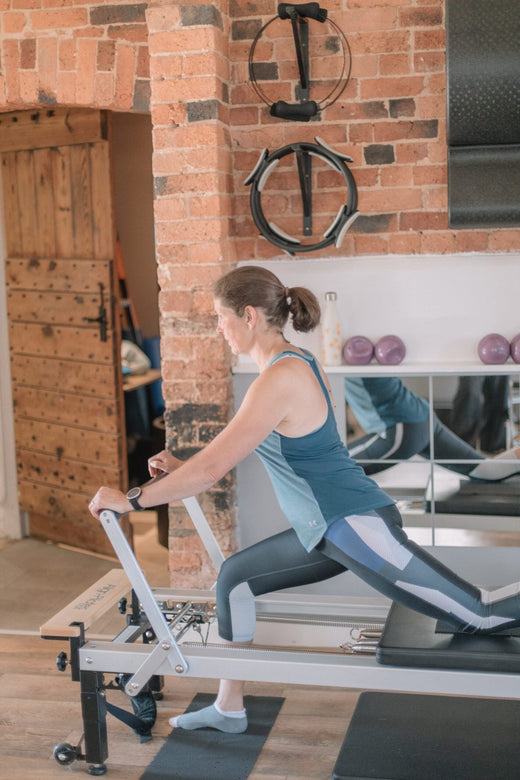
What an hour on the reformer does
- Opens what the desk closes. Chest-opening strap work, supported back extension over the box, and shoulder work like wall slides with the roller reverse the forward-curled shape hour after hour at a screen builds.
- Wakes up the deep support system. The deep core and shoulder-blade muscles that switch off in a chair are exactly what Pilates trains, so that between sessions, your body holds itself up with less effort.
- Restores rotation. Desks involve almost no twisting, and spines that never rotate stiffen. Controlled rotation work keeps your mid-back moving the way it was designed to.
- Unknots the neck from below. Most stubborn neck and shoulder tension is not really a neck problem: it is a posture problem, with the neck muscles working overtime to hold a forward head against gravity. Strengthen the posture underneath and the neck finally gets to relax.
Why the reformer beats the gym for this
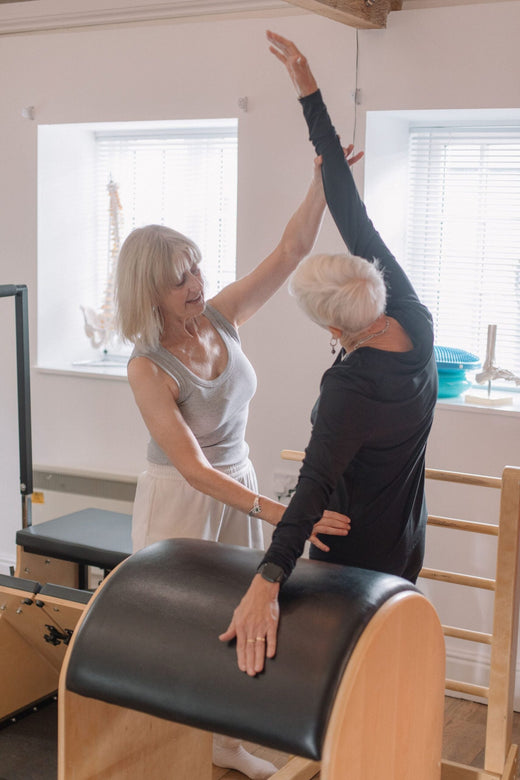
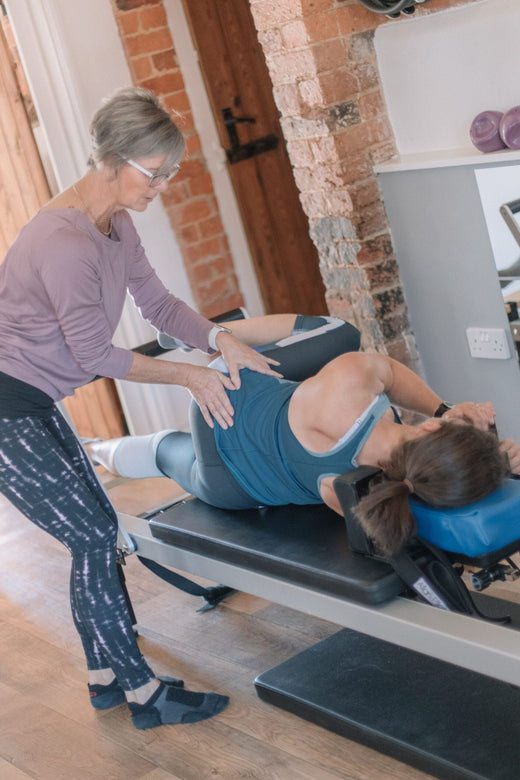
Desk bodies usually arrive with a particular combination: stiff in some places, weak in others, and switched off almost everywhere. Loading that combination with free weights straight away tends to reinforce the compensations you already have. The reformer's springs and supported positions let us strengthen you in good alignment from day one, and with no more than four people in a class, someone is always watching that your shoulders are not quietly creeping back up toward your ears.
Where to start
An hour a week will not cancel forty at a desk, but it changes the trajectory, and most desk workers feel the difference quickly: taller by the end of a session, looser by the next morning, and gradually free of that end-of-week ache they had accepted as normal. Your desk is not going anywhere. Come and push back, starting with an hour one to one so nothing is a surprise.