22 July 2026
Reformer Pilates for cyclists: open hips, strong back, more power
Cycling is wonderful and cycling is repetitive, and every rider eventually meets the consequences of both. Hours folded over the bars in the same position, turning the same circles, build tremendous fitness alongside a very particular collection of problems: hip flexors that forget how to lengthen, a rounded upper back that follows you off the bike, a lower back that aches on longer rides, and glutes that, despite all those miles, are often surprisingly lazy. The reformer addresses the whole list.
The riding position, and what it costs
On the bike, your hips never fully extend, your spine holds one long curve, your chest stays closed and your neck cranes up to see the road. Held for hours, week after week, that shape starts to come home with you. Riders describe standing up after a long ride and taking a few strides to unfold; over the years, the unfolding gets less complete. None of this is a reason to ride less. It is a reason to train the opposite shape deliberately, which is much of what an hour on the reformer is.
What we open
- Hip flexors and quads. Deep, supported lunge work on the carriage lengthens the front of the hip under control, not a passive stretch, but strength through the range cycling never visits.
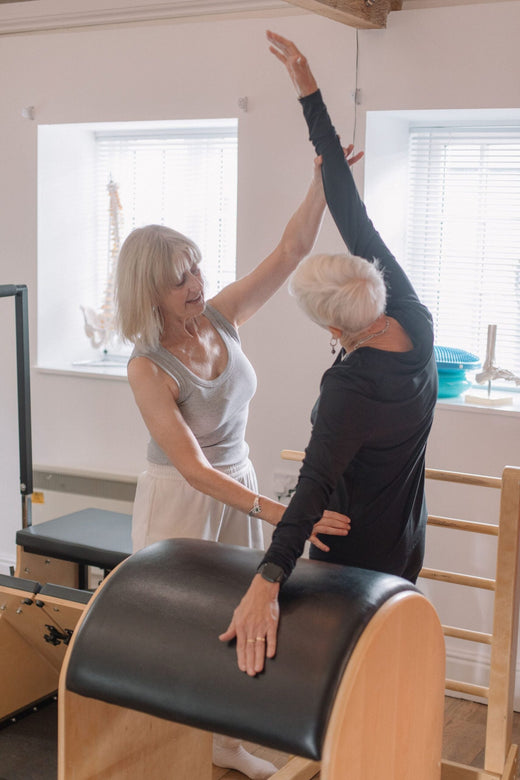
- The chest and upper back. Strap work that draws the shoulders open, and supported extension over the box, reverse the curl of the riding position and let you breathe wider than the drops allow.
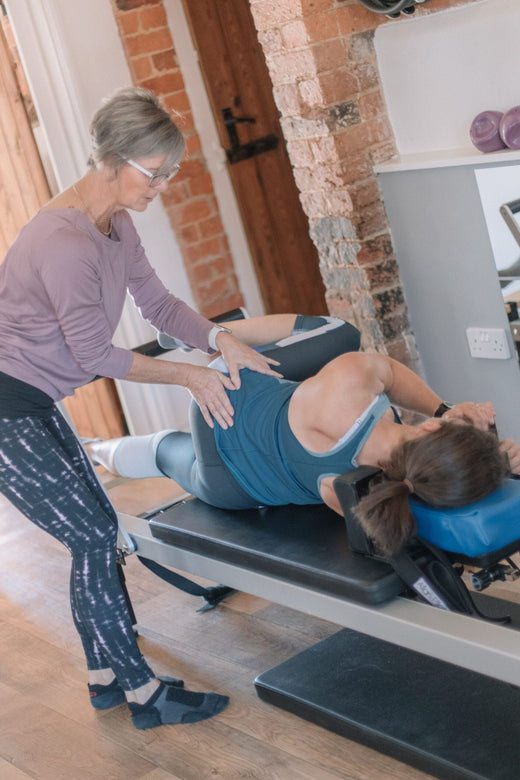
- Rotation. Cycling involves almost none, and spines that never rotate stiffen. Controlled rotation keeps your trunk supple, which also pays off every time you glance over a shoulder in traffic.
What we strengthen
- Glutes that actually fire. Cycling's restricted hip range lets the quads dominate while the glutes coast. Bridging and single-leg work on the reformer wake up the biggest engine you own; many riders feel the difference on their first climb afterwards.
- A trunk that holds its shape. Watts leak through a collapsing core. When your trunk can hold steady while your legs drive, more of your effort reaches the pedals, and the lower back stops absorbing what the core should be transmitting. That is free speed, no new wheels required.
- Single-leg honesty. Pedalling is one leg at a time, and almost every rider has a stronger side. Single-leg footwork on the carriage finds the difference and evens it out.
Where to start
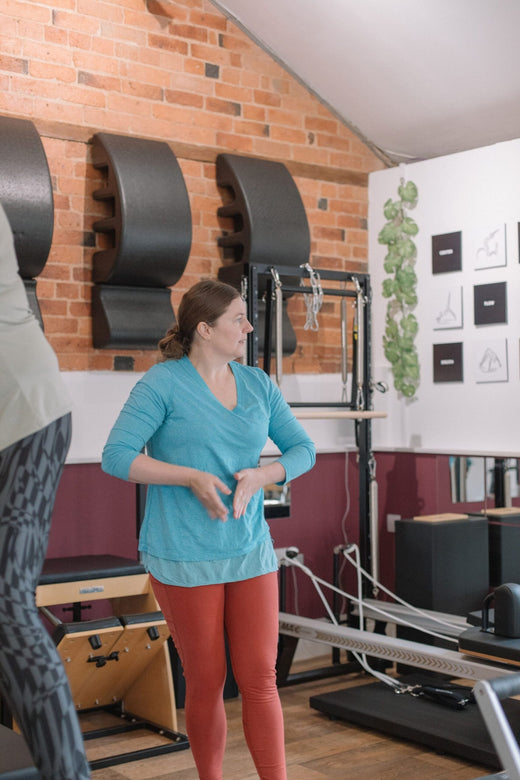
One hour a week, ideally on a rest day, slots into a training plan without stealing anything from it, and our small classes mean the work is set to your body, your mileage and your particular tightnesses. Ride all you like. We will keep you unfolded.