2 July 2026
Reformer Pilates for horse riders: seat, symmetry and core
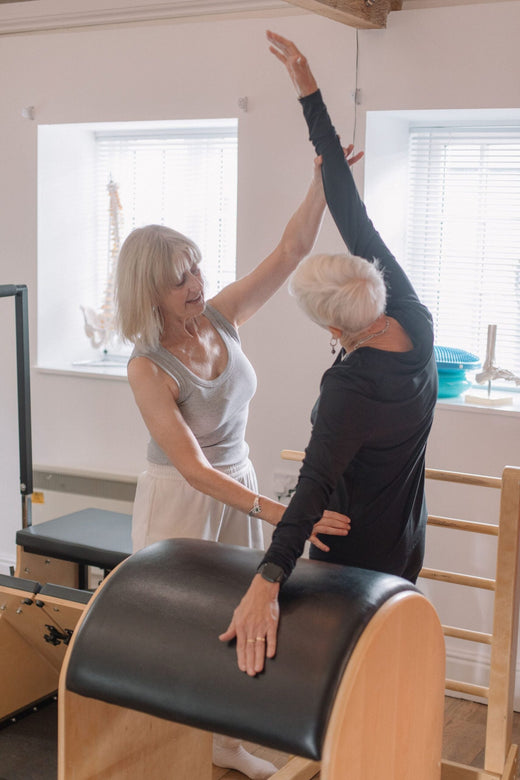
Out here in rural Northamptonshire, a good number of the people on our reformers spend the rest of their week in the saddle. That is no coincidence. Riders tend to discover Pilates for a simple reason: almost every instruction they have ever been given in a lesson, sit tall, stop gripping with your knees, stop collapsing through your left side, follow the movement with your seat, is really an instruction about core control, symmetry and independent movement. And those are exactly the things Pilates trains.
The rider's problem: asymmetry you cannot feel
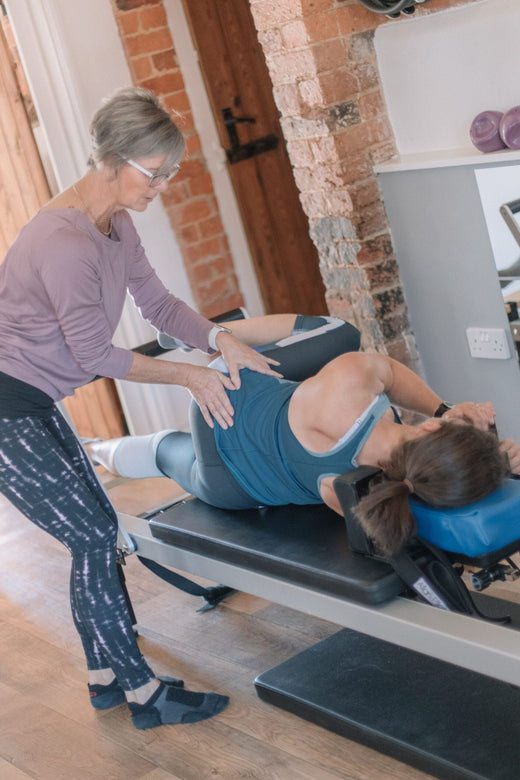
Nearly every rider is crooked, and nearly no rider can feel it. Years of mounting from the same side, a stronger rein hand, an old fall you compensated around, it all adds up to a seat that loads one seat bone more than the other. Your horse feels it long before you do. The reformer is unusually good at revealing this, because the carriage moves on wheels: when one side of you works harder than the other, the machine drifts, and suddenly an asymmetry you could not feel becomes something you can see and correct.
An independent seat starts with a stable centre
The holy grail of riding, hands that stay soft while the seat follows the horse, requires your arms, pelvis and trunk to do different jobs at the same time. Pilates calls this dissociation, and it is trained constantly on the reformer: holding the trunk quietly still while the legs press and glide, keeping the pelvis level while one arm pulls a spring. Practised on the carriage, it turns up in the saddle as a steadier lower leg, quieter hands and a seat that absorbs movement instead of bracing against it.
Hips that can actually follow the movement
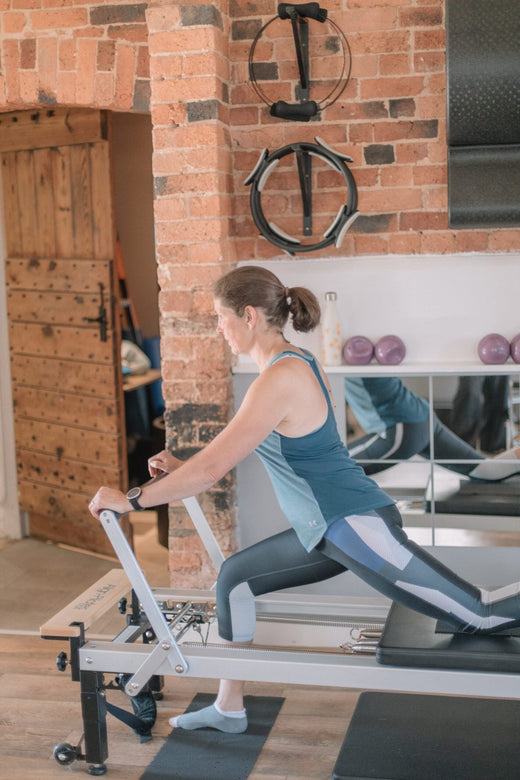
Gripping, tipping forward, and struggling to sit the trot all trace back to hips that lack the mobility to move freely under a stable trunk. Reformer work opens and strengthens the hips through long, controlled ranges, deep lunges, side-lying leg work, hip openers with the springs assisting, so following your horse's back becomes something your body can do rather than something you have to force.
Strength for out of the saddle, too
Yard work is heavy work: hay bales, water buckets, wheelbarrows across a muddy field. The same bridging, pulling and anti-rotation strength that improves your position also protects your back for everything you lift before you have even got on.
Where to start
You do not need to tell your riding friends you are doing Pilates. You could just quietly become the one whose position everyone compliments. Our small classes mean your instructor will get to know your particular crookedness personally, and work on it week after week. Your horse will notice first.