20 July 2026
Hypermobility and Pilates: strength for bendy bodies
If you are the bendy one, the one who could always do the party tricks, whose joints click and give and occasionally let you down entirely, and who somehow aches more than all your stiff friends put together, this post is for you. Hypermobility is common, commonly missed, and commonly given exactly the wrong advice: you should stretch more. You should not. Your joints already have range to spare. What they are missing is control, and control is trainable.
An honest note first: hypermobility spans a wide spectrum, from simply having flexible joints to connective tissue conditions such as hypermobile Ehlers-Danlos syndrome that come with wider symptoms. If pain, dislocations, fatigue or other symptoms are significant for you, please seek a proper assessment from your GP or a specialist physiotherapist. We are very happy to work alongside their guidance.
Why bendy bodies ache
Joints are held steady by two systems: the passive one, ligaments and joint capsules, and the active one, muscles responding to information about where the joint is. In hypermobile bodies the passive system is lax, so the muscles must do the stabilising work, constantly, without good information, because lax tissues also report joint position less clearly. The result is that paradox every hypermobile person knows: the most flexible person in the room, permanently tense and tired, muscles gripping all day to do a job ligaments are not doing.
What the reformer offers
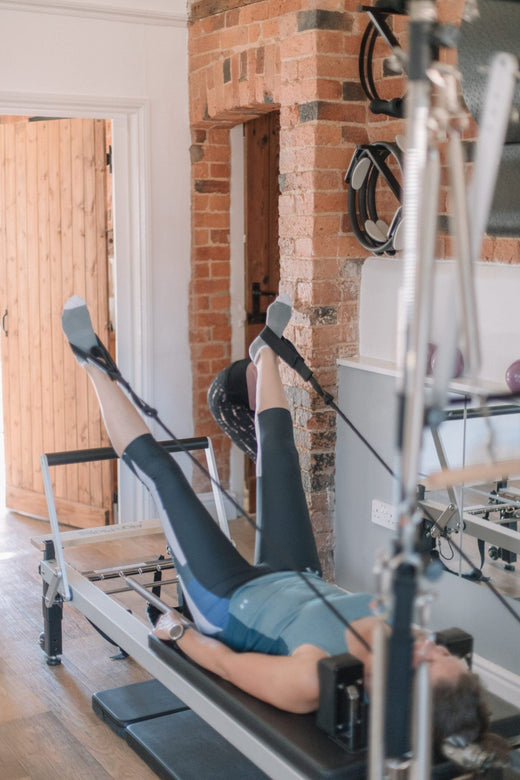
- Resistance that teaches position. Springs give your nervous system something the open air never does: feedback. Pressing and pulling against gentle, constant resistance tells your muscles exactly where your limbs are, sharpening the joint-position sense that laxity blurs.
- Strength in the middle of the range. We deliberately train short of your end range, where your joints hang on their ligaments, building strength in the mid-range where muscles can actually protect. For a hypermobile body this is the skill: learning where your useful range ends, long before your absolute range does.
- Control instead of momentum. Slow, precise, deliberate movement, the essence of Pilates, is precisely the quality lax joints lack. Every exercise is practice at moving through space with the brakes working.
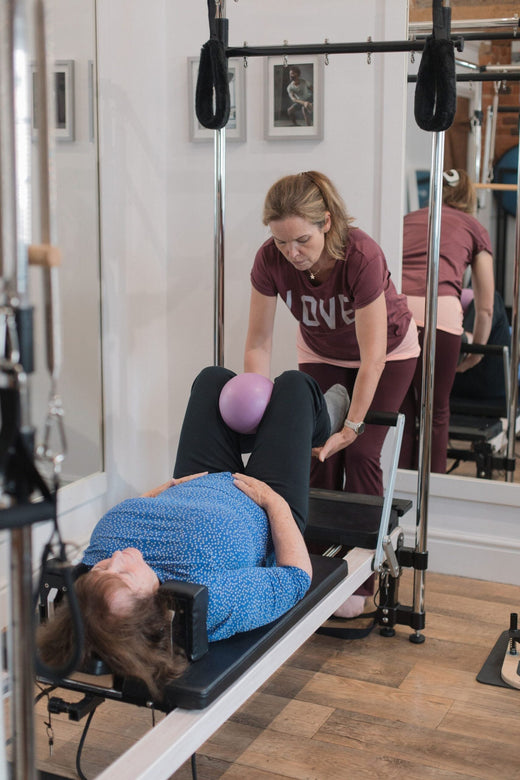
- Support while you learn. The carriage, straps and springs hold you in positions a hypermobile body would otherwise have to grip its way through, so you can build strength without feeding the tension habit.
A quiet warning about your superpower
Bendy people are often praised in movement classes, look how deep she can go!, and it is worth being clear: in this studio, going further is not the goal, and we will often actively ask you for less range and more control. It can feel strange to be reined in at the thing you are best at. It is also, usually, the exact moment progress starts.
Where to start
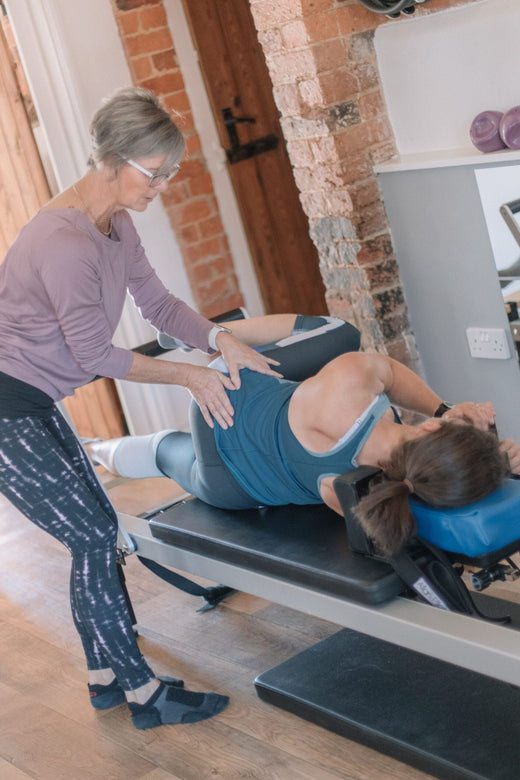
With four people at most in a class, your instructor can keep an eye on joints that hyperextend quietly, elbows and knees are sneaky, and cue you back to your strong range all session long. Come and learn what your bendiness feels like with a stable centre behind it. It feels, our hypermobile members tell us, like finally landing.