28 June 2026
Sciatica and reformer Pilates: easing nerve pain with support
Sciatica has a way of taking over your whole life. The burning, shooting or tingling pain that runs from your lower back or buttock down the back of your leg can make sitting miserable, walking wearing, and sleep elusive. And the advice you find online often feels contradictory: rest, but keep moving; stretch, but don't overstretch. Here is how we approach it on the reformer at The Old Dairy.
An honest note first: sciatica is a symptom, not a diagnosis, and it has several possible causes. If your pain is severe, follows an injury, or comes with numbness, weakness, or any change in bladder or bowel control, please see your GP before starting exercise. We are very happy to work alongside your GP, physiotherapist or osteopath, and we will always ask about your history before your first session.
Why movement matters with sciatica
For most people, the worst thing for an irritated sciatic nerve is doing nothing at all. Muscles that guard and stiffen around the nerve tend to keep it irritated, and long periods of sitting usually make things worse. What the body generally wants is gentle, controlled, repeated movement, the kind that reassures the nervous system rather than provoking it. That is precisely what the reformer is good at.
How the reformer helps
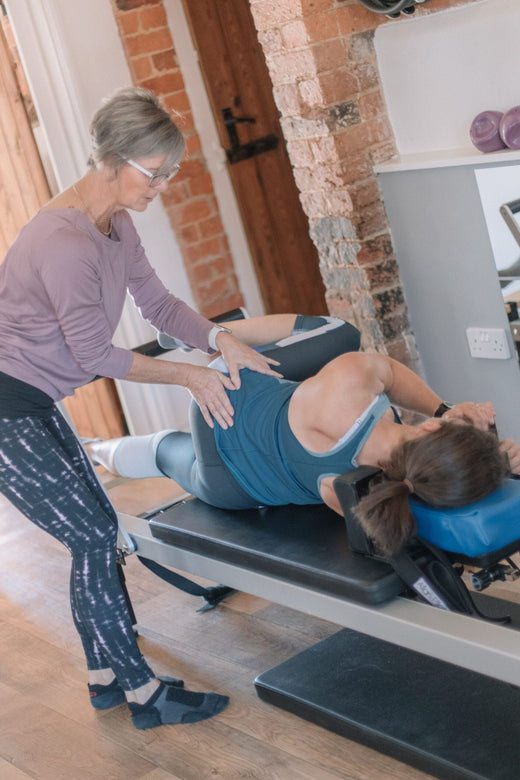
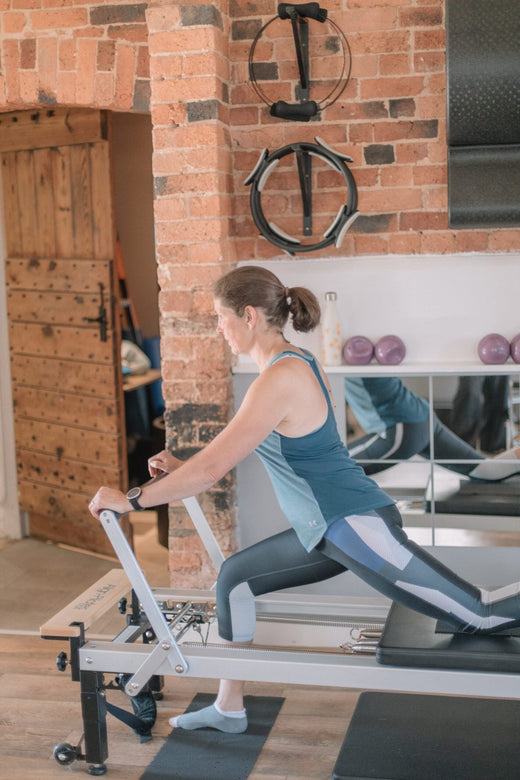
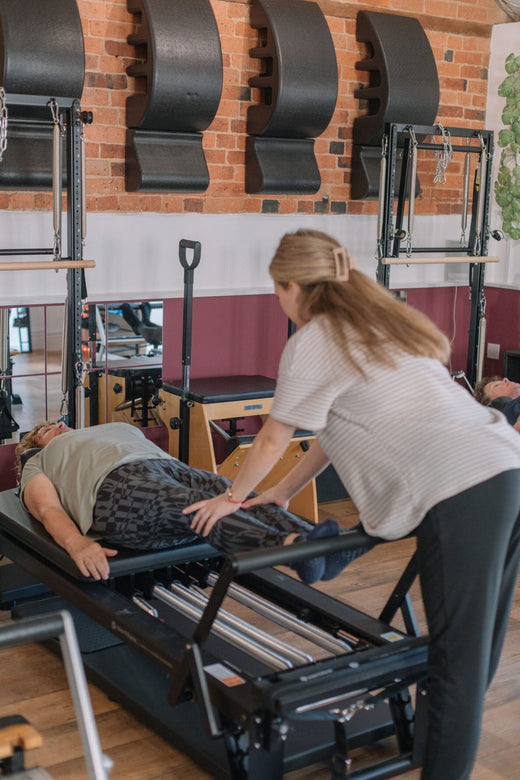
The reformer lets you move your hips and spine while lying supported on a cushioned carriage, with springs doing part of the work for you. That changes everything about how exercise feels when a nerve is grumpy:
- You are not fighting gravity. Lying or side-lying positions take the compressive load off your lower back while you work.
- The springs assist before they resist. Early on, we set the machine to help your legs move smoothly through comfortable ranges, keeping the nerve gliding without strain.
- Every movement is adjustable. If a position provokes your symptoms, we change the angle, the range or the spring, not the whole plan.
What we actually work on
Over time, most people with sciatica benefit from stronger, better-coordinated muscles around the pelvis: the glutes, the deep hip rotators, the hamstrings and the deep core. Footwork and bridging build the hips and legs without jarring. Strap work lets the legs move freely while the back stays supported. Gentle hip openers address the muscles, including the piriformis, that often grip around the sciatic nerve. None of it is dramatic. All of it adds up.
In a class of four, nothing gets missed
With a maximum of four people in every class, we can keep an eye on how you are responding from one exercise to the next, and quietly adjust your setup whenever something does not feel right. You will never be left to guess whether a movement should feel the way it does.
Where to start
If sciatica has been wearing you down, be reassured: this is something we see and work with often. Start gently, let the springs support you, and give your body the consistent, calm movement it has been asking for. When you are ready, we would love to help.