14 July 2026
Is reformer Pilates good for men? Yes, here's why
Let us answer the question in the title immediately: yes. Emphatically. And the fact it still needs asking says more about marketing history than about Pilates. The method was invented by a man, Joseph Pilates, a boxer, gymnast and self-defence instructor, who developed it training men, including interned soldiers during the First World War and, later, athletes and dancers in New York. Somewhere between then and now, Pilates acquired an image problem. The work itself never changed.
What men typically bring to the studio
We will generalise, with apologies to every exception. Men who come to us are often strong but stiff: years of gym work, sport, or manual jobs have built muscle over a shrinking range of motion. Hamstrings that groan at a straight-leg stretch, hips that will not sit deep, shoulders that press well overhead but rotate poorly. And frequently a lower back doing extra work to cover for all of it. Sound familiar? That combination is precisely what the reformer was built for.
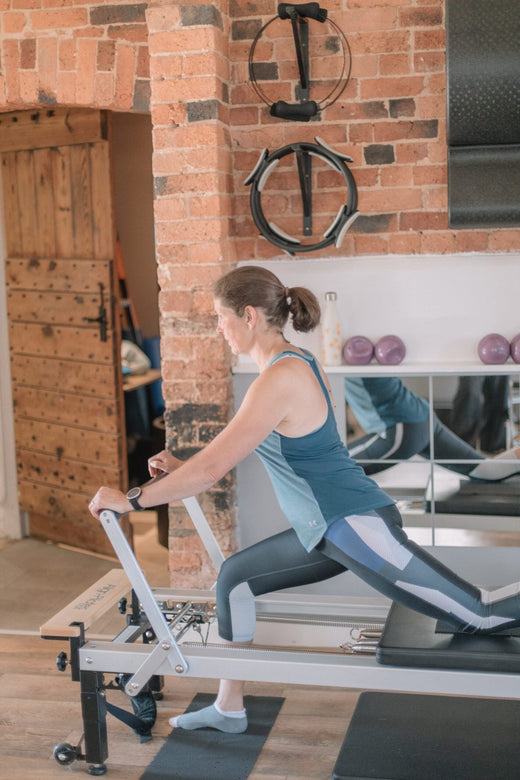
What actually happens on the machine
- Strength through full range. The springs load your muscles while they lengthen, not just while they shorten, which is exactly how flexibility improves in a way that lasts. It is strength training and mobility work in the same movement.
- The deep core, not the six-pack. Crunches train the surface. The reformer trains the deeper system, the muscles that brace your spine when you deadlift, row, dig or carry, and that keep your back honest when you twist at speed.
- Control is the challenge. If you think the work sounds gentle, try moving a loaded carriage slowly, with control, without your shoulders creeping up or your back arching. The shake in your legs by minute forty will settle the question.
It complements everything else you do
Pilates is not asking you to give anything up. It fills the gaps other training leaves: mobility for lifters, rotation and balance for golfers and racket players, controlled strength for runners and cyclists, and a stronger back for every job that involves a shovel, a toolbox or a grandchild who wants carrying. Many of the men here started because something, usually a back, complained loudly enough. Most stay because they simply move better everywhere else.
What your first session is like
No experience needed, no flexibility prerequisites, and no room full of experts to keep up with: classes are four people at most, all levels, all builds, all working on their own springs at their own pace. You will learn the machine one-to-one in an intro session first. Come sceptical if you like. The reformer has been changing sceptical minds since 1918.