4 July 2026
Osteoporosis and reformer Pilates: building bone safely
A diagnosis of osteoporosis or osteopenia often arrives with a frightening message: be careful. Be careful bending, be careful lifting, be careful falling. Careful is sensible, but on its own it is not a plan, because bone does not get stronger by being protected. It gets stronger by being loaded, wisely, progressively and safely. That is where the reformer earns its place.
An honest note first: if you have been diagnosed with osteoporosis, please let us know before your first session, and do check with your GP that exercise is appropriate for you, especially if you have had a fracture. This is a condition we take seriously, and some common Pilates exercises need modifying for low bone density. We would far rather know than guess.
Why loading matters for bone
Bone is living tissue that responds to demand. When muscles pull on bone and when bone bears weight, it adapts by laying down more mineral. This is why resistance exercise, alongside the medication and nutrition your doctor may recommend, is consistently encouraged for people with low bone density. The challenge is finding resistance work that is safe, controlled and appropriate, which is precisely the reformer's specialty.
What we do more of
- Weight-bearing leg work. Footwork against the springs loads the hips and legs, two of the sites where bone density matters most, through safe, controlled ranges.
- Upright, extension-based work. Strengthening the muscles along the back of the body supports the posture that protects the spine. Work at the tower with the roll-up bar, and standing work for posture and balance, feature heavily.
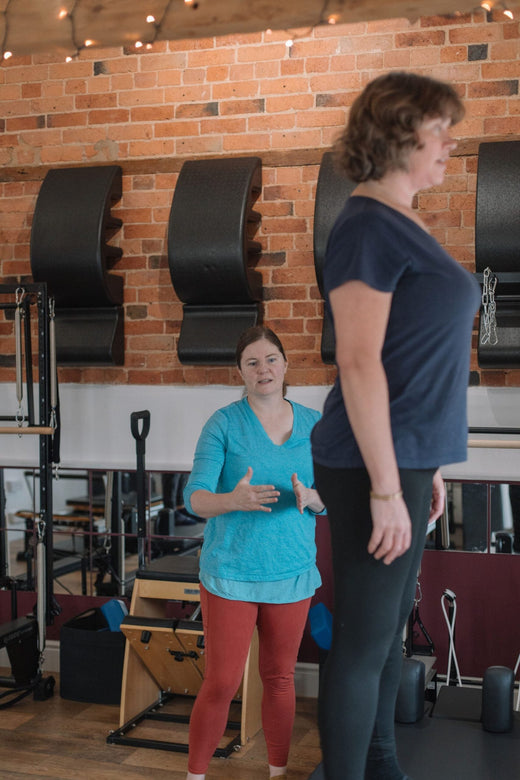
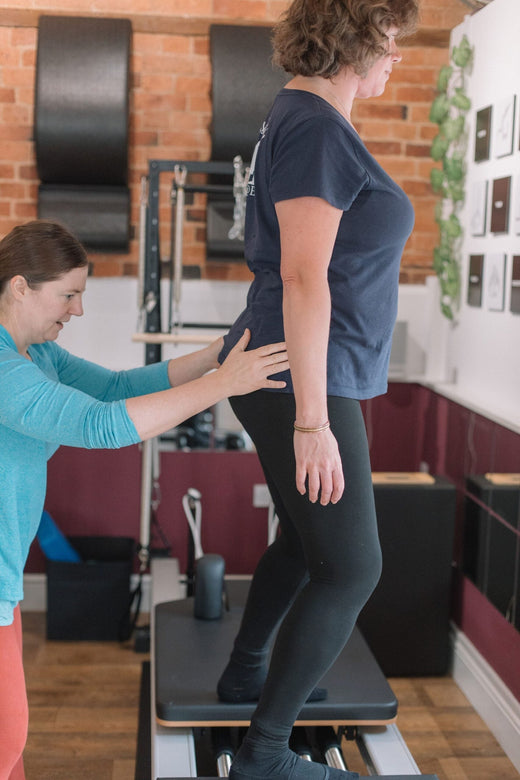
- Balance training. The strongest bones in the world matter less than not falling in the first place. Standing stability work is quietly one of the most valuable things we do.
What we modify
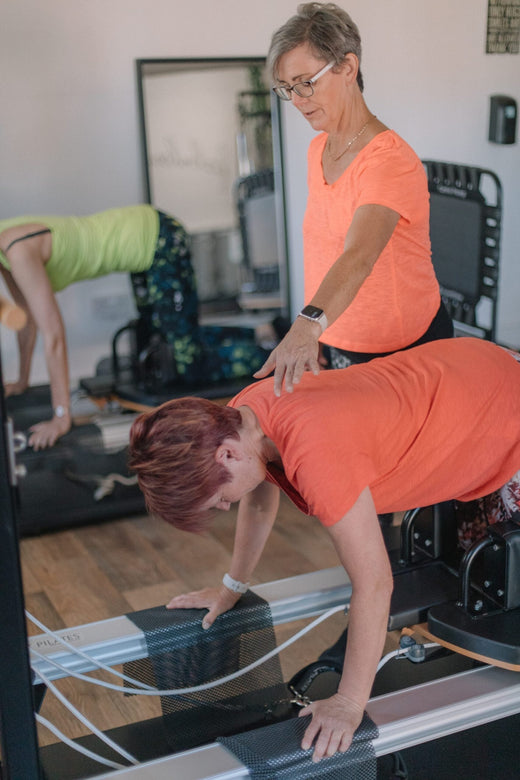
Guidance for osteoporosis is to avoid loaded, end-range spinal flexion, the deep rounding-forward shapes, and unsupported twisting under load, because they concentrate pressure on the front of the vertebrae. Plenty of classical Pilates exercises involve exactly those shapes, so we substitute them: supported neutral-spine work instead of loaded curls, hip-hinging instead of rounding, rotation kept gentle and unloaded. In a class of four, these swaps happen seamlessly; you simply do your version while the class does theirs.
The longer game
Bone adapts slowly, over months and years, not weeks. What we are really building is a habit your skeleton can rely on: consistent resistance work, better balance, stronger posture, and the confidence to keep doing the lifting, carrying, gardening life that keeps bone stimulated naturally. A diagnosis is a reason to start, not a reason to stop.
Where to start
Come and talk to us. Tell us about your scan, your history and what your doctor has said, and we will build sessions that load you wisely. Strong is safer than careful, and it feels a great deal better, too.