15 October 2026
Arthritis and reformer Pilates: moving without flaring
Arthritis presents a horrible bargain: moving hurts, but not moving makes everything worse. Stiff joints want motion; sore joints make you dread it. Reformer Pilates sits almost perfectly in the middle of that bargain - which is why so many people with arthritis find their way to a reformer, often on the advice of a physiotherapist.
The honest note, as always: arthritis comes in many forms, and we are instructors, not doctors. If your arthritis is newly diagnosed, actively flaring, or you are under a rheumatologist, follow their guidance first - and tell us everything at your intro so we can tailor your sessions properly.
Why supported movement helps
Joints are happiest when they move regularly through a comfortable range, with muscles strong enough to share the load. UK health guidance says the same thing consistently: for most people with arthritis, staying active is one of the best things you can do. The hard part was never knowing that - it is finding a way to do it that does not punish you.
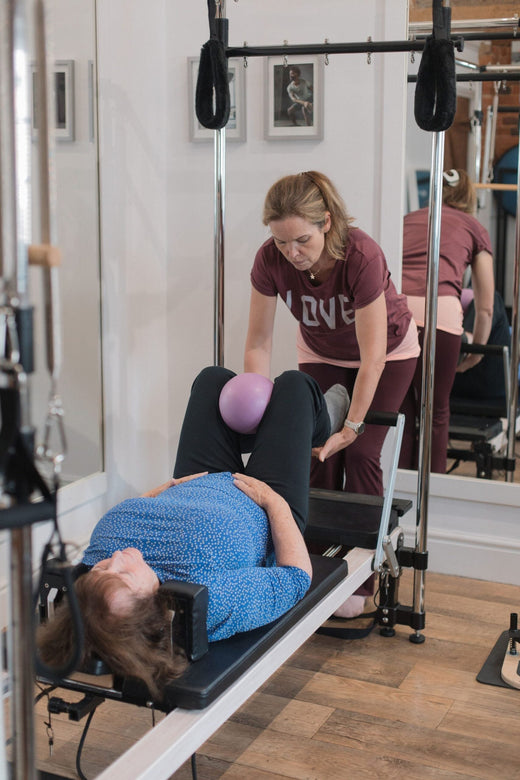
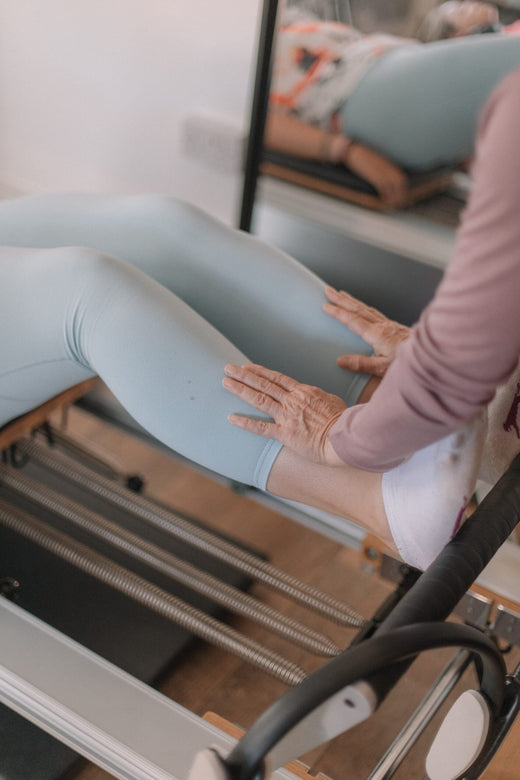
The reformer is built for exactly that. The carriage and springs support your limbs while you move, so you can strengthen the muscles around a joint without grinding the joint itself. The resistance is adjustable spring by spring, meaning the same exercise can be featherlight or seriously challenging - whatever today's joints will welcome. And because so much of the work is lying or seated, sore knees and hips are spared the load of endless standing.
The forms we see most
Osteoarthritis is the most common visitor - knees, hips, hands and spines that have simply done a lot of living. Our guide to osteoarthritis and the reformer goes deeper there. We also welcome members with rheumatoid and other inflammatory forms, always alongside their medical team's guidance - the approach simply becomes more conservative, with more listening and less pushing on the harder weeks.
Good days and harder days
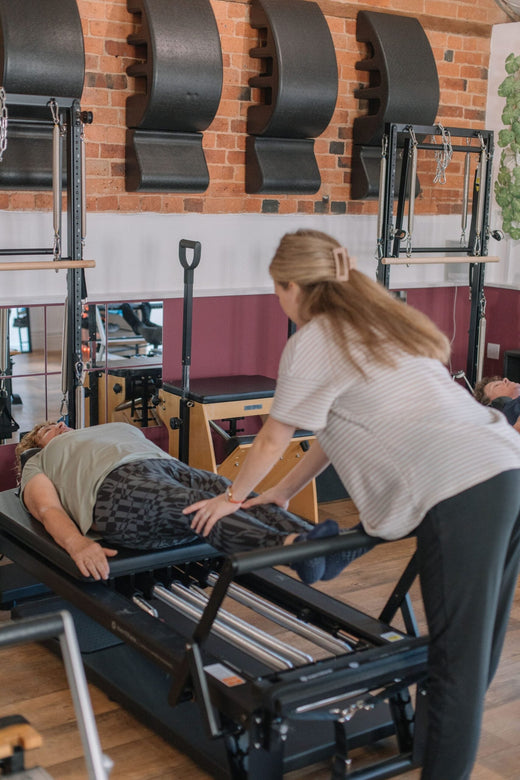
Anyone with arthritis knows the weather changes. In classes of no more than four, your instructor can quietly adapt your session on the day - lighter springs, a smaller range, a different position - without you missing a beat or feeling singled out. That flexibility is the difference between exercise you maintain for years and exercise you abandon after a bad fortnight.
Starting carefully
Everyone here starts with a 1:1 introductory session (£33), which matters double with arthritis: it is where your instructor learns which joints need protecting and which need waking up. Some people then join a small class; others begin with private sessions for a little longer. There is no rush and no fixed route.
Common questions
Will it hurt? It should not - discomfort in a working muscle is fine, pain in a joint is a signal we respect immediately. You will never be pushed through joint pain here, and telling your instructor mid-class is encouraged, not tolerated.
Should I start with a group or privately? Either can be right. If your arthritis is mild and stable, a Level 1 class is usually fine. If it is widespread, unpredictable or newly managed, a few private sessions first let us learn your body thoroughly - your intro will settle it.
What should I tell my instructor? Everything - which joints, what flares you, what your consultant has said, what movements you avoid at home. Nothing you say is too small, and all of it makes your sessions better.
The long game
Nobody promises arthritis away - anyone who does should be politely ignored. What members tell us is quieter and better: fewer stiff mornings, more confident stairs, gardens returned to. Movement, taken gently and consistently, is still one of the best tools there is. Have a look at our movements, and let us help you use it.